
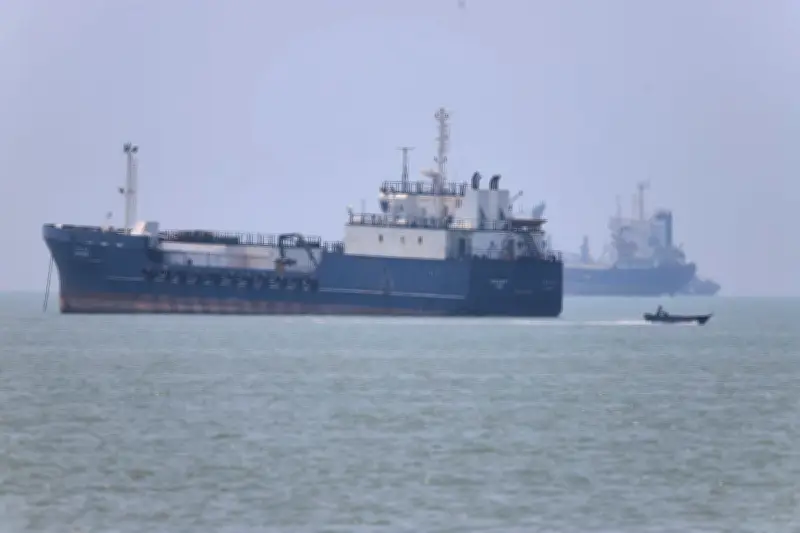
Iran has declared that mine clearance in the Strait of Hormuz will be conducted exclusively by its own forces, directly challenging a planned UK and French-led mission to secure the vital oil route. Deputy Foreign Minister Kazem Gharibabadi stated that this position aligns with the interim ceasefire deal signed with the United States, as Tehran seeks to maintain control over the strategic waterway.
Macron's Proposal Draws Iranian Criticism
Gharibabadi's remarks were a direct response to French President Emmanuel Macron, who announced that France would collaborate with Oman and other partners to demine the Gulf channel and ensure free passage for vessels. Macron posted on X after meeting with Oman's sultan in Paris: "We are working together for de-escalation in the Middle East. We have decided to collaborate jointly, in co-ordination with our partners, on demining the strait to secure maritime routes and ensure free and unconditional passage through the Strait of Hormuz."
In a sharp retort, Gharibabadi wrote: "Macron has said that he is cooperating with his partners in demining the Strait of Hormuz. According to the Islamabad memorandum of understanding, demining is carried out solely by Iran and by no other country, and we fundamentally do not permit any such thing. The situation is sensitive and complex. We strongly advise France not to complicate it further with its provocations."
Background: The Fragile Ceasefire and Strategic Waterway
Britain and France have been leading efforts to establish an international mission to protect and reassure vessels using the strait once hostilities end. Ending Iran's stranglehold on the waterway—which disrupted global oil and gas supplies, driving up fuel and food prices—was a key demand in negotiations. However, the sea route remains a flashpoint for the fragile truce. An attack on a cargo ship recently sparked a four-day exchange of fire between the two sides, threatening the agreement aimed at ending the war.
The initial US-Iran deal, known as the Islamabad memorandum of understanding, only secures safe, toll-free passage through the strait for 60 days, pending a final agreement on Tehran's disputed nuclear plans. As part of opening the waterway, it stipulates that demining will be carried out by Iran. The pact also leaves it to Tehran and Oman, in conjunction with other Gulf states, to "define the future administration and maritime services in the Strait of Hormuz." Meanwhile, Iran has continued to exert leverage over the channel, including demanding ships seek permission to transit and raising the possibility of future charges.
Ongoing Tensions and Diplomatic Moves
The UK Foreign Office has been contacted for comment on the Iranian rejection. Separately, after trading strikes over the weekend and with an apparent pause in attacks, the United States is sending a high-level delegation to Qatar to hold talks with Iran, although Tehran has denied that a meeting is scheduled.




