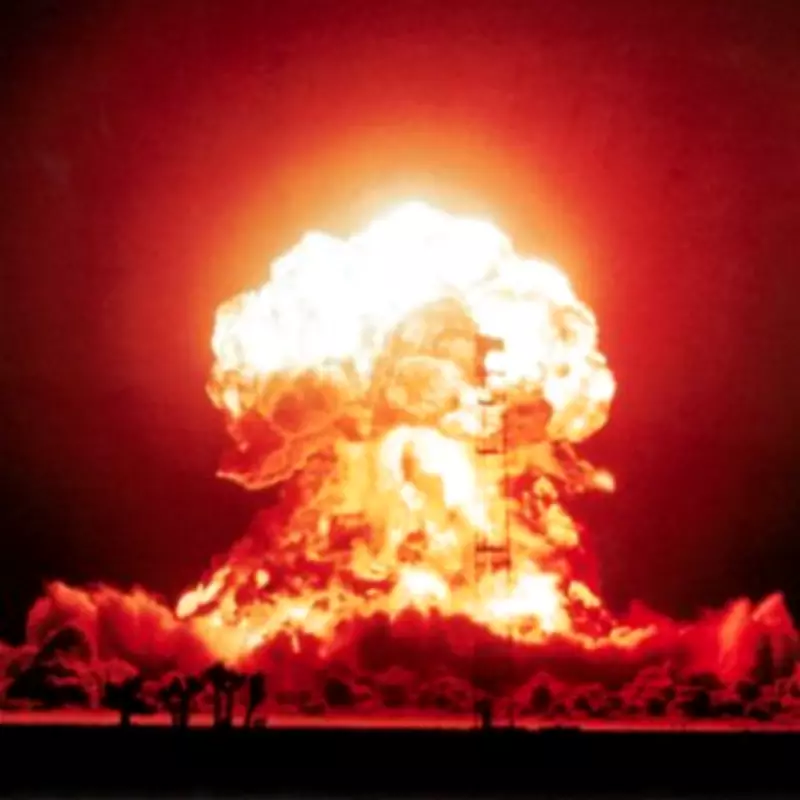
Atomic science experts have raised the alarm over Iran's ability to make nuclear weapons, warning the regime "has enough plutonium reserves for 200 nuclear bombs."
Nonproliferation Policy Education Center Executive Director Henry Sokolski said the regime could have had time to fashion nuclear weapons. His warning came as Iran threatened to target US-controlled sites in the Middle East despite ongoing peace talks.
The Iranian Revolutionary Guard promised "heavy attacks" on American bases and ships in the region, while Donald Trump still awaits a response from the regime to his proposed peace deal. Tehran's fresh warning comes just one day after the US attacked two Iranian tankers in the Gulf of Oman.

Nuclear Capabilities
Henry Sokolski argued in an article published in the Bulletin of the Atomic Scientists in April that Iran has enough "plutonium for more than 200 nuclear bombs." He said: "The last time IAEA inspectors visited Bushehr was August 27, 2025. Even when agency inspectors had routine access to the plant, they only visited every 90 days - more than enough time to divert the spent fuel and possibly fashion it into nuclear weapons."
Writing last month on conservative news site Real Clear Defense, Sokolski wrote: "Washington should make sure that Iran doesn't remove Bushehr's spent fuel and strip out the plutonium. This can and should be done without bombing the plant."
"It could do this with space surveillance assets or, as it did in 2012, with drones," he said. "Second, any 'peace' deal President Trump cuts with Tehran should include a requirement that there be near-real-time monitoring of the Bushehr reactor and spent fuel pond, much as the IAEA had in place with Iran's fuel enrichment activities."
Military Escalation
Iran has threatened to target US-controlled sites in the Middle East if its ships come under fire, Iranian media reported on Saturday. "Any attack on Iranian tankers and commercial vessels will result in a heavy attack on one of the American centres in the region and enemy ships," the country's Revolutionary Guards said. Tehran's latest warning comes a day after US strikes on two Iranian tankers in the Gulf of Oman.
US Central Command (CENTCOM) has said their forces have redirected 58 commercial vessels and disabled four to prevent the ships from entering or leaving Iranian ports. The US military previously posted a video of two Iranian oil tankers as they were struck by an American fighter jet today, marking the latest confrontation between the US and Iran.
Diplomatic Efforts
The US and Iran could resume talks as early as next week in Islamabad, Pakistan, according to reports. The Wall Street Journal, citing people familiar with the matter, reported that the US and Iran are working with mediators to formulate a one-page, 14-point memorandum of understanding. This would set the parameters for a month of talks focused on ending the war which started on February 28. The draft is said to include discussions on Iran's nuclear programme, tensions in the Strait of Hormuz and the possible handling of Iran's uranium stockpiles to another country.
German Chancellor Friedrich Merz has said Europe wants to work to keep the NATO alliance "alive" amid apparent tensions with President Donald Trump over the US-Israeli war against Iran. "We are really willing to keep this alliance alive for the future," Merz said at a press conference with Sweden's Prime Minister Ulf Kristersson.
Regional Impact
Brent crude oil futures gained as much as 3 percent on Friday as tensions rose in the Strait of Hormuz. The gains were scaled back amid hopes of an agreement between Washington and Tehran to end the conflict. Brent crude futures settled at $101.29 per barrel, up $1.23 or 1.23 percent.
A Royal Navy warship is being sent to the Middle East to be ready to join an international mission to safeguard shipping in the Strait of Hormuz. Type 45 destroyer HMS Dragon will "pre-position" in the region, ready to join the UK and French-led initiative once hostilities cease between Iran and US-Israeli forces.

At least 31 people were killed on Friday in Israeli attacks on southern Lebanon, marking one of the deadliest days since the conflict between Israel and Hezbollah resurged on March 2. Hezbollah has said that it carried out 26 attacks on Israeli forces in southern Lebanon since the afternoon of Thursday.