Defense Secretary Pete Hegseth's Religious Rhetoric Alarms Military Amid Iran War
Defense Secretary Pete Hegseth has dramatically shifted the Pentagon's approach to faith, invoking religious language and implementing policy changes that have blurred the traditional separation between church and state. This development has become particularly pronounced during the ongoing U.S.-Israeli war against Iran, now entering its second month with no resolution in sight.
Unprecedented Religious Invocations
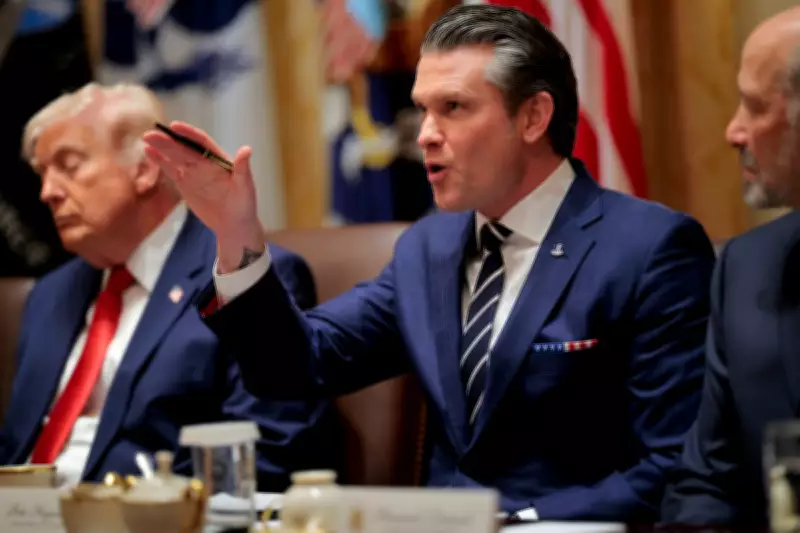
Hegseth, a former Fox News host with a prominent Jerusalem cross tattoo, has long expressed his Evangelical Christian beliefs publicly. He has stated that the United States was "founded as a Christian nation" and remains one "in our DNA, if we keep it." His actions have included hosting Pentagon worship services that legal experts describe as "unprecedented" in military history.
During a March 19 press briefing, Hegseth explicitly encouraged Americans to pray for troops "in the name of Jesus Christ." At a Pentagon prayer service on Wednesday, he escalated this rhetoric, calling for "overwhelming violence of action against those who deserve no mercy" and praying that "wicked souls" be "delivered to the eternal damnation" in the conflict with Iran, a predominantly Muslim nation.

Military Concerns and Complaints
Current and former military leaders have expressed deep unease about this approach. An unnamed senior Army civilian described the situation as "terrifying," warning that if troops believe "God is on our side," it could remove ethical constraints on military actions. The Military Religious Freedom Foundation has reported receiving over 200 complaints from service members whose superiors suggested their deployment to Iran was part of God's plan.
Retired Army Maj. Gen. Randy Manner revealed he has spoken with "dozens and dozens" of military chaplains who feel marginalized if they don't align with Hegseth's religious perspective. An unnamed Air Force general lamented that "decades worth of progress has been undone in 12 months," calling the situation "heartbreaking."
Policy Changes and Legal Challenges
Hegseth has implemented significant policy shifts at the Pentagon:
- Eliminating dozens of military codes for various faith groups
- Axing the Army's Spiritual Fitness guide, which he criticized for focusing on self-care rather than "truth"
- Requiring military chaplains to wear religious insignia instead of rank on their uniforms
Rachel Laser, president of Americans United for the Separation of Church and State, argues these changes have undone longstanding efforts to foster religious inclusion in the armed forces. The organization has sued the Pentagon for failing to respond to public records requests about Hegseth's prayer services, expressing concern that even voluntary services create pressure on employees to attend.
Broader Implications and Responses
A former member of the Joint Chiefs leadership team emphasized that military service should represent "all Americans, no matter what they believe," criticizing the "hyper-Christian tone" from leadership as contrary to constitutional religious freedom. Pope Leo appeared to offer a veiled rebuke during a Sunday mass, stating that Jesus "rejects war" and "does not listen to the prayers of those who wage war."
Pentagon Press Secretary Kingsley Wilson defended the prayer services as "100 percent voluntary" and constitutionally protected, claiming they "improve morale for those who choose to attend." However, critics maintain that Hegseth's approach represents a fundamental shift in how religion intersects with military operations and national defense policy during a critical international conflict.