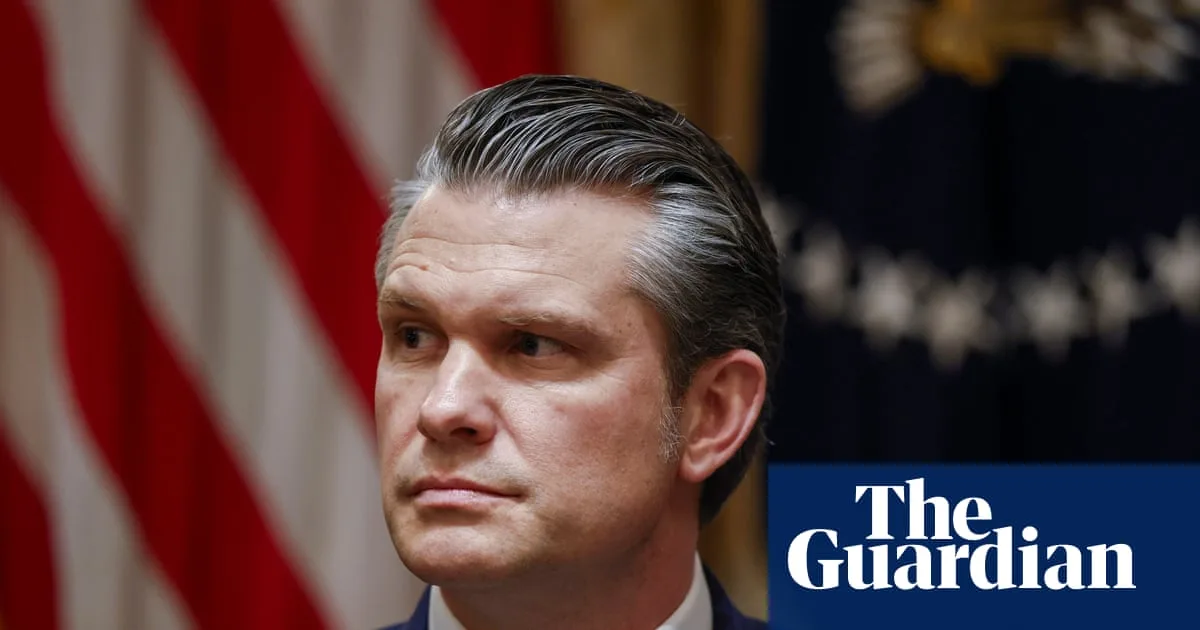
Defense Secretary Hegseth Prays for 'Overwhelming Violence' at Pentagon Service
Defense Secretary Pete Hegseth delivered a fervent prayer during a Christian worship service at the Pentagon, invoking divine support for "overwhelming violence of action against those who deserve no mercy." The service, held on Wednesday and attended by military and civilian personnel, marked Hegseth's first such event since the onset of the Iran war, as reported by the Associated Press.
Prayer Calls for Divine Intervention in Conflict
In his prayer, Hegseth urged that "every round find its mark against the enemies of righteousness and our great nation," while also asking for wisdom, endurance, and unbreakable unity for troops. He attributed the prayer's origins to a military chaplain, noting it was distributed to soldiers after the capture of Venezuelan President Nicolás Maduro by U.S. forces. This invocation comes amidst heightened tensions, with Hegseth previously framing the Iran conflict in religious terms, describing adversaries as "religious fanatics" seeking nuclear capabilities for an "Armageddon."
Reforms to Military Chaplain Corps Spark Controversy
The remarks followed Hegseth's announcement of significant changes to the military's chaplain corps, which he criticized in a video message for being "infected by political correctness and secular humanism." He argued that chaplains had been "watered down" to function merely as therapists, prioritizing "self-help and self-care" over faith and virtue. Under the new reforms, religious affiliation codes will be reduced from approximately 200 to 31, and chaplains will replace officer rank insignia with religious symbols on their uniforms. Hegseth framed these adjustments as part of an effort to "make the chaplain corps great again," aligning with his broader push to integrate Christian principles into defense operations.
Monthly Prayer Sessions and Christian Nationalist Ties
Since taking office, Hegseth has instituted monthly prayer sessions at the Pentagon, all presided over by evangelical leaders, according to the Associated Press. He is a member of a church affiliated with the Congregation of Reformed Evangelical Churches, founded by Doug Wilson, a self-identified Christian nationalist who has also led a Pentagon prayer service. This integration of faith into official duties has drawn sharp criticism and legal challenges, with opponents arguing it blurs the line between church and state.
Criticism and Legal Challenges Mount
Military veterans have expressed concerns that Hegseth's religious emphasis could foster division and weaken national security. Kristofer Goldsmith, an Iraq war veteran and CEO of the watchdog group Task Force Butler, warned that an influx of Christian nationalists into the military might lead to poor performance and toxic leadership, jeopardizing security for years. Additionally, Americans United for Separation of Church and State has filed lawsuits against the defense and labor departments, seeking public records on prayer services to assess compliance with religious neutrality laws. The organization's president, Rachel Laser, emphasized that "the federal government's role is to serve the public, not to proselytize," highlighting fears of coercion in voluntary attendance.
As debates over the role of religion in military and government intensify, Hegseth's actions continue to spark legal and ethical scrutiny, reflecting broader tensions within U.S. politics and defense policy.






