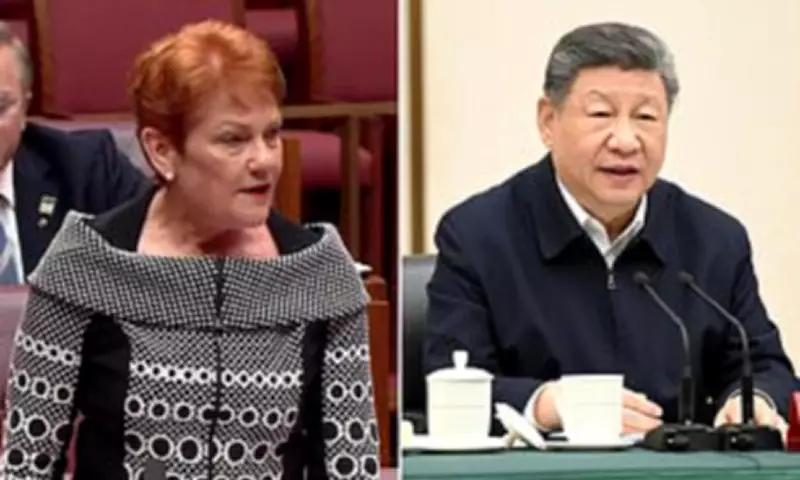
Pauline Hanson has issued a stark warning that Australia is dangerously unprepared for a major regional conflict, asserting the nation would be plunged into chaos if China were to invade Taiwan. The One Nation leader delivered her cautionary address in the Senate on Monday, highlighting how decades of declining manufacturing and growing dependence on overseas imports have left Australia exposed to severe disruptions.
Manufacturing Decline and Economic Vulnerability
Hanson emphasised that current economic pressures would pale in comparison to the shock of a conflict involving China and Taiwan. 'Be prepared for what's going to happen,' she stated. 'China has said they are going to invade Taiwan. If you think this is the start of it, it's not. It's going to get worse than that.' She pointed to alarming statistics: as of 2025, manufacturing accounted for just 5.1 per cent of Australia's GDP, with the industry in terminal decline over recent decades. Last year, Australia ranked lowest in manufacturing among all 37 countries in the Organisation for Economic Co-operation and Development.
Reliance on Chinese Imports and Supply Chain Risks
The senator warned that Australia imports approximately $300 billion worth of goods from China, and any disruption from a conflict would cripple critical supply chains. 'We will be on our knees,' Hanson declared. She urged the nation to pursue self-sufficiency, particularly in fuel production, and to revitalise domestic industries. 'Start going after our own fuel here in this nation. Be self‑sufficient. Start up our industries and manufacturing.'

Political Clashes Over War and Fuel Security
Hanson's remarks followed an explosive speech from Greens Senator Sarah Hanson‑Young, who lashed out at the Australian government's response to the Middle East conflict. Hanson‑Young accused the Coalition, Labor, and One Nation of backing what she repeatedly described as an 'illegal war' led by US President Donald Trump. 'There is no bigger cheerleader for Donald Trump in this country than Pauline Hanson and One Nation,' she argued, claiming Australians are already paying higher prices due to politicians blindly following the United States into conflict.
Hanson rejected assertions that One Nation supports war, stating no senator wants to see Australian troops deployed overseas. 'I don't want to see war. I don't want to see your people out there fighting,' she said. 'But we've been dealt this hand and we have to deal with it the best we can.' She blamed energy and climate policies backed by Labor and the Greens for rising power prices and the closure of domestic industries, noting that 47,000 small businesses have failed due to electricity costs.
Fuel Shortages and Agricultural Pressures
With inflation at 3.7 per cent and the cash rate at 4.1 per cent, the Middle East conflict is exacerbating global fuel supply pressures, driving diesel prices above $3 per litre. Hanson highlighted the strain on farmers from fuel and fertiliser shortages, warning, 'If the farming sector goes down, the whole community goes down.'
Liberal Senate Leader Michaelia Cash, who moved a motion to suspend standing orders, accused the Albanese government of failing to act on fuel security. 'This government has been warned time and time again about fuel security, and it has chosen to ignore those warnings,' Cash said. She criticised the government's response as inadequate, stating, 'Meetings do not lower prices at the bowser. Press conferences do not keep trucks on the road, bins emptied, or carers able to reach vulnerable Australians.' Cash urged Prime Minister Anthony Albanese to immediately cut fuel excise and prioritise support for essential industries.
Government Response and National Cabinet Meeting
In response to mounting pressures, Albanese met with state and territory leaders at National Cabinet on Monday and announced the fuel excise would be halved for three months. This move aims to alleviate some of the financial burdens on Australians, though critics argue more comprehensive measures are needed to address long-term vulnerabilities highlighted by Hanson's warnings.