
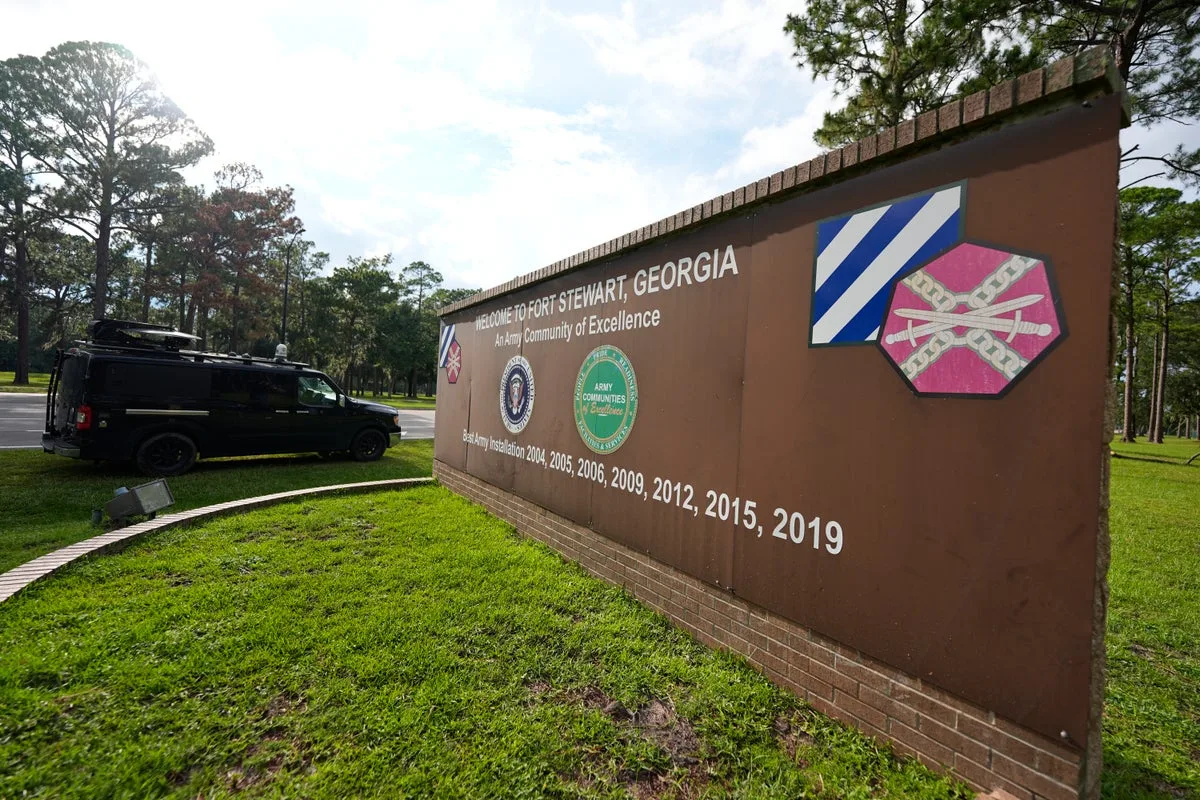
A shooting that injured five soldiers at Fort Stewart, one of the largest US military bases, has reignited questions about the long-standing policy that largely prohibits service members from carrying personal firearms on base. The incident occurred on Wednesday when logistics Sergeant Quornelius Radford used a personal weapon to open fire, according to Brigadier General John Lubas.
Witnesses tackled the shooter before law enforcement arrived, but they were unarmed due to Department of Defense regulations that restrict personal firearms to military police unless authorised by a senior commander. The policy, which applies even in Georgia—a state with lenient gun laws—requires weapons to be stored securely and checked out only for approved activities like hunting or target practice.
The shooting has sparked online debate, with some questioning why soldiers did not return fire and others arguing that existing rules fail to prevent such incidents. Experts note that the policy balances safety and security, particularly on installations handling classified operations. Robert Capovilla, a former military prosecutor, said that allowing personal weapons could compromise security, while Eric Carpenter, another former prosecutor, highlighted parallels with broader gun control debates.
Both experts agreed that the policy has limitations, particularly regarding service members living off-base who can bring weapons onto the installation, and the difficulty of confiscating firearms from those showing signs of mental distress. However, Carpenter concluded that no set of rules could entirely prevent such attacks. The investigation into the Fort Stewart shooting is ongoing.




