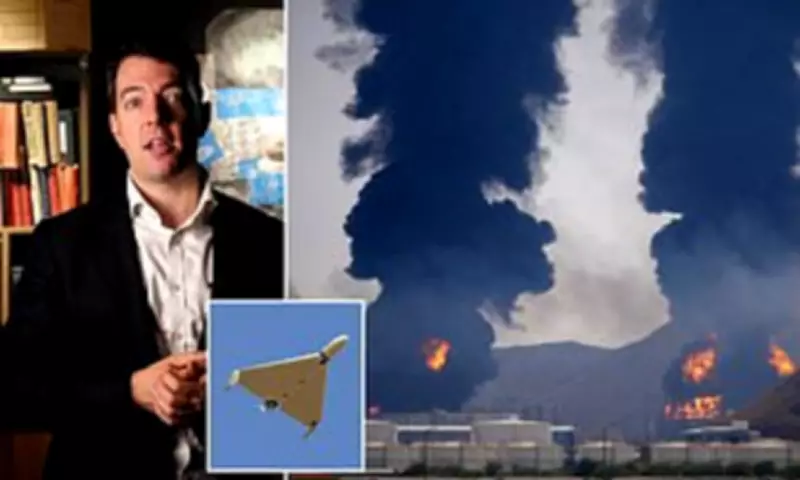
The proliferation of killer drones has become a defining feature of contemporary military conflicts, with both Russia and Ukraine deploying them extensively. This trend reached a dramatic new level at the beginning of this month when Iran shocked the international community by launching retaliatory strikes against several Gulf nations.
Iran's Drone and Missile Barrage
The Islamic Republic initiated these attacks in response to a US-Israel missile bombardment that resulted in the death of Ayatollah Ali Khamenei on February 28, 2026. According to recent data from Al Arabiya, Iran has fired nearly 5,000 missiles and drones at neighboring countries. These strikes have targeted critical infrastructure including US military bases, luxury five-star hotels, and vital oil refineries across Saudi Arabia, Bahrain, Qatar, Kuwait, and the United Arab Emirates.
The Rising Challenge of Drone Defence
As military drone capabilities become increasingly sophisticated, the technology designed to neutralize them must evolve at a comparable pace. In the latest episode of the Daily Mail's War on Tape series, foreign correspondent Chris Pleasance visited one of the world's largest arms exhibitions to investigate the cutting-edge systems being developed to detect and destroy unmanned aerial vehicles.

The Cost Problem with Traditional Solutions
While shooting drones down might seem straightforward, traditional methods present significant financial challenges. Armed forces have historically relied on missiles like the Aster 30, which offers exceptional accuracy and long-range capabilities but carries a staggering price tag of approximately £3 million per unit. This expense becomes particularly problematic when confronting aggressor drones that may cost anywhere from a few hundred to several thousand pounds.
Innovative and Affordable Alternatives
Several defence contractors are now pursuing innovative approaches to make anti-drone systems more economically viable without sacrificing effectiveness. Saab has introduced the Nimbrix missile, measuring just three feet in length and weighing under seven pounds. This compact system can travel up to three miles and costs tens of thousands of dollars rather than millions.
Another emerging solution is the Frankenburg Mark I, developed by Frankenburg Technologies. At merely 60 centimeters long—comparable to a baguette—this missile can fly one and a half miles and is priced at £40,000 per unit. During the Defence and Security Equipment International 2026 conference at London's Excel Centre, Pleasance interviewed Kusti Salm, CEO of Frankenburg Technologies and former Permanent Secretary to the Estonian Ministry of Defence.
Salm emphasized the urgency of developing affordable countermeasures, stating: "The manufacturing of long-range drones carrying warheads is now around 100 per day and increasing by a factor of four annually. This year we're looking at 30-40,000 drones, next year more than 100,000. The only way to stop this madness is to create something that is cheaper and readily available."
Alternative Neutralization Methods
Beyond missile systems, defence experts are exploring multiple approaches to counter drone threats. Jamming technology works by broadcasting powerful signals that overwhelm drone communication frequencies, effectively drowning them out and causing crashes. However, some militaries have circumvented this by employing drones equipped with fibre-optic cables, which eliminate airborne signals that could be intercepted.
Furthermore, certain drone models like Iran's widely used Shaheds operate without pilots, making them immune to conventional jamming techniques. This has led to the development of what might sound like science fiction solutions: high-powered laser systems.
The Promise and Limitations of Laser Defence
These advanced laser systems function by directing an intense energy beam at incoming drones, effectively cooking their electrical components and sometimes causing them to burst into flames. The primary advantage is operational cost—each laser shot consumes only electricity, resulting in an expense of mere cents per engagement.

Despite their potential, laser systems face practical limitations. They tend to be heavy and require substantial power supplies in the form of large batteries, reducing their mobility. Additionally, while successfully tested in controlled environments, they remain largely unproven in actual combat scenarios. Environmental factors including rain, smoke, and even reflective surfaces on drones can potentially interfere with their effectiveness.
The rapid evolution of drone warfare continues to push defence manufacturers toward increasingly innovative and cost-effective solutions, creating a technological arms race that will likely define future military conflicts.