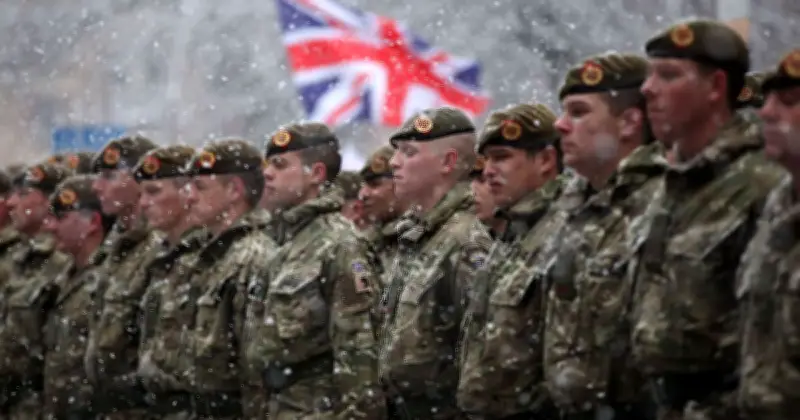
Planning for World War Three or other worst-case scenarios could be stepped up after the head of the army called on the UK's political leaders to start a 'frank conversation' with the public about preparing for war as tensions between Russia and the West continue to escalate. General Sir Roly Walker this week told Sky News that 'every' citizen will be 'asked to make sacrifices' and play their part in the defence of the country.
Historic precedent for conscription age
Just this year, the age range for men to be called up to the Army Reservists was increased from 55 to 65, and historical precedent shows us that in times of war, men as old as 60 have been told to fight. Assuming tensions continue to ramp up and a new global conflict were to erupt, there are some indicators about what would happen if the UK went to war and needed to introduce conscription, or mandatory military service, whether in a WW3 situation or not.
In WW2, conscription began for men aged between 20 and 22 in 1939, up to six months before the war actually broke out. The UK Parliament website says: "During the spring of 1939, the deteriorating international situation forced the British government under Neville Chamberlain to consider preparations for a possible war against Nazi Germany. Plans for limited conscription applying to single men aged between 20 and 22 were given parliamentary approval in the Military Training Act in May 1939. This required men to undertake six months' military training, and some 240,000 registered for service."
How the age range expanded during WW2
But when war was declared, the age range was immediately increased to a much higher upper limit, to any man aged 18 to 41. It continues: "On the day Britain declared war on Germany, 3 September 1939, Parliament immediately passed a more wide-reaching measure. The National Service (Armed Forces) Act imposed conscription on all males aged between 18 and 41 who had to register for service."
The only men who weren't called up were those who were too unfit medically, or who worked in industries which were deemed as vital to the war effort. It adds: "Those medically unfit were exempted, as were others in key industries and jobs such as baking, farming, medicine, and engineering."
By 1942, the age limit had increased again, with men as old as 60 called in to help. By the end of 1941, women and 'all childless widows' between the ages of 20 and 30 were called up, while men aged up to 51 were called up for military service. Even those aged 52 to 60 were required to take part in "some form of military service."
Recent warnings and public opinion
In 2024, Grant Shapps, who at the time was Defence Secretary, said that we are "moving from a post-war to a pre-war world", and General Sir Patrick Sanders, Britain's most senior army officer, called for an increase in the size of the army and said that the country needed to increase preparedness for conflict.
A YouGov survey carried out on 3,044 people found that 38% of under-40s said they would refuse to serve in the armed forces if a new world war broke out, and 30% would not serve even if the UK faced 'imminent invasion'. The same poll found that 72% supported women being conscripted as well as men.
It isn't clear what would happen to those refusing to serve in a potential WW3 scenario, but in WW2, British 'conscientious objectors' were put on trial, with some given mandatory jobs to contribute to the war effort in other ways instead.