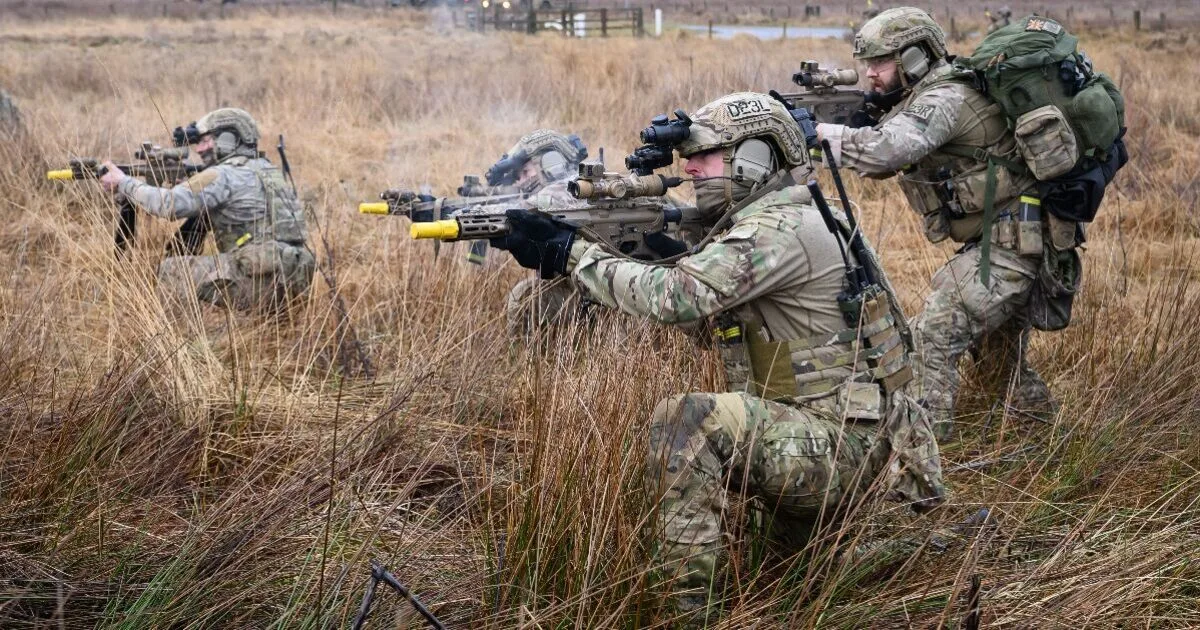
Former Commander Warns British Army Could Only 'Seize a Small Market Town'
British Army Could Only 'Seize a Small Market Town'

General Sir Richard Barrons, a former top military commander, has delivered a devastating assessment of the British Armed Forces, stating they are so depleted they could only "seize a small market town on a good day". This warning comes amid escalating concerns over the UK's preparedness for the ongoing war in the Middle East and its ability to defend itself effectively.

Severe Limitations in Military Capability

General Barrons, who contributed to a major government defence review last year, explained that none of the UK's military services are currently capable of undertaking "anything substantial". He emphasised that the Armed Forces, due to their reduced size and limited sophistication, can only make a very small contribution to operations led by the United States or NATO. "What it cannot do is anything substantial", he told the BBC, painting a grim picture of the nation's defence posture.

Failed Commitments to NATO

The former commander highlighted that the UK has pledged to provide NATO with a strategic reserve corps of 30,000 to 50,000 troops, ready for rapid deployment across the alliance. However, he starkly noted that "the army has not got the equipment or the training or the support to get anywhere close to delivering that yet". This admission raises serious questions about the UK's reliability as a NATO partner and its strategic military planning.

Wide Pickt banner — collaborative shopping lists app for Telegram, phone mockup with grocery list

Expert Agreement on Critical Shortfalls

Jack Watling, a senior research fellow for land warfare at the Royal United Services Institute (RUSI), supported General Barrons' brutal assessment. He provided a chilling comparison, noting that Ukrainian forces suffered 10,000 casualties defending the small market town of Bakhmut—a number that would nearly equal the entire infantry force of the British military. Watling also warned that the UK is critically short of artillery, having donated significant amounts to Ukraine, further weakening its own defensive capabilities.

Geopolitical Threats and Domestic Political Tensions

This military critique emerges against a backdrop of heightened geopolitical tensions. Israel recently warned that Iranian missiles pose a direct threat to European cities, including London, following Iran's unsuccessful ballistic missile attacks on the UK-US Diego Garcia military base. Domestically, Prime Minister Sir Keir Starmer faces accusations of "complacency" regarding the UK's lack of preparedness for the Middle East conflict.

Parliamentary Scrutiny and Defence Spending Debates

During a tense appearance before the Commons liaison committee, Sir Keir clashed with MPs from both Labour and Tory benches over claims that the UK is already at war. Veteran Tory MP Sir Bernard Jenkin criticised the government for a "lack of war-fighting mentality" and accused it of "enormous complacency" in defence decision-making. In response, Sir Keir defended the government's commitment to increasing defence spending to 2.5 percent, a move he argued was neglected by the previous administration.

Operational Failures in the Mediterranean

The questions surrounding UK preparedness have intensified since Iran launched drone attacks on Cyprus, with one striking the UK base RAF Akrotiri at the conflict's outset. While the destroyer HMS Dragon was eventually deployed, it required six days of hurried preparations before setting sail, and no other UK naval assets were in the region. This delay proved embarrassing, as Greek and French forces were able to deploy naval assets to defend Cyprus more swiftly than the UK.

The combination of expert warnings, geopolitical threats, and operational shortcomings underscores a critical moment for UK defence policy, with calls for urgent action to address the military's depleted state.

Pickt after-article banner — collaborative shopping lists app with family illustration




