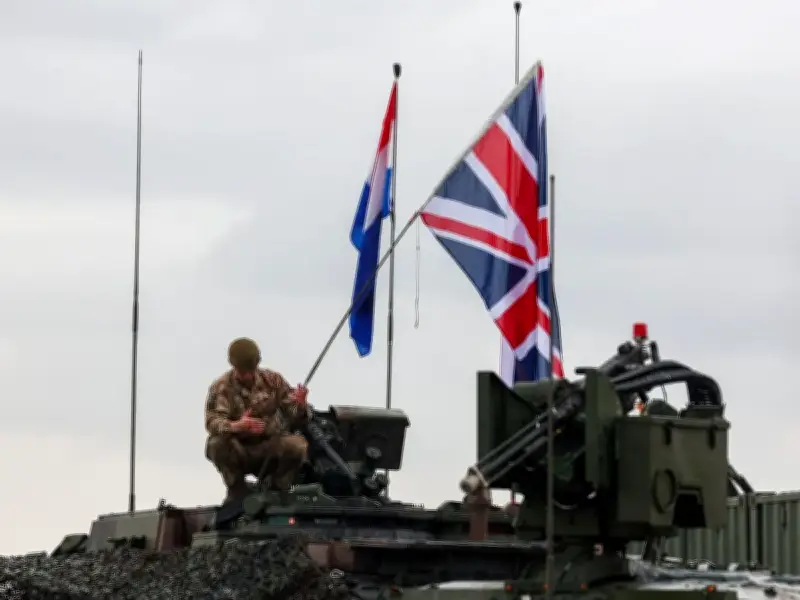
The UK is steadily preparing for potential conflict, with recent measures including housing RAF Typhoon jets in protective hangars, contacting around 100,000 reservists, and announcing an £8 billion submarine investment. The government has also launched a public campaign advising people to stockpile supplies.
For months, the government has hinted that society must face the possibility that decades of relative peace are over. It is treading a line between alarm and putting the public on notice that a storm is coming and the country needs to prepare for it.
Since the Second World War, UK troops have fought in dozens of armed conflicts, but citizens have been largely protected from them. Terror attacks on UK streets became the aftermath of wars in Iraq and Afghanistan, the most horrific being the July 7 2005 bomb blasts in London. That al-Qaeda backed atrocity killed 52, injured more than 700, and many more followed as Islamic State became the major threat.
Escalating Threats and Public Warnings
Britain became almost used to the occasional terror attack, no matter how horrific, and calmly got on with business as usual. But Russian President Vladimir Putin's full-scale invasion of Ukraine in 2022 once more brought military aggression to the UK's near-doorstep. US President Donald Trump's ill-planned war on Iran has also sent the global risk of terror and a wider war in the Middle East soaring.
Ask any senior military person or an expert in the field of intelligence and they all say the same thing - 'we're already at war, it just looks different.'
Fighter Jet Alert and Stockpiling Advice
In September, a series of incidents such as the arrests of Iran-linked suspects near RAF Fairford, in Gloucestershire, brought the potential terror threat from a hostile state such as Iran out into the open. The US has now ended decades of using the UK to store heavy B1 Lancer bombers to move them elsewhere in the face of such a potential threat.
In October, the UK Government launched the Be Ready campaign, asking people to collect enough supplies of food and water for three days, plus storing batteries. This puts the public on notice that there could be food chain disruptions, infrastructure being damaged such as the water supply or electricity. It warns of a threat from severe weather, cyber-attacks, technological failures, and hostile state threats as reasons for improving household resilience.
Warnings to Businesses and RAF Protection
In November, in the most dramatic warning since the Cold War, MI5's National Protective Security Authority warned businesses linked to helping Ukraine that Russia could target them and their employees. It warned staff should adopt counter-surveillance techniques, saying: "Individuals can be targets as well as organisations."
Within the past few days, RAF chiefs instructed their engineers to house Typhoon attack jets overnight in protective hangars in case of an attack from drones, amid threats from both Iran and Ukraine. US Air Force chiefs stepped up security arrangements by beginning to evacuate warplanes from RAF Mildenhall.
Reservist Letters and Submarine Investment
Around 100,000 former members of Britain's Armed Forces have been sent letters by the Ministry of Defence as the Government takes unprecedented steps to prepare for a potential conflict. The letters, sent to veterans across the Army, Royal Navy and RAF, ask them to update their contact details and provide information about their current employment and skills.
UK defence secretary Wes Streeting said the UK's submarines will spend less time undergoing maintenance and more time at sea under an £8 billion investment aimed at bolstering Britain's nuclear deterrent and warfighting readiness. All of the UK's submarines are nuclear-powered, including the Vanguard-class nuclear deterrent subs and the Astute-class conventionally-armed vessels.
Streeting said what he expected to be "the single biggest procurement decision of this Parliament" will see submarine maintenance and repair facilities upgraded, with dry dock yards to run around the clock. Calls to accelerate submarine maintenance have intensified after HMS Vengeance, one of four submarines that carry Britain's Trident nuclear missiles, earlier this month concluded a record seven-month deployment.