Big Bend Border Wall Plans: Confusion and Opposition Persist
Big Bend Border Wall Plans: Confusion and Opposition

Plans for a border wall in the Big Bend region of West Texas have been marked by shifting, unannounced changes and have sparked widespread opposition. Since news first surfaced late last year that border walls could be built for the first time in this remote area, the story has been characterized by few clearly communicated details from the Trump administration.

Will there be a border wall in the Big Bend region?

Yes, according to U.S. Customs and Border Protection’s (CBP) latest plans. Physical barriers, in the form of 30-foot-high steel bollard walls, are planned for a 175-mile stretch of the U.S.-Mexico border in Hudspeth, Jeff Davis, and Presidio counties. This plan is broken into three projects: Big Bend 1 (from Sierra Blanca to near the Hudspeth-Jeff Davis county line), Big Bend 2 (from Ruidosa to near Madera Canyon Campgrounds in Big Bend Ranch State Park), and Big Bend 3 (from the county line to Ruidosa). Federal contracts were awarded in March, with Barnard Construction receiving $1 billion for Big Bend 1 and $960.4 million for Big Bend 3, and Fisher Sand and Gravel receiving $1.2 billion for Big Bend 2. In late April, a $4.4 million contract was awarded to Tierra Right of Way Services for environmental and cultural monitoring on Big Bend 3. CBP says the timeline for completion is sometime in 2027. Landowners began receiving letters from the U.S. Army Corps of Engineers in February, and the public comment period for this section closed on May 22.

Will there be a wall in Big Bend National Park?

No, according to CBP’s latest plans. Instead, the park will receive a combination of border vehicle barriers, surveillance technology, and patrol roads under a project called Big Bend 4. This stretches from near Madera Canyon Campgrounds along the Rio Grande across much of the national park to the Lower Canyons east of the park. Last week, DHS awarded a $1.7 billion contract to an Albuquerque construction firm for this project. Although a federal website lists it as a border wall contract, CBP denies it is for a physical wall. Anti-wall advocates remain skeptical.

Wide Pickt banner — collaborative shopping lists app for Telegram, phone mockup with grocery list

What are the latest details on national park work?

Brewster County Judge Greg Henington, whose county contains the park, met with CBP representatives last week. He learned that CBP plans to improve (but not pave) dirt roads like River Road and Black Gap Road, improve some existing paved roads, and install concrete vehicle barriers at spots like Lajitas, Rio Grande Village, and La Linda. CBP also plans to use cameras and sensors with infrared technology to respect the area’s dark sky designation, though Henington said they were vague on electronic surveillance details.

Could the plans still change?

Yes. Throughout recent months, CBP’s plans have changed multiple times without formal announcements. Changes have often only been noticed by local residents, advocates, and news outlets monitoring the agency’s Smart Wall map, which even disappeared for several weeks from CBP’s website.

When could construction begin?

It is hard to say. Local officials were told in March that construction could begin as soon as June 1, but CBP has not provided an updated timeline. Contractors are already mobilizing: one federal contractor began moving heavy equipment to the Rio Grande earlier this month for the Hudspeth-Jeff Davis-Presidio wall project, after a dustup over unauthorized road work in April. Plans are underway for a 500-person man camp for workers south of Van Horn in Lobo, though the local groundwater district is still considering whether to allow a commercial well for the project. The U.S. Army Corps of Engineers is in active negotiations with landowners, though it is unclear how many have authorized construction or will face eminent domain proceedings.

Pickt after-article banner — collaborative shopping lists app with family illustration

How are people reacting?

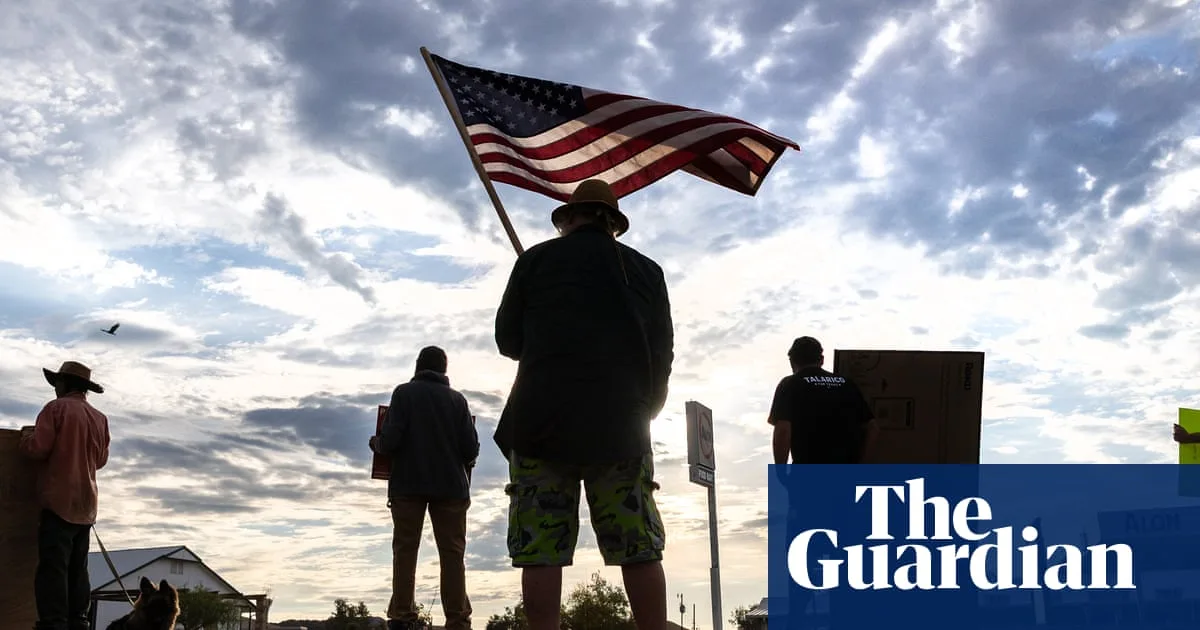
CBP’s plans have sparked widespread bipartisan opposition. Five border county sheriffs spoke out, and more than 2,000 people protested at the Texas Capitol in April. Seven former superintendents of Big Bend National Park sent a letter to Homeland Security Secretary Markwayne Mullin urging him not to waive federal environmental laws, arguing that even vehicle barriers and roads would be highly destructive. Concerns include impacts on wildlife, dark skies, tourism, and flooding. Local officials, initially kept in the dark, sent a letter requesting more collaboration. They now meet with CBP every couple of weeks. Judge Henington said, “None of this makes any of us happy, but I think it’s a positive that at least they seem to be moving away from this secret squirrel stuff and being more open about it.” State officials have been mostly quiet, while area Democrats Sen. Cesar Blanco and Rep. Eddie Morales oppose the plan. The Center for Biological Diversity, a church preservation group, and a local river guide have sued DHS for bypassing environmental laws.

Does the region need a wall?

This is at the heart of the debate. The Border Patrol’s Big Bend Sector, spanning 510 miles, has historically been one of the least-trafficked areas. Apprehensions of illegal crossings fell 74% from 2023 to 2025, and autonomous surveillance towers have cut traffic significantly. Local sheriffs believe technology can patrol the border without extensive infrastructure. However, President Trump has long sought a physical wall across the entire border. On the first day of his second term in January 2025, he signed an executive order directing the Defense and Homeland Security secretaries to take all appropriate action to deploy and construct barriers. The One Big Beautiful Bill Act, approved by Congress in July 2025, included $46.5 billion for border wall construction.




