Former Army Commanders Decry Public Funds Targeting SAS Veterans
Two distinguished former Army commanders have launched a scathing attack on what they describe as the systematic misuse of public money to 'punish' SAS veterans who served with distinction during the Northern Ireland Troubles. General Sir Peter Wall, the former head of the British Army, and General Sir Nick Parker, former Commander Land Forces, have jointly condemned what they term 'meritless challenges' funded by taxpayers against military personnel.
Legal Challenge Dismissed in Belfast Court
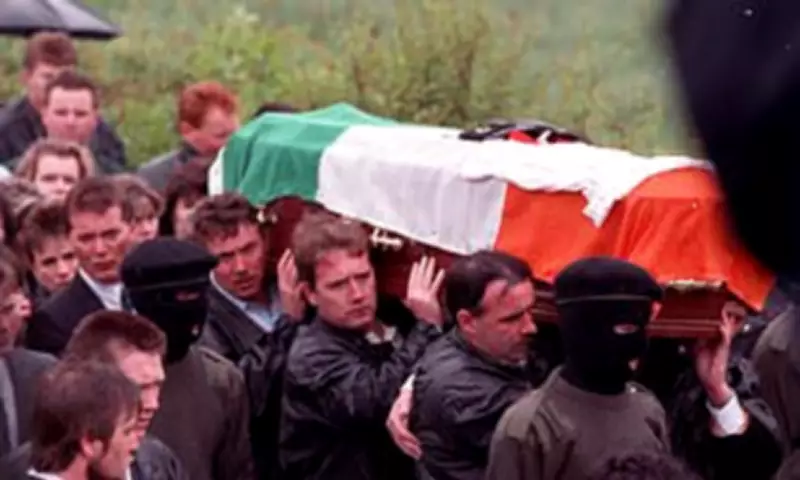
The commanders' intervention follows a significant judicial decision in Belfast, where a judge dismissed a second appeal against coroner's findings regarding a 1991 SAS operation in Cloagh, County Tyrone. The court upheld that SAS soldiers were fully justified in their use of lethal force when they confronted and killed three IRA members nearly thirty-five years ago.
General Wall and General Parker issued a powerful joint statement declaring: 'Public money is being misused to fund meritless challenges, wasting precious judicial time and dragging veterans and their families through years of unnecessary distress.' They have urgently called upon the government to review its Troubles legislation, which they argue has removed crucial protections for Northern Ireland veterans originally established under the Conservative government's Legacy Act.

The 1991 Operation Details
The military operation in question occurred on June 3, 1991, when SAS soldiers, acting on intelligence that members of the IRA's East Tyrone brigade planned to murder a former member of the Loyalist Ulster Defence Regiment, set up an ambush at a public car park in Cloagh. One soldier had disguised himself as the intended target and waited for the paramilitaries to arrive.
When one of the IRA volunteers opened the passenger door of their vehicle with a rifle aimed, the SAS team opened fire, killing three paramilitaries: Peter Ryan, Tony Doris, and Lawrence McNally. A subsequent judicial ruling described Doris specifically as being part of an 'active service unit intent on murder.'
Legal Challenge and Judicial Response
Roisin Nugent, daughter of Tony Doris and cousin of current Northern Ireland First Minister Michelle O'Neill, received legal aid to challenge the coroner's 2024 verdict that lethal force was justified. Her judicial review application focused specifically on one veteran, known as Soldier B, now in his sixties, who fired eight shots toward her father within two seconds.
Ms. Nugent argued that Soldier B should have shouted a warning or paused between shots to assess necessity. However, in a comprehensive judgment last year, Mr. Justice McAlinden dismissed her claims as 'utterly divorced from the reality of the circumstances and challenges faced by Soldier B.'
The judge posed a rhetorical question: 'Faced with a vehicle containing three members of an IRA active service unit intent on murder, what was Soldier B to do? Should he have fired one shot in the hope that this would have frightened the occupants of the vehicle into surrendering?' He concluded that the only realistic response was to neutralize the immediate threat, which Soldier B did in a 'restrained and proportionate manner.'
Remarkably, Justice McAlinden expressed surprise that legal aid funding was made available for what he termed a 'ludicrous' challenge. Despite this strong judicial language, Ms. Nugent again utilized legal aid to take her case to Northern Ireland's Court of Appeal.
Appeal Court Ruling and Funding Questions
In a summary released on Thursday, Lady Chief Justice Siobhan Keegan again refused Ms. Nugent's request for judicial review, stating that Soldier B 'honestly believed' the IRA unit posed an 'immediate threat to life' and that his actions represented a 'proportionate response in a fast-moving and lethal situation.'
Significantly, Lady Chief Justice Keegan questioned whether the challenge represented an 'effective use of public funds,' noting that 'to us the challenge really amounted to a disagreement with the coroner's findings.'

Broader Implications and Political Response
Sir David Davis, a former SAS reservist, responded to the ruling by stating: 'This is large amounts of public money being misspent masquerading as justice, whilst in truth it promotes serial injustice.' He described the Labour government's proposed Troubles legislation as 'a disgrace and a scandal.'
A joint statement from Special Forces associations argued that the judicial finding 'exposes how attempts to deal with the legacy of the Troubles are being exploited at public expense to punish and persecute veterans and to peddle a false narrative.'
A Ministry of Defence spokesman welcomed the Court of Appeal's judgment dismissing the Nugent appeal, acknowledging that 'this case is part of the complex legacy of the Troubles, which affected so many veterans, families, and communities.'
The legal aid system in Northern Ireland operates under devolved authority from central government, with the Northern Ireland Department of Justice receiving assistance from Westminster funding. This case highlights ongoing tensions between historical accountability, veterans' protections, and appropriate use of public resources in addressing Northern Ireland's troubled past.