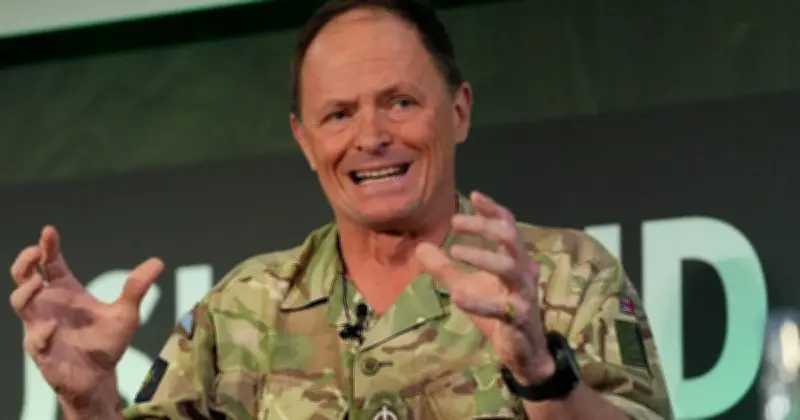
The head of the British Army has warned that political leaders are about to call on ordinary Britons to prepare for war. In an address to soldiers at Catterick Garrison in North Yorkshire, General Sir Roly Walker predicted that “very soon” a “frank conversation” would be held between politicians and the population about “just what is going on”.
Call for citizens to consent to sacrifices
Speaking to some 700 soldiers, Sir Roly said political leaders would explain that citizens “have got to consent to sacrifices to prioritise defence and security”. He added that citizens, to whom the military is “not necessarily at the front of their mind”, need to “play a part in the defence and security of this country”.
“They need to understand what we do for them. They need to consent to allow us to do that, which means sacrifices by them,” he said. “And ultimately we are going to need them to back us, to back you to do the one thing that you do that nobody else gets to do and that is to take the fight to the enemy.”
Global tensions and Russian aggression
Sir Roly’s comments come as Russian acts of aggression have ramped up against the UK over its continued support for Ukraine, which is fighting Moscow’s four-year-long invasion. The Islamic regime of Iran has also become emboldened in recent months, openly threatening RAF bases on UK soil in retaliation for American warplanes using them as staging posts for US President Donald Trump’s war in the Middle East.
The general added: “As anyone who is studying the trajectory of world affairs will realise, there is extreme jeopardy in the world. And the business of soldiering is coming back into the nation’s psyche.”
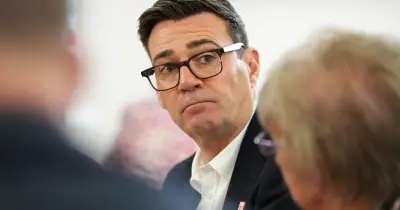
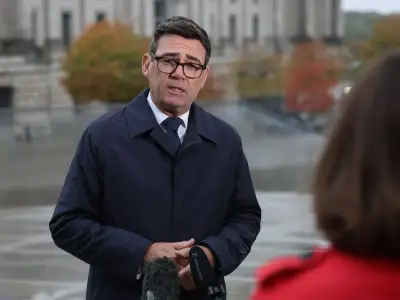
In the coming weeks, Prime Minister Andy Burnham is expected to launch a new campaign to encourage British households to be better prepared for any crisis, including armed conflict.
Military and security chiefs echo warnings
Sir Roly is not alone in his assessment. In June, Chief of Defence Staff Sir Richard Kighton told BBC Radio 4’s Today Programme “this is the most dangerous period that I have known”. He added that Russia has been “probing, challenging, testing our defences”, and is “raising the stakes and risks crossing a line”.
MI5’s chief Sir Ken McCallum, in his annual address in London on Tuesday, called Russia “aggressor number one” and revealed more than 50 people have been arrested over Iran-linked plots against the UK in the past year. He said: “My message to the British public is this: you have a stake in our national resilience. You too have a vital role to play. It might be quiet. It might be life-saving. It all counts.”
“Our adversaries are trying to mess with us, undermine us, divide us. We can choose not to let them.” He added that the nation needs to be “clear-eyed about the more contested world we now live in” and that people should expect to hear more from government in the coming months on how to be more resilient.
Defence secretary meets US counterpart
With relations between London and Washington strained, British Defence Secretary Wes Streeting met US counterpart Pete Hegseth at the Pentagon on Thursday. Mr Streeting wrote on X that “the gravest dangers of the 20th century are returning”. Mr Hegseth is said to have assured the UK team that the US-backed Starlink communication service used by Ukraine for early warning of Russian missile attacks had been restored to full power after an apparent outage.
Speaking to the BBC, Mr Streeting said: “I am reassured, and was reassured directly by Secretary Hegseth, that the service has been restored.”
Conservative former defence secretary Sir Ben Wallace earlier told the broadcaster he believed Mr Trump “wants Russia to win” and that “all his actions show he’s much more supportive of Russia than Ukraine, and that should worry us all”. Asked about Sir Ben’s intervention, Mr Streeting said: “My reflection on the meeting I’ve just had with Secretary Hegseth is that this is a fight between freedom and self-determination and democracy for Ukraine, and Russian tyranny… America ultimately comes down on the side of freedom. I think there’s no doubt that President Trump wants to see an end to this war and wants to play a role in negotiating a peace.”
Russian provocations and UK response
The Kremlin has been increasingly warlike towards the UK, with Russian warships probing the English Channel having to be repeatedly escorted by the Royal Navy. In June, the Russian frigate Admiral Grigorovich fired ‘warning shots’ at a UK-registered civilian yacht 23 miles off the Isle of Wight. In April, then Defence Secretary John Healey revealed three Russian submarines conducted a “covert” operation over vital communication cables and pipelines in waters north of the UK. A month later, Russian warplanes “repeatedly and dangerously” intercepted an unarmed RAF spy plane over the Black Sea.
Moscow has also been suspected of conducting cyber warfare against Britain. In response, Downing Street agreed this week to send another shipment of Storm Shadow missiles to Kyiv to aid in the Ukrainian defence against Russia.
Iran has also been accused of trying to hit UK military sites, including a suspected plot to attack RAF Fairford in Gloucestershire in September, where US warplanes operating in the American war with Iran are based. The PM previously said the presumed terror plot was “almost certainly” directed by Iran.