Youth Services on the Brink: Knowsley's Struggle Amid Funding Crisis
Youth services in Knowsley, a borough on the outskirts of Liverpool, are walking a financial tightrope as they battle to keep their doors open for young people. With almost six decades of operation, institutions like The Boyzee at Halewood Youth in Community Centre now face an uncertain future due to severe funding shortages.
"We're on a Cliff Edge": The Dire Reality of Youth Provision
"I feel like I'm failing because I can't reach everyone," said Toni Dodd, centre manager at Karma in the Community, a youth service based in Huyton. "I'll go over and get kids hanging outside the shops, bring them in, but it's who am I not reaching? It just takes one thing and they're on that track into crime, into drugs. There are kids going into school on ketamine. I do all I can but it's so hard to keep it open and running, and you can't meet the demand there is."
Research conducted by Social Investment Business and the University of Leeds reveals that Knowsley has the highest number of youth work "black holes" among all local authorities in England. These are areas characterised by significant deprivation and antisocial behaviour, yet they suffer from few or no youth services.

Educational Challenges Compound the Crisis
The borough's educational landscape presents additional hurdles. Knowsley offers no A-level provision, forcing students to travel to Liverpool or neighbouring council areas to continue their studies. Although there has been some improvement in recent years, Knowsley still records the lowest GCSE pass rate in the UK. In the 2023-24 academic year, only 23% of students achieved grade 5 or above in English and mathematics.
Dodd emphasises that grassroots services like Karma in the Community are essential for keeping young people on track. The centre reaches hundreds of children annually through youth clubs, camping trips, and highly sought-after kickboxing classes that maintain waiting lists due to overwhelming demand.
Personal Testimonies Highlight the Impact
Nathan Orr, 19, began attending the centre at age eight and now works as a kickboxing coach, travelling internationally with his skills. He credits the service with saving him, teaching discipline and respect, and providing a sense of belonging.
"I compare myself to other lads my age, I think there's a lot of people doing the wrong things because there's just not much going on in communities," Orr explained. "Youth clubs used to be local, they used to be on every estate and you were never more than a 10-minute walk away. Now it's too hard for people to get to them."
Orr described schools as challenging environments rife with bullying and conflicts. He also highlighted the difficulties of navigating post-school life, particularly after his local sixth form closed, forcing him to attend college elsewhere. "It puts people off, I think," he added.
Funding Cuts and Community Consequences
Like many areas across the country, Knowsley has seen numerous youth clubs close as funding has been slashed. According to SIB, neighbourhoods around Kirkby are among the worst affected, effectively becoming youth work black holes.
The impact on the community is stark. Merseyside police frequently implement "dispersal zones" in response to incidents involving criminal damage, threats, drug use, and dangerous driving by youths. Officers recently issued a plea to parents to address their teenagers' behaviour.
Knowsley council received government funding last year to help rebuild local youth service leadership. SIB's research underscores the necessity of directing resources to areas with the highest needs.
The Boyzee: A Legacy Under Threat
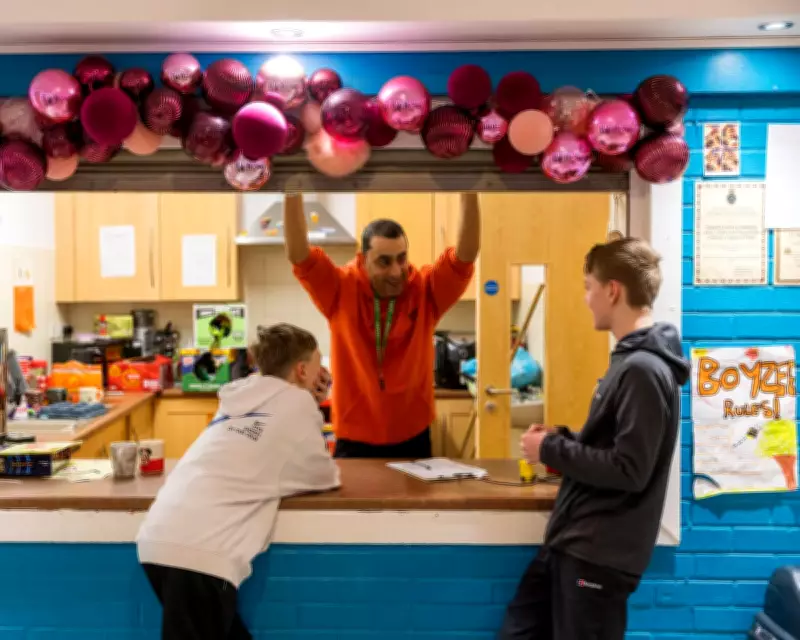
The Boyzee at Halewood Youth in Community Centre, which began as a boys' club in 1968 and now welcomes all young people, has weathered numerous challenges. In 2018, its two senior staff members halved their salaries to keep operations running. A recent Youth Investment Fund grant, administered via SIB, facilitated much-needed renovations. Previously, the building was so dilapidated that staff had to rush in during rainstorms to manage leaks.

Despite these improvements, daily running costs remain a struggle. "We're on the verge of going off a cliff because of the lack of revenue funding," warned Mark Nelson, operations manager and senior youth worker. "We've got funding until the end of March, but if we don't get more, I'd say we've got a maximum of about four months before we close."
Nelson stressed that while capital investment has been beneficial, a sustained solution is crucial. "A short sharp fix is not what we need, we need something sustained," he asserted.
Overwhelming Demand and Dedicated Staff
The centre's popularity is evident, with bustling activities on a Tuesday evening including football, exercise classes, crafts, pool, and socialising. "There are severe levels of social deprivation around here, and the issues which come with that, like antisocial behaviour," Nelson noted. "But we're the only dedicated youth provision in the area – and I'm not talking sports centres and football clubs which are great, but there's often costs involved."
Dawn Corrie, a senior youth worker, reflected on the decline of local clubs. "There used to be more clubs around, and we have watched them go under over the years," she said. Many young people travel from neighbouring towns due to the lack of nearby options.
Corrie expressed frustration over the financial strain. "I get angry because why are we staying awake all night and stressing, just to pay our wages basically, which is not a great deal. Jesus Christ, I could be working here for 60 hours a week and only get paid for 30. I'm knocking on doors for people to come in and do a couple of hours, just so we can open up to the kids."