

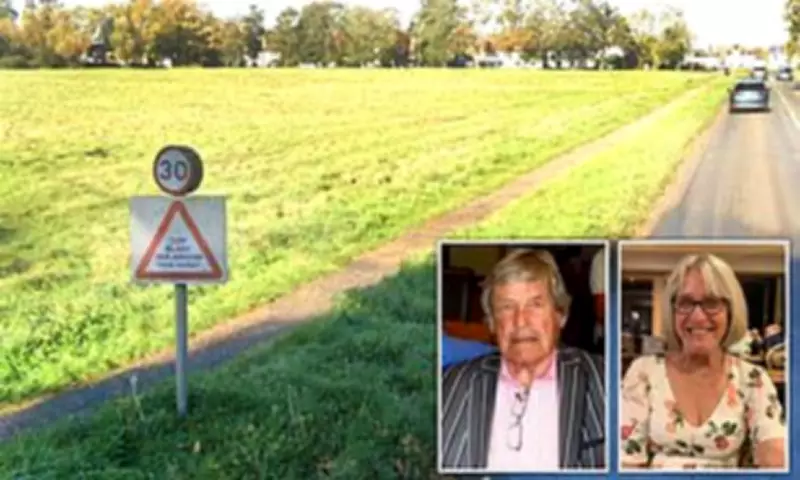
Norfolk Village Deeply Divided Over Controversial Speed Awareness Signs
A tranquil Norfolk village has become the centre of a bitter dispute over "light-hearted" speed awareness signs that were funded by a retired businessman who killed his partner by driving too fast around a dangerous bend. Raymond Bayfield, 83, was behind the wheel of a hired Ford Fiesta carrying Carole Jermy, 67, in September 2023 when he failed to negotiate a tight curve, left the roadway, and careered into a ditch.
Tragic Crash and Legal Consequences
The vehicle ended up lying on its passenger side, and Ms Jermy sustained catastrophic injuries that proved fatal the following day in hospital. Bayfield appeared at Norwich Crown Court last month with a new girlfriend, where he received an eight-month suspended jail sentence after pleading guilty to causing death by careless or inconsiderate driving. The court heard how the couple had maintained an on-and-off relationship for seventeen years and were travelling to a dog grooming appointment with Ms Jermy's pet, Dudley, when the tragedy unfolded.
Family's Painful Request and Council's Refusal
A heated row has now erupted over five distinctive signs positioned around Old Buckenham, the picturesque Norfolk village where the former company director resides. Ms Jermy's grieving family formally requested the removal of these signs, arguing they serve as constant, painful reminders of their loss. However, the parish council has steadfastly refused to take them down.

Kelly Radford, 47, Ms Jermy's daughter, contacted the council to explain that she must pass the signs regularly while driving to visit her mother's grave at the village's historic St Nicholas Church, which features a rare 13th-century tower. Her sister also encounters the distressing reminders daily while taking her children to and from the local village school.
Dialect Signs and Community Debate
Written in distinctive Norfolk dialect—a linguistic tradition Bayfield actively promotes—the signs display messages within red triangles such as "Watch Yar Speed," "Slew Yer Down," and "Cor Blast Yew Argon Tew Fast." In her heartfelt letter to the council, Ms Radford acknowledged the intended humour but pleaded for their removal given the circumstances. Councillors debated the matter privately, citing the need for a "respectful discussion," but ultimately rejected the family's appeal.
The council stated they had consulted with the community speed watch group and determined the signs remain "an effective tool in making drivers aware of their speed." A spokesman emphasised that while they fully sympathise with the deeply sensitive situation regarding the signs' funding, they are viewed as a necessary public utility. The council must balance individual concerns with the broader safety requirements of the entire community.
Villagers Express Strongly Divided Opinions
Ms Radford criticised the decision vehemently, suggesting the signs would be "taken down in an instant" if a parish councillor's own family member had been killed by Bayfield. She has found support among some villagers who argue the signs actually distract drivers as they pass through. John Walters, 68, whose professional background involved road regulations for over two decades, noted that when drivers must pause to read signs, it creates a problem. He advocated for familiar, instantly recognisable signage instead.
Sarah Hunt, 82, added that the signs could be distracting and might even come across as "rude" to some. However, other residents defended the signs. Leslie Passfield, 64, argued they "give you a feel of the local community" and contribute to village character. He pointed out that if distraction is the concern, then numerous other village notices for events like bingo nights should also be removed.
Another local resident, who wished to remain anonymous, expressed sympathy for the family but stressed that speeding has been a persistent issue in the area for years. They believe the signs have made a tangible difference and removing them could potentially lead to further accidents.

Legal and Technical Details of the Fatal Incident
Villages are permitted to install their own speed awareness signs, provided they are formally purchased and managed by parish councils with consent from the local highways authority. Bayfield is understood to have been involved in both funding and maintaining these particular signs. During sentencing, the court heard that Bayfield was driving at an estimated 47 mph—technically within the speed limit at that location in Besthorpe, Norfolk—but experts testified this was excessive for the specific bend.
Prosecutor Sarah Fiddy explained that Bayfield failed to negotiate the left-hand bend at the junction with School Lane, causing the vehicle to leave the road and enter a ditch. The post-mortem examination revealed Ms Jermy died from multiple injuries, particularly to the chest, with no defects found in the road itself. An investigator reported being unable to complete a drive above 45 mph safely on that bend, describing it as a blind curve where higher speeds are hazardous.
Aftermath and Lingering Questions
Bayfield claimed during proceedings that Ms Jermy's dog had been a distraction, although witnesses confirmed the animal was secured in the back of the car. His barrister, Tim Pole, told magistrates his client apologised for the "sorrow and pain" caused, stating this tragedy occupies his thoughts constantly. District Judge Matthew Bone noted Bayfield had failed to provide a clear account of events and banned him from driving for three years, requiring an extended test before any return to the road.
Following the sentencing, Ms Jermy's family criticised Bayfield, noting that the apology delivered through his lawyer was the first expression of contrition they had heard. Ms Radford added that the family still lacks closure, remarking, "We still do not know the circumstances of what happened. There were two people in that accident that knew what happened. One of them is not here to tell us and the other one is claiming that he can't remember." The signs, which have been in place for several years, now stand as a focal point of community division and unresolved grief.





