

Dramatic Five-Fold Increase in Traveller Caravans Recorded Across England
Official government statistics have revealed a startling five-fold surge in the number of Traveller caravans across multiple regions of England over the past two years. This substantial expansion shows no signs of slowing, with local authorities reporting a continuous stream of planning applications and approvals for new sites despite significant resident opposition.
Council Areas With The Most Significant Rises
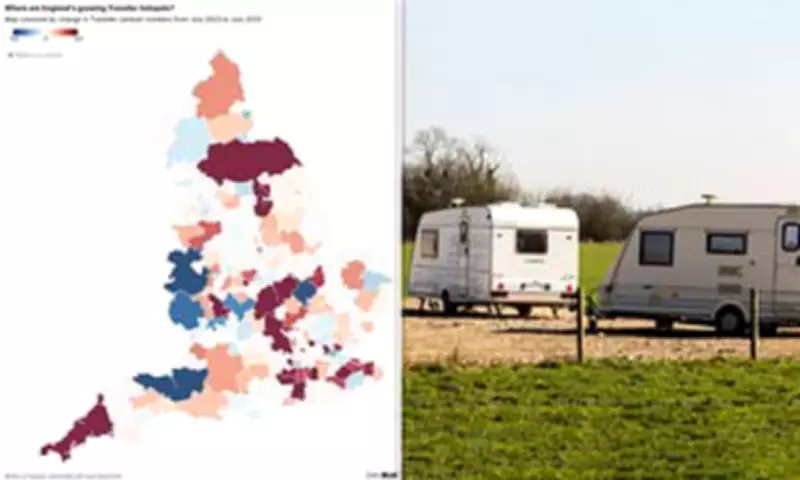
Kirklees Council in West Yorkshire experienced the highest percentage increase, with caravan numbers skyrocketing by 136 percent from just nine in July 2023 to forty-seven by July 2025. However, Buckinghamshire Council recorded the most substantial numerical growth, accommodating an additional 560 caravans during the same period – representing a sixty percent rise.
Following Buckinghamshire, Maidstone witnessed caravan numbers jump from 901 to 1,237, while North Northamptonshire completed the top three with an increase from 232 to 414 caravans. Tandridge Council also reported a notable rise of 110 additional caravans.

Council Perspectives and Emerging Concerns
Peter Strachan of Buckinghamshire Council attributed the dramatic increase to "natural population growth within families already living on established sites" combined with "the creation of additional permitted sites." This explanation highlights how existing communities are expanding alongside new developments.
However, Catherine Sayer, leader of Tandridge Council, expressed different concerns, stating: "We have evidence that not all the caravans are being used by gypsies and travellers." She suggested some are being rented to undocumented individuals, describing this as a "growing problem." Ms. Sayer detailed how some groups prepare sites during weekends when council workers are absent, removing hardstanding surfaces to accommodate static caravans.
Regional Variations and National Context
While many areas have seen substantial growth, Somerset has experienced an exodus of the travelling community, with approximately 391 fewer caravans now than in 2023. These figures, compiled by the Ministry of Housing, Communities and Local Government, encompass both authorised permanent sites and temporary setups on agricultural land or council-owned spaces like parks and cricket grounds.
The data follows recent mapping of all 276 public Traveller sites across England, revealing the geographical spread of these communities. Nearly eighty percent of Travellers and Gypsies actually reside in conventional brick-and-mortar accommodation, challenging common perceptions.
Planning Disputes and Political Responses
Unauthorised camps have emerged in protected green belts and national parks, with terrified locals describing themselves as "powerless" to act against what they see as shameless flouting of planning regulations. Some residents fear reprisals for speaking out against these developments.
High-profile cases have seen Travellers purchasing land in desirable areas, laying tarmac and creating pitches, then seeking retrospective planning permission. This forces local authorities into lengthy, costly removal processes for already-developed sites. One notorious incident near Aylesbury, Buckinghamshire, saw travellers accused of "holding a village to ransom" after purchasing conservation land for approximately £15,000, then demanding £600,000 to leave.
Labour has faced accusations of a "soft-touch" approach, with ministers under pressure to implement stricter measures against illegal sites that some claim are scarring the countryside. Travellers counter that they're forced to break planning rules due to a national shortage of publicly provided sites.
Broader Social Implications
The travelling community faces significant challenges within the justice system. Despite comprising just 0.1-0.5 percent of the general population, Travellers account for approximately five percent of prisoners in England and Wales according to the Prisoners' Education Trust. Gypsy and Traveller children are similarly over-represented in youth justice systems.

The term "Gypsies and Travellers" encompasses diverse groups including Romany Gypsies, Welsh Gypsies, Scottish Gypsy Travellers and Irish Travellers, each with distinct histories, cultures and beliefs. Local authorities bear responsibility for providing suitable accommodation for these communities, a challenge that has become increasingly complex amid the current surge.
Council representatives offered varying explanations for the increases. A North Northamptonshire Council spokesman noted there was "no clear explanation" but pointed to rising unauthorised sites. Meanwhile, a Horsham District Council spokesman emphasized that "the count is a snapshot of the position on the day that the count was undertaken," suggesting numbers may fluctuate.
As planning controversies continue and caravan numbers grow, the tension between community expansion, planning regulations, and resident concerns creates an increasingly complex landscape for local authorities across England.





