
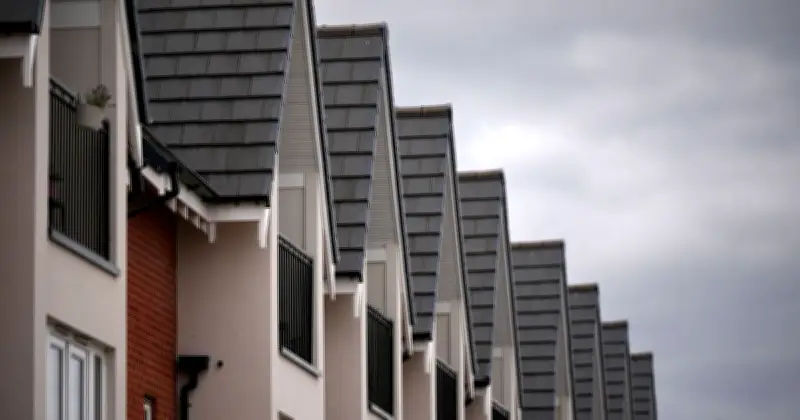
Residents in the Shropshire village of Stoke Heath have expressed outrage after 21 newly built homes, each valued at around £250,000, were allocated to accommodate approximately 83 asylum seekers and their families. The development, which locals have dubbed “Migrant Street,” has sparked claims that the original purpose of the homes was misrepresented, with many believing they were intended for affordable housing.
Community anger over broken promises
One resident told reporters: “It’s bang out of order. It doesn’t feel fair that these people will be living in shiny new homes free of charge, which hard-working local folk could never afford.” Another local, Melanie Almond, described the announcement as a shock: “It was like a bomb’s gone off and you’ve got ten minutes to get out. It was a complete shock. I found out on the internet. We couldn’t believe it.”
Emma O’Sullivan, 30, raised concerns about local infrastructure and trust in planning decisions. She said: “We were told that the new development would be social houses, which was fine, but no one moved in for a year. Now we’re told they will be used for asylum seekers and they’re not part of the social housing at all. We feel like we’ve been lied to. I’ve got three teenage girls and we’re really worried. It’s not who they are, it’s how many there are. It’ll overload the infrastructure. There are only two primary schools in the area so if they’re all families that’s going to flood the primary schools. It’s just, ‘They’re here, put up with them’.”
Political backlash and infrastructure concerns
Former serviceman John “Basil” Brockhurst criticised the allocation, arguing priority should go to struggling UK residents: “To me there’s a lot more people that need brand new housing rather than people who make out they come from far away countries.” Conservative MP Mark Pritchard described Stoke Heath as a “completely inappropriate location,” noting the village’s lack of public services. He said: “Stoke Heath is an isolated rural location with very few public services. This is the wrong location and at the wrong scale. I will fight these ill-conceived plans all the way.”
Shropshire Council has formally raised concerns with Home Secretary Shabana Mahmood, stating it is awaiting a response before deciding its next steps. A spokesperson confirmed the authority has written to express “strong concerns” about the proposal. West Mercia Police and Crime Commissioner John-Paul Campion also described the plans as “wholly inappropriate.”
Government defends policy shift
The Government has defended the policy as part of efforts to reduce the use of asylum hotels and shift accommodation into housing and disused sites. Officials say the approach is intended to cut costs and reduce reliance on hotel rooms by 2029. Latest figures show 20,885 asylum seekers were being housed in hotels as of March, with a further 72,768 placed in alternative accommodation such as Houses in Multiple Occupation and temporary camps while claims are processed.
Serco, which oversees asylum accommodation in the West Midlands, said it operates under direct instruction from the Home Office. A spokesman said: “We work under the direction of the Home Office, who decide where people are placed, based on overall national demand. The Home Office determines how many people are to be accommodated in each local authority area and instruct us accordingly.” The Home Office added: “This Government is restoring order to the system by making record levels of asylum decisions, cutting claims by 12 per cent and increasing removals of illegal migrants by 41 per cent. We are working closely with local authorities to ramp up the closure of asylum hotels across the UK. Hotel numbers have more than halved since their peak and instead we are scaling up the use of large, basic accommodation for illegal migrants to reduce community impact.”




