

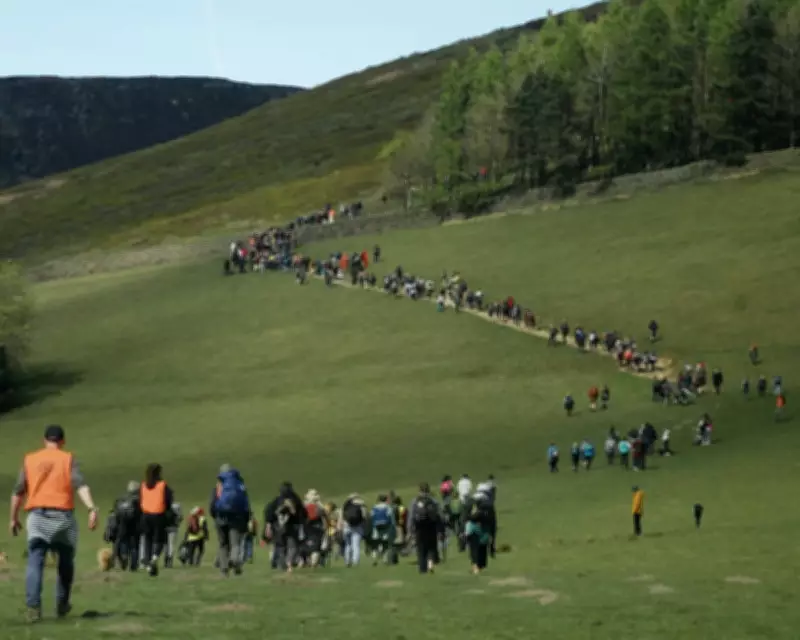
A new documentary titled Our Land highlights increasing anger and momentum for Scottish-style land access rights in England, where the public is legally allowed on just 8% of the land. The film, directed by Orban Wallace, examines the rise of the right to roam movement, which began five years ago and employs tactics reminiscent of the 1932 mass trespass on Kinder Scout in the Peak District.
Mass Trespasses and Public Engagement
The documentary follows campaigners as they organise smaller mass trespasses on private land across England, interviewing landowners from Devon to Scotland. Wallace hopes the film will foster an informed conversation, noting that currently, opposing sides are not engaging in dialogue.
Catalyst Events
Key events have accelerated the movement, including the battle to retain wild camping rights on Dartmoor. After landowners won a High Court ruling to remove campers from a 1,600-hectare estate, public fury led to mass protests and a Supreme Court decision overturning the ruling. Nick Hayes, author of The Book of Trespass, described this as unleashing a seam of energy that has built its own momentum.

Scottish Model as Inspiration
Campaigners advocate for a law similar to Scotland's Land Reform (Scotland) Act 2003, which grants responsible access to most land and inland water for walking, cycling, and camping. Similar rights exist in Sweden and Norway under Allemansrätten. Scottish landowner John Grant, featured in the film, supports the act, stating that people care for the land when they have access.
Opposition and Concerns
Not all landowners are convinced. Francis Fulford, who owns a 1,200-hectare estate in Devon, argues that access should be limited to those who pay for upkeep, citing safety and ignorance of rural ways. Farmers also express concerns about gates left open, livestock at risk, and crops disturbed.
Path Forward
Naturalist Nadia Shaikh, who moved to Scotland, believes that English public can learn responsible behaviour through education. Guy Shrubsole, land activist, notes that the last major access expansion was the Countryside and Rights of Way Act 2000 under Labour. A new law would remove arbitrary control by large landowners, as 1% own 50% of England. The government, however, does not support directly adopting the Scottish model due to differences in land use and population density. A Defra spokesperson highlighted existing initiatives like new national river walks and the King Charles III England Coast Path. Our Land is released in cinemas on 8 May.






