

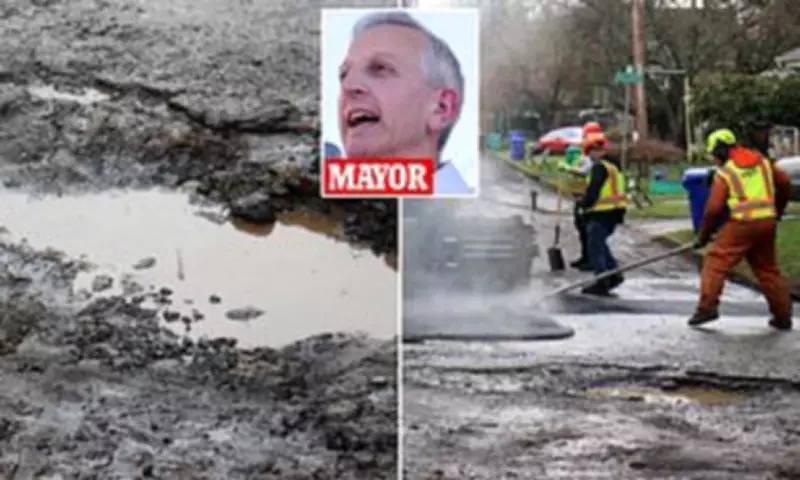
Progressive leaders in Portland are actively exploring new taxation measures as they urgently seek funds to address the city's severely damaged road infrastructure. The primary initiative, championed by Mayor Keith Wilson, involves implementing a transportation utility fee that would impose additional monthly charges on both residents and businesses. This proposal emerges despite Portland already bearing some of the heaviest tax burdens in the United States.
Proposed Fee Structure and Revenue Projections
Under the suggested plan, homeowners would be billed $12 per month, while apartment dwellers would pay $8.40 monthly. Commercial property owners would face a significantly higher fee of $61 each month. These new charges would appear directly on utility statements. City projections indicate this fee could yield up to $46.7 million annually, providing crucial resources for essential maintenance work.
Mayor's Justification and Council Support
Mayor Wilson has characterized the proposal as "part of a necessary, forward-looking conversation" designed to finance "absolutely vital" repairs, including dangerous potholes. Portland Councilwoman Olivia Clark, a Democrat, reinforced this urgency by revealing that a cyclist recently died after falling into a pothole. "We're going to pay for this one way or another," Clark told KOIN. "So I would rather get ahead of the problem."

Alarming Infrastructure Statistics
The push for increased taxation coincides with Portland's street maintenance backlog swelling to an astonishing $4.8 billion. Municipal authorities acknowledged last year that nearly two-thirds of the city's streets are in poor or very poor condition. More than half of Portland's busiest thoroughfares exist in what officials describe as "similarly decrepit conditions."
Councilwoman Clark emphasized the deteriorating situation, stating, "We have to do something. Our streets are just going to continue to deteriorate." She further noted that some neighborhoods in this Democrat-led city remain unpaved, lacking basic curbs or sidewalks. "I think the conditions speak for themselves," Clark remarked. "They're deplorable. It's a system failure."
Public Skepticism and Official Determination
Local residents have expressed reservations about the proposed fee, highlighting Portland's already substantial tax obligations. "We are a highly taxed city and we need to be thoughtful about where we're spending our money on things like this," Portland resident Ross Jackson told reporters.
Nevertheless, city officials remain steadfast that additional revenue must be secured to address the crumbling infrastructure. Mayor Wilson's office asserted that the transportation tax "could provide a stable source of funding for essential road maintenance and safety improvements," according to The Oregonian. The mayor added that thirty-one other Oregon cities already employ similar taxation models, and Portland adopting this approach would reduce dependence on federal, state, and fuel-based taxes.
Additional Revenue-Generating Proposals
Beyond the transportation utility fee, Portland lawmakers are examining other taxation mechanisms. A street damage restoration fee targeting utility companies and contractors that excavate public roads is under consideration. This model operates successfully in other progressive cities including Seattle, San Diego, and San Francisco. Councilwoman Clark estimates this fee could generate an additional $22 million annually.
"I'm absolutely appalled that our neighbors are raising more money than we are, and their streets are in better condition than ours are," Clark commented to the Willamette Week.
Another proposal involves implementing a surcharge of up to fifty cents on individual deliveries from corporations such as Amazon, DoorDash, and FedEx. This measure could produce $13.5 million per year, further increasing financial pressure on local consumers.

Portland's Existing Tax Burden
Portland already ranks among America's most heavily taxed municipalities. According to the Tax Foundation, combined state, county, and city taxes create the nation's highest corporate tax rate at just under twenty-one percent. High-income earners in Portland confront a combined top marginal rate approaching fifteen percent on their income, while small businesses navigate aggressive cumulative taxation.
Administrative Process and Transportation Bureau Warning
Residents will have opportunity to provide public feedback on the transportation utility tax proposal during a session scheduled for April 2. Barring any complications, the measure will be presented to the full Portland City Council six days later, preceding the city's budgeting process.
Portland's Bureau of Transportation issued a stark warning, stating it is "unable to meet basic needs for maintenance and safety" because revenue fails to match expenses. The agency cautioned, "If nothing changes, PBOT will have to cut its budget for the eighth consecutive year. The longer we wait to repair our transportation assets, the bigger and more expensive the problems become."





