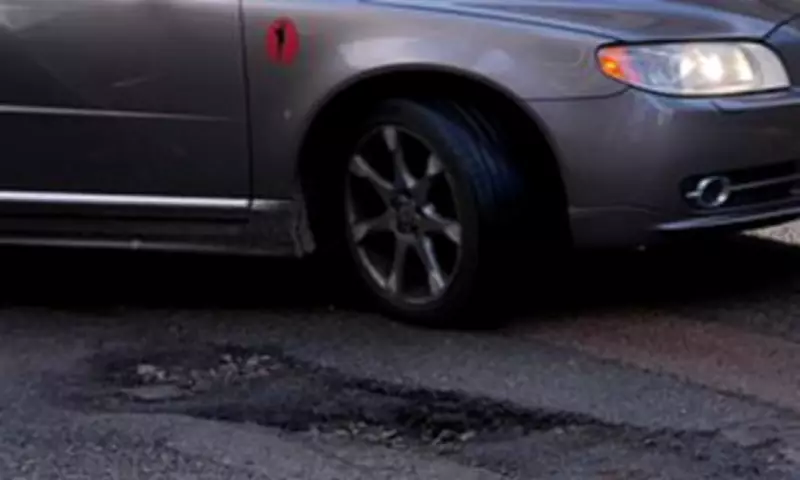
Tough New Rules Threaten Council Funding Over Pothole Repair Failures
Local authorities across England and Wales are facing the prospect of losing substantial funding for road repairs under stringent new regulations being developed by government ministers. The measures aim to tackle what has been described as a 'pothole plague' affecting Britain's local road network.
Carrot and Stick Approach to Road Maintenance
The proposed strategy represents a significant toughening of existing rules, with ministers planning to withhold up to a quarter of allocated funding from councils that fail to meet performance standards. This 'carrot and stick' approach requires local authorities to share comprehensive performance data with the Government regarding their road repair activities.
Ministers will implement stricter controls to prevent councils from diverting road maintenance budgets to other areas, ensuring that money specifically earmarked for pothole repairs reaches the frontline where crumbling infrastructure needs urgent attention.

Performance Ratings Determine Funding Allocation
While similar strategies have been employed previously with limited enforcement – only one council lost funding under more lenient rules last year – the new system will be considerably more rigorous. Councils receiving a 'red' performance rating will automatically face funding reductions, with nearly a dozen local authorities currently falling into this category.
Government sources indicate these tougher regulations could be implemented as early as next month, representing a significant development in the ongoing battle to improve Britain's road infrastructure.
Record Investment Meets Growing Crisis
The policy shift comes as the Government has committed a record £7.3 billion toward pothole spending between next month and the end of the decade. A Government source emphasized: 'This Labour government has put its money where its mouth is – committing record sums to fix Britain's roads. But we have to make sure councils are spending it correctly and delivering change people can see in their communities.'
However, this substantial investment faces a daunting challenge. The annual Asphalt Industry Alliance (AIA) report reveals the repair bill for Britain's local roads has escalated to £18.6 billion, up from £17 billion last year. The study paints a concerning picture of infrastructure deterioration:
- Local roads are now being resurfaced on average every 97 years, increased from 93 years previously
- Almost half (49%) of local roads in England and Wales are predicted to crumble and become unusable within 15 years
- One in six roads will deteriorate to this state within the next five years
Support for Campaign and Industry Response
The policy development represents a boost for the Daily Mail's End the Pothole Plague campaign, which has advocated for more decisive action to address Britain's deteriorating local road network. The campaign has highlighted how councils, responsible for road resurfacing, have struggled to keep pace with maintenance demands.
Industry experts have welcomed the focus on proper fund allocation. Simon Williams of the RAC commented: 'Record investment from central government, along with a commitment to longer-term funding, gives councils a real chance to get on top of road maintenance. Those that can show they're taking the right approach – especially preventative treatments that can stop potholes forming – should receive more funding than those still relying on the "patch and dash" method.'
AA president Edmund King added: 'The roads are in such a poor state that fixing them is going to take a herculean effort. We applaud the emphasis that the total funds given for maintenance should be spent on the roads. Any council dragging their heels to upgrade the road network should know that they face a funding gap pushing their potholes into a financial hole if they fail to perform.'

Growing Frustration and Safety Concerns
The pothole crisis has generated increasing public frustration, with the Daily Mail reporting a surge in attacks on road maintenance workers by angry motorists. AIA chairman David Giles revealed that workers are increasingly subjected to verbal abuse, spitting, and even physical assault while attempting to repair long-damaged roads.
This deteriorating situation underscores the urgency of effective road maintenance strategies and the need for councils to demonstrate tangible progress in addressing infrastructure deficiencies. The Government's new approach aims to ensure that record funding translates into visible improvements for communities across the country.