

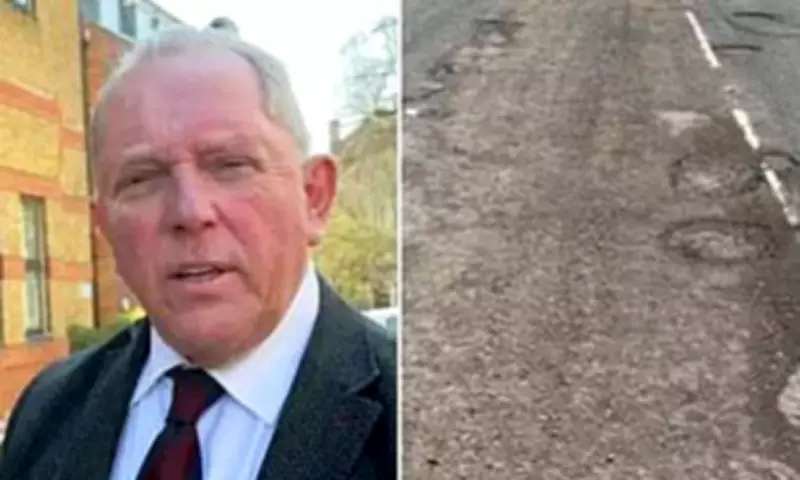
A determined motorist has successfully forced a local council to repair three pothole-ridden roads by taking them to court using a rarely invoked piece of legislation. Derek Bennett, a 68-year-old retired construction project manager, became exasperated with the deteriorating condition of streets in his home village of Berkhamsted in Hertfordshire and the nearby town of Hemel Hempstead.
Legal Action Under Section 56
Mr Bennett filed a formal notice under section 56 of the Highways Act 1980, which explicitly states that highways authorities have a legal duty to maintain public roads at public expense. After Hertfordshire County Council failed to respond to his applications within the statutory one-month period, the matter was escalated to St Albans Crown Court.
Court Order and Costs Awarded
Judge Andrew Johnson presided over the case and ordered the council to complete the necessary repair work on the three specified roads within twenty working days. The judge also awarded Mr Bennett costs of £1,650 to compensate for the time he had spent, as he described it, 'faffing about' on the legal proceedings.

The roads now mandated for repair are the unclassified Ivy House Lane and the 40mph A4251 London Road, both located in Berkhamsted, and the A4147 Redbourn Road in Hemel Hempstead. Mr Bennett had initially submitted demands for three additional roads, but these had already been repaired by the council prior to the court hearing.
A National Disgrace
Mr Bennett, who described the state of Britain's roads as a 'national disgrace', explained his motivation to the press. 'I'm doing this as a public service, but I can't cover my own area, let alone the rest of the country,' he said. 'I don't know why we put up with this. It's so easy to deal with. If everyone did it, we'd have lovely roads within six months.'
Historical Legislation
He revealed that he began investigating legal avenues after becoming increasingly frustrated with the appalling road conditions he encountered daily. 'It's very interesting. The legislation goes back to Elizabeth I and it's had various incarnations over the years. The latest is the Highways Act 1980,' Mr Bennett noted.
'How it works is you simply write to the highways authority, naming the road and alleging it's a public highway that must be maintained at public expense and that it is out of repair. They've got one calendar month to respond. Hertfordshire County Council didn't get back to me within the statutory period,' he added.
Court Proceedings
The case was initially heard on Monday but was adjourned because the council's barrister could not confirm whether work had been carried out on the roads in question. It was rescheduled for the following day, when Judge Johnson established that Mr Bennett had properly served notice on the council, which subsequently admitted the roads were indeed out of repair.
'The judge said he'd never come across this. He didn't realise it was their jurisdiction because they deal with rapists and murderers – and there I was talking about potholes,' Mr Bennett remarked about the unusual nature of the case in a crown court setting.
Broader Campaign
Encouraged by his success, Mr Bennett has now filed similar submissions concerning other roads within Hertfordshire and has also initiated proceedings with the county councils in Cambridgeshire and Buckinghamshire. These cases can be heard either by magistrates or crown court judges, depending on their progress.
'The Highways Act says highways authorities have an absolute duty to maintain the highways at public expense,' Mr Bennett emphasized, noting that the entire legal process is free for the claimant. He added that how cash-strapped councils would afford such work was a 'political matter' beyond his remit.
Council Response and National Context
A spokesperson for Hertfordshire County Council expressed disappointment that this routine maintenance issue had escalated to legal proceedings. 'We had already repaired three of these roads before this court hearing, and we have already scheduled repair work to the others,' the spokesperson stated.

This case unfolds against a bleak national backdrop for road maintenance. Recent data reveals that the repair bill to fix Britain's pock-marked local roads has surged to £18.6 billion, up from £17 billion just last year. The annual Asphalt Industry Alliance study further found that town hall-maintained local roads are now being resurfaced on average only once every 97 years, an increase from 93 years previously.
Alarmingly, almost half of all local roads in England and Wales are predicted to crumble and become unusable within the next fifteen years, with one in six expected to deteriorate beyond use within just five years. This highlights the scale of the infrastructure challenge facing local authorities across the nation.





