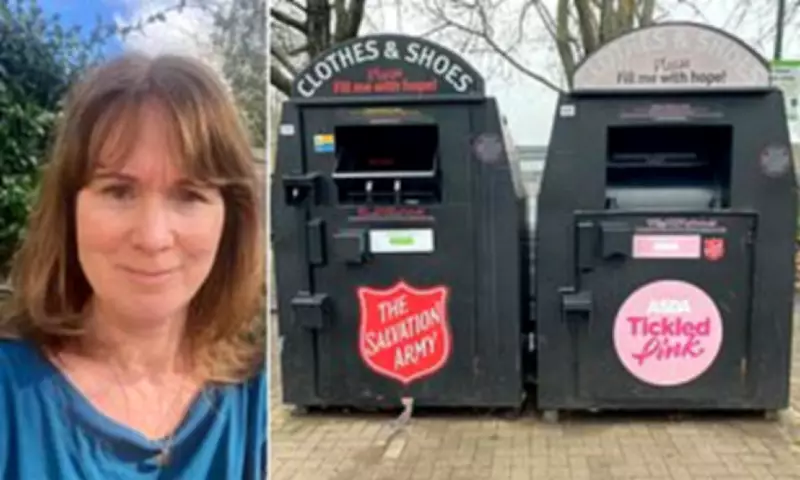
A mother from Kent has described being left "floored" after receiving a £1,000 fine for alleged fly-tipping, when she was merely attempting to donate children's clothes to charity. Kate Clayton, a 57-year-old teacher from West Malling, faced the hefty penalty after leaving a bag next to overflowing collection bins, in what she called a "really unfair" situation that caused significant distress.
The Incident at the Donation Point
On January 26, Kate Clayton arrived at a local collection point with three bags of children's clothing intended for charitable causes. Two of the bags were destined for The Salvation Army, while the third was for Asda's breast cancer charity, Tickled Pink. Upon arrival, she discovered that the donation bins were completely full.
Ms Clayton managed to squeeze two of the bags into the packed containers but was forced to leave the third bag on the ground nearby. Mere seconds after driving away, she was stopped by council enforcement officers who issued her with a Fixed Penalty Notice for fly-tipping, demanding payment within two weeks.

Immediate Reaction and Appeal Process
"I drove literally 20 feet before a council person approached me," Ms Clayton recalled. "I just thought he was going to ask me directions or something. I was absolutely floored when he said £1,000. I just couldn't believe it. It wasn't fly-tipping; I was donating to charity."
The mother-of-four immediately offered to retrieve the bag and take it home, but the officers refused to withdraw the fine. She subsequently took the bag home anyway and launched an appeal through Tonbridge and Malling Borough Council and Kingdom Local Authority Support.
What followed was a tense 29-day waiting period without any response, leaving Ms Clayton in a state of panic. "I thought I was going to have to go to court," she said. "I didn't have £1,000. I couldn't afford it. When it is actual fly-tipping on the side of the road, the people who do it don't get caught."
Resolution and Council Response
This week, Ms Clayton finally received an email confirming that her fine had been cancelled. "I am just really glad that they took the fine away," she expressed with relief. "I was so happy. I had been so stressed and upset. I am quite level-headed, but it was awful. It is quite threatening."
She added that she felt the council's practices were "ruthless and a bit aggressive," highlighting the disparity between her charitable intent and the severe penalty initially imposed.
Official Statements from Authorities
A spokesperson for Kingdom Local Authority Support stated: "While Kingdom Local Authority Support does not comment on individual cases, where concerns are raised, we review each matter based on the information available. However, we can confirm that in this instance, Tonbridge and Malling Borough Council has decided to rescind the Fixed Penalty Notice."
The spokesperson further explained: "Kingdom LAS are content the relevant enforcement processes were followed, in line with agreed policies with Tonbridge and Malling Borough Council, when the FPN was issued. In accordance with national legislation, leaving items outside charity donation banks is classed as fly-tipping. Such items are not collected or removed by the charities operating the banks and can lead to obstruction, environmental issues, and additional costs for local authorities and the taxpayer."
They emphasized: "Fly-tipping remains a serious issue for communities across the country, and our officers are committed to helping ensure clean and well-maintained public spaces for everyone."
A spokesperson for Tonbridge and Malling Borough Council added: "We have reviewed this case and can confirm that the fine has been rescinded. We apologise to the resident for the inconvenience and any concern this may have caused. We have instructed Kingdom to cease any further enforcement action in such instances."
This case underscores the fine line between charitable donations and fly-tipping regulations, raising questions about enforcement discretion and communication between councils and residents. Ms Clayton's experience serves as a cautionary tale for others attempting to donate items when collection points are at capacity.