

Councils Face 'Trigger-Happy' Accusations as Litter Fines Skyrocket
Local authorities across Britain have been accused of adopting 'trigger-happy' enforcement tactics after exclusive data revealed littering fines have increased by as much as 160-fold in certain areas. The dramatic escalation in fixed penalty notices (FPNs) has sparked widespread concern that councils are prioritising revenue generation over genuine environmental protection.
Staggering Increases in Penalty Notices
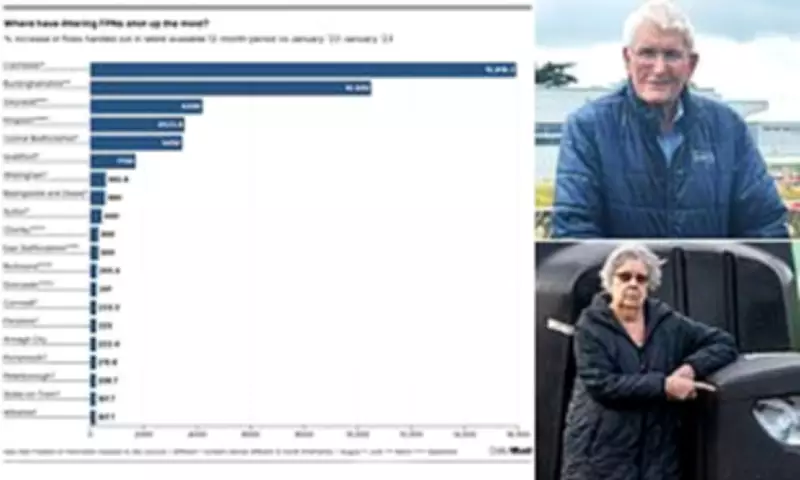
Freedom of Information requests submitted to all 382 councils across England, Wales, Scotland and Northern Ireland have uncovered extraordinary increases in litter enforcement. Colchester City Council emerged as particularly aggressive, issuing an average of 146.8 FPNs monthly last year compared to just 0.9 per month in 2022 - representing a staggering 160-fold increase.
Richmond-upon-Thames Council similarly escalated its enforcement, handing out 117.8 littering fines monthly last year compared to 33.2 per month in 2022. Buckinghamshire Council saw monthly fines jump from 0.1 to 8.8, while Gwynedd in Wales increased from 0.1 to 3.6 monthly penalties.

Questionable Enforcement Tactics
The investigation revealed numerous concerning enforcement practices, including wardens patrolling private supermarket car parks belonging to McDonald's, Tesco and Sainsbury's. Local residents have accused councils of money-grabbing behaviour, particularly as many authorities claim to be financially constrained.
Benjamin Elks, grassroots development manager at the TaxPayers' Alliance, told the Daily Mail: 'Everybody wants clean streets, but these figures suggest some authorities are becoming far too trigger-happy. When litter wardens are patrolling supermarket car parks and chasing people down high streets, it risks looking less like environmental protection and more like revenue-raising.'
Controversial Cases Highlight Overzealous Approach
Several high-profile cases have illustrated what critics describe as disproportionate enforcement. Last October, Burcu Yesilyurt was pursued down Richmond's high street by three council officers after pouring coffee remnants into a drain, receiving a £150 fine that was later rescinded following public outcry.
In Reading, 83-year-old Carole Wright faced a £600 fine and criminal conviction threat for allegedly fly-tipping a single cardboard box placed beside a recycling bin. Meanwhile, 86-year-old Roy Marsh from Skegness received a £250 penalty for spitting out a leaf that had blown into his mouth during a windy walk.
Expanding Enforcement Teams
The increased fining coincides with councils expanding their enforcement teams. Colchester's headcount of enforcement officers grew by nearly 20 percent over the relevant period, while Buckinghamshire increased from five patrol officers in 2022 to nine officers plus three additional anti-social behaviour enforcers by 2025.
Legal Framework and Regional Variations
Littering offences fall under Sections 87 and 88 of the Environmental Protection Act 1990, which prohibits dropping, throwing, depositing or leaving anything that causes defacement on land open to the air. The definition extends beyond conventional litter to include cigarette butts, chewing gum, and even spitting.
Penalty amounts vary significantly between regions, with Lambeth in South London charging £400 (reducible to £250 if paid within 14 days), while other areas impose standard £150 fines. There are no formal appeal processes for FPNs, though individuals can challenge penalties through court proceedings, risking criminal charges if unsuccessful.
Council Defences and Mixed Responses
Despite 83 councils recording decreases in FPN issuance, many authorities defended their approaches. A Local Government Association spokesperson stated: 'Litter blights our streets, parks and beaches and costs millions to clear up annually. Councils have legal duties to keep public spaces clean and safe, responding proportionately while tackling environmental abuse.'

Buckinghamshire Council's Cabinet Member for Environment, Climate Change & Waste, Ade Osibogun, declared: 'We make no apology for taking a firm stance against littering. Our residents consistently tell us they want cleaner streets, and enforcing against those who choose to drop litter is important for achieving that.'
Broader Enforcement Landscape
The investigation focused specifically on littering offences, excluding fly-tipping penalties that have also generated controversy. Many councils outsource enforcement to private contractors, complicating data collection and accountability. The timeframe for 2023 data varied between authorities, with some providing figures up to September 2025 and others until March of that year.
As councils continue to expand enforcement operations, the debate intensifies between maintaining clean public spaces and avoiding perceived overreach. With financial pressures mounting on local authorities, the balance between environmental protection and revenue generation remains a contentious issue affecting communities nationwide.





