
Renfrewshire's Local Democracy Reporter has used the Local Democracy Reporting Service (LDRS) Day of Action to reflect on a year of covering key local issues, from contentious cost-cutting measures to the impact of severe flooding.
The event, organised by the News Media Association, provides a platform to highlight the importance of the scheme and its vital role in strengthening local accountability.
Following stories from start to finish
Being an LDR is rewarding for different reasons, but one that stands out is the ability to follow an issue from its inception to its eventual conclusion.
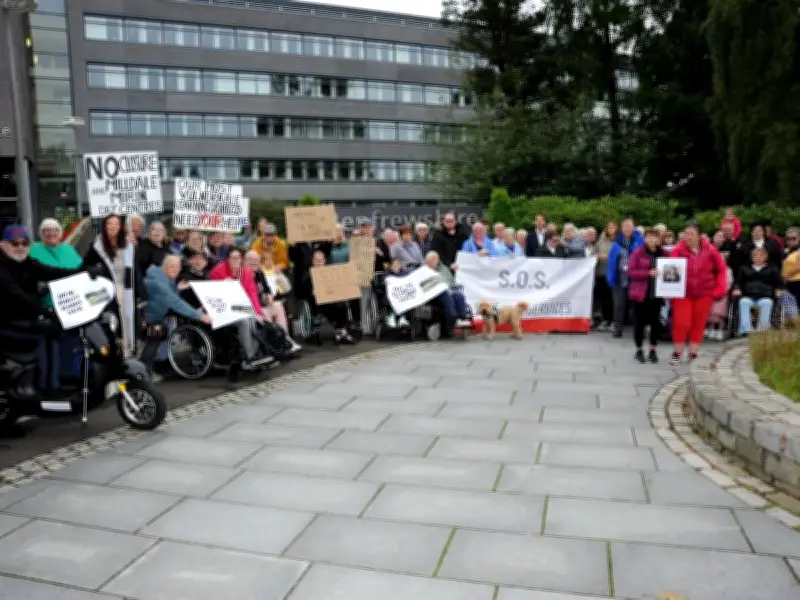
For example, in June, a series of contentious cost-cutting proposals – including the protested redesign of the learning and physical disability day service model – were agreed at Renfrewshire Integration Joint Board (IJB).
This was a story covered in some shape or form for almost three years, with regular conversations with carers and councillors, attendance at a public meeting with MSPs present, and coverage of the debates and decisions at the IJB.
A poignant part of that journey was writing about the passing of Helen McAleer, an unwavering campaigner in the movement to protect services for her daughter Amanda and her friends, at the age of 74 in April.
The reach of the LDR service
LDRs are funded by the BBC but employed by local and regional publishers across the UK who train and develop them, while the content they create is shared with all qualifying partners.
This means a single story can reach audiences through newspapers, websites, broadcasters and hyperlocal publishers, ensuring important local information is available as widely as possible.
Since the launch of the service in 2018, more than 600,000 public interest stories have been published by LDRs across the UK.
Other stories covered in the past year
In the past 12 months, other stories covered include controversial plans for a housing development in Bridge of Weir, refused by Renfrewshire Council and appealed to Scottish ministers; shocking reports of school pupils creating fake social media accounts using teachers' names and generating AI videos of them; concerns expressed about the security and future of listed buildings like the former Royal Alexandra Infirmary in Paisley; and recently the damage caused by severe flooding in Renfrew during Storm Boelo.
There is work to do going forward, at a time when local journalism is as important as ever, and the reporter hopes to continue to bring the stories that matter.




