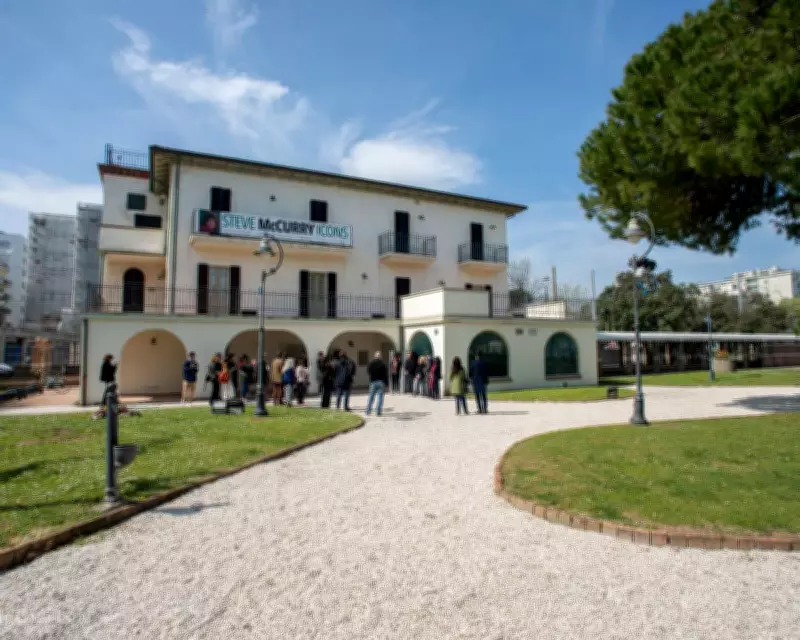
Italian Council Secures Mussolini's Historic Villa to Thwart Fascist Nostalgics
In a decisive move to safeguard historical integrity and democratic principles, the municipal council of Riccione, Italy, has successfully acquired Villa Mussolini, the former summer holiday residence of fascist dictator Benito Mussolini. The purchase was executed through a public auction, with the explicit aim of preventing the property from falling into the hands of what Mayor Daniela Angelini described as "fascist nostalgics."
A Strategic Acquisition to Uphold Democratic Values
Daniela Angelini, the left-wing mayor of Riccione—a coastal town near Rimini along the Adriatic—hailed the acquisition as "an act of love and vision." She emphasized that returning the villa to public ownership represents a significant victory for the entire community, ensuring it remains a space aligned with contemporary democratic values rather than a shrine to Italy's dark fascist past.
The council faced stiff competition from a private bidder who was a former member of the Italian Social Movement, a neofascist party established in 1946 by Mussolini's lingering supporters. By outbidding this individual, Riccione's authorities have effectively blocked any potential use of the villa that could glorify or romanticize the fascist era.

The Controversial History of Villa Mussolini
Villa Mussolini boasts a long and contentious history that reflects Italy's complex relationship with its fascist period. Originally constructed in 1893 just steps from the sea, the property was purchased in 1934 by Rachele Mussolini, the dictator's second wife. Benito Mussolini, born in Predappio within the Emilia-Romagna region, frequently used the villa for government business during his stays, arriving by seaplane.
The Mussolini family expanded the villa to include a third floor, twenty rooms, and a tennis court. Following World War II and the collapse of the fascist regime, the property transitioned to public ownership. During Riccione's economic boom in the 1950s and 1960s, it served various commercial purposes, including as a veterinary clinic for dogs and a restaurant. In the late 1970s, a communist mayor of Riccione even attempted to have the villa bulldozed.
From Abandonment to Community Hub
After years of neglect, Villa Mussolini was purchased in the late 1990s by Rimini's Cassa di Risparmio savings bank. The bank restored the property and reopened it in 2005 as a venue for art exhibitions, public events, and civil weddings. However, the villa's associations with Mussolini have long divided the community, with debates resurfacing last year when the Cassa di Risparmio foundation decided to auction it off.
Councillors from Brothers of Italy, the far-right party led by Prime Minister Giorgia Meloni, argued that any new owner must retain the name Villa Mussolini. Mayor Angelini confirmed that the name will be maintained, despite pressure from some political allies to change it. She asserted that history must be cultivated, not "cancelled," warning that altering the name could have the "dangerous effect" of transforming the villa into a gathering place for fascist nostalgics—a scenario her administration firmly rejects.
Future Plans: Education and Community Engagement
Angelini outlined plans to continue using Villa Mussolini as a vibrant community space. It will host exhibitions that recount the "good, the bad and the ugly" of 20th-century history, alongside other social and cultural events. "Yes, the name evokes an ugly story, and that we will tell," she stated. "You can't erase it; you must tell it in the right way, ensuring our democratic values emerge."
Since World War II, Riccione and the broader Emilia-Romagna region have been predominantly left-wing. Notably, it was only in 2025 that the town council formally revoked Mussolini's honorary citizenship—a title nearly all Italian towns and cities were compelled to bestow during the fascist regime. "This is a man who was stained with crimes, who did not deserve that honour," Angelini remarked. "But the villa is another story—it will be used as an expression of the values of our community and our democracy."