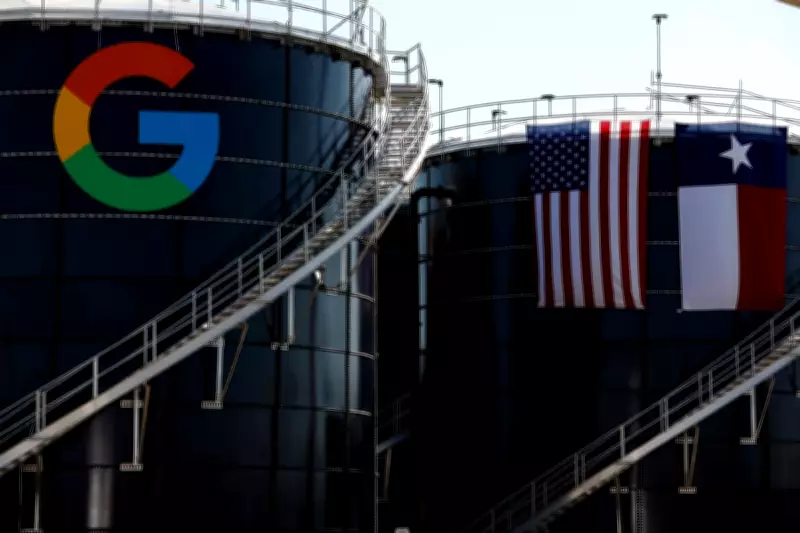
Google's Texas Gas Plant Partnership Signals Major Climate Policy Shift
Google has confirmed plans to partner with a natural gas power plant in Texas to supply energy for one of its AI datacenters, a move that starkly contrasts with its long-standing commitment to carbon neutrality by 2030. This development, uncovered by research from Cleanview and verified by the company, highlights a significant strategic pivot for the tech giant, once hailed as a pioneer in clean energy initiatives.
Details of the Texas Power Plant Project
The gas power plant is set to be constructed in Armstrong County, a sparsely populated region in the Texas panhandle. Led by Crusoe Energy, the project is part of the "Goodnight" datacenter campus, named after a nearby town. According to Cleanview's report, Crusoe filed a permit in January to build a 933-megawatt facility that will operate off-grid and provide power to at least two buildings on the campus. Satellite images confirm that construction is already well underway.
In its 465-page permit application, Crusoe estimates the plant will emit approximately 4.5 million tons of carbon dioxide annually—a primary driver of the climate crisis. For context, this exceeds the entire city of San Francisco's yearly emissions of about 4 million tons. Michael Thomas, founder of Cleanview and author of the report, noted that this represents one of Google's first direct investments in fossil fuel infrastructure, marking a departure from its clean energy leadership image.

Google's Response and Ongoing Negotiations
When questioned by the Guardian, Google spokesperson Chrissy Moy did not deny the project but stated, "We don't have a contract in place for the plant in Texas." The extent of electricity Google might purchase remains unclear as negotiations continue. Moy redirected attention to a separate windfarm partnership with Serena Energy in the region. Crusoe Energy did not respond to requests for comment.
This Texas facility is the third known gas project Google has engaged with recently. In October, the company announced an agreement to buy power from a gas plant in Illinois, and last month, documents revealed Google is exploring another large gas project in Nebraska. Despite this, Google maintains that its focus remains on carbon-free energy and does not view natural gas as a deviation from its climate goals, shifting from carbon credits to grid-building strategies.
Broader Trend in Tech Industry and Climate Commitments
Google's move reflects a wider trend among tech giants grappling with the high energy demands of AI. Meta, Amazon, and Microsoft, all with net-zero pledges, are also turning to natural gas for their datacenters. For instance, Meta is building a large gas-powered facility in Louisiana, Amazon operates multiple gigawatt-scale gas datacenters, and Microsoft recently announced a gas project in West Virginia and a deal with Chevron for a 2.5-gigawatt plant in west Texas.
Thomas of Cleanview observed that while these companies have long resisted natural gas, the rapid growth of AI has introduced complexities, creating a tension between climate goals and technological expansion. Google's emissions have risen by 48% since 2019 due to datacenter energy consumption, leading the company to reframe its 2030 targets as "climate moonshots"—speculative projects with uncertain outcomes, such as self-driving cars or wifi balloons.
In its 2025 environmental report, Google described its climate goals as "ambition-based," acknowledging that AI's expansion brings "significant uncertainties" around emissions. This shift underscores the challenges tech firms face in balancing innovation with environmental responsibility, as the race to advance AI intensifies pressure on energy resources and climate commitments.