

UK Councils Implement Strict Bans on Oversized Vehicles in Car Parks
A significant number of local authorities across the United Kingdom have begun enforcing stringent bans on specific vehicles from utilizing council-operated car parks, citing their excessive dimensions as the primary concern. At least five councils have officially declared that vehicles measuring over 5 metres in length are effectively prohibited from standard parking facilities under their jurisdiction.
The Five-Metre Threshold and Enforcement Measures
The standard parking bay length in the UK is established at 4.8 metres, rendering any vehicle exceeding 5 metres susceptible to penalties for overhanging the designated white lines. The councils currently enforcing this regulation include Wokingham, South Hams, Broadland, South Norfolk, and West Devon. Motorists whose vehicles protrude beyond the bay markings face the issuance of a Penalty Charge Notice for the infraction of "failing to park within a marked bay."
Transportation experts have expressed astonishment at the quantity of contemporary luxury and family vehicles that now fall into this oversized category, highlighting a growing trend in vehicle dimensions that conflict with existing infrastructure.

Comprehensive List of Prohibited Vehicles
Below is an extensive compilation of common vehicles currently available in the UK market that surpass the critical 5-metre threshold, thereby facing potential bans in numerous council car parks:
- Range Rover (Standard & LWB): The standard model measures 5.05 metres, with the Long Wheelbase variant extending to a substantial 5.25 metres.
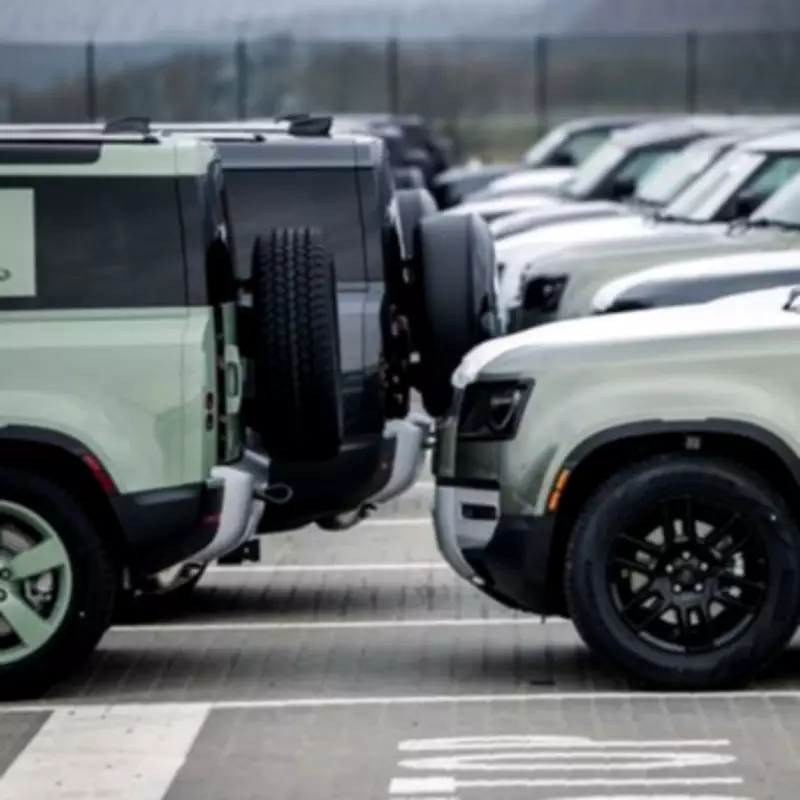
- Land Rover Defender 130: At 5.36 metres, this represents one of the longest vehicles on British roads. The Defender 110 model sits precisely on the limit at 5.01 metres.
- Kia EV9: 5.01 metres.
- Audi Q7 / SQ7: 5.06 metres.
- Volvo XC90: Historically just under the limit, recent iterations now reach the 5.00 metre mark.
- BMW X7 (2019-): 5,151 millimetres.
- Mercedes GLS: 5.21 metres.
- Tesla Model X: 5.06 metres.
- BMW i7 (2022-): 5,391 millimetres.
- Mercedes-Benz S-Class (2021-): 5,179 millimetres.
- Audi A8 (2018-): 5,172 millimetres.
- Mercedes-Benz V-class (2015-): 5,140 millimetres.
- Mercedes-Benz EQV (2020-): 5,140 millimetres.
- BMW 8 Series Gran Coupe (2019-): 5,082 millimetres.
- Audi SQ7 (2016-): 5,069 millimetres.
- BMW i5 (2023-): 5,060 millimetres.
- Audi Q7 (2015-): 5,052 millimetres.
- Kia EV9 (2024-): 5,015 millimetres.
- Genesis G80 Electrified (2022-): 5,005 millimetres.
- Mercedes-Benz EQS (2021-): 5,216 millimetres.
Council Statements and Historical Data
Wokingham Council provided clarification on their policy, stating: "We have implemented limits on both the size and weight of vehicles permitted to use our car parks, with these regulations introduced at varying dates. Since June 2023, all motor vehicles exceeding 5.00 metres in maximum length, surpassing 2.10 metres in overall height, or exceeding 3050 kilogrammes in gross weight are prohibited, except for necessary access purposes."
Between 2017 and 2024, Wokingham Council documented 153 separate instances of vehicles violating this length restriction, underscoring the ongoing relevance of the issue.
Alternative Approaches: The Parisian Model and UK Adoption
While certain councils are enacting outright bans on lengthy vehicles, others are adopting alternative strategies inspired by international precedents. Last year, Paris residents voted decisively to support a substantial increase in parking rates for SUVs within the French capital, tripling hourly fees to €18 (£15.55) for cars weighing 1.6 tonnes or more in central Paris.

In the UK, Cardiff Council has emerged as the first major city to approve a scheme imposing higher parking permit fees specifically for "oversized" vehicles. The council is targeting vehicles exceeding 2,400 kilograms (or 2,000 kilograms for non-electric models), arguing that these larger vehicles occupy more space and contribute to accelerated road deterioration.
This decision followed a public consultation wherein two-thirds of respondents expressed agreement that larger vehicles should incur higher permit costs. Dan De’Ath, the cabinet member for transport, emphasized the rationale, stating: "SUVs are significantly larger than average cars, they generate far more wear and tear on our roads, but fundamentally, if you strike a child while operating a heavy SUV, the probability of that child dying is drastically increased."
He further elaborated: "We believe it is reasonable to request drivers of such vehicles to contribute slightly more for the additional road wear and extra space they utilize. We are not referring to SUV-shaped cars; we are addressing very heavy, American-style vehicles. This initiative is not about implementing bans; it is about gently encouraging behavioural change."
Broader Trends and Expert Commentary
Several London boroughs have also progressed towards "emission and size-based" parking systems, where the physical footprint of a vehicle directly influences permit pricing structures.
Data obtained through a 2024 Freedom of Information request by Autocar revealed that 91.8 percent of the 287 responding UK local authorities have no current plans to enlarge their parking bay dimensions, indicating that infrastructure adaptation is unlikely.
Elly Baker, Chair of the Transport Committee on the London Assembly, has joined calls for more decisive action. She told BBC London: "London's constrained road space was not designed to accommodate the monster vehicles we are now witnessing on the market. SUVs are congesting our street space, complicating parking, and the elevated bonnet height and increased weight substantially raise the risk of serious injury or fatality in collisions. We should be imposing limits on the dimensions of standard vehicles and investigating increased charges where appropriate."





