

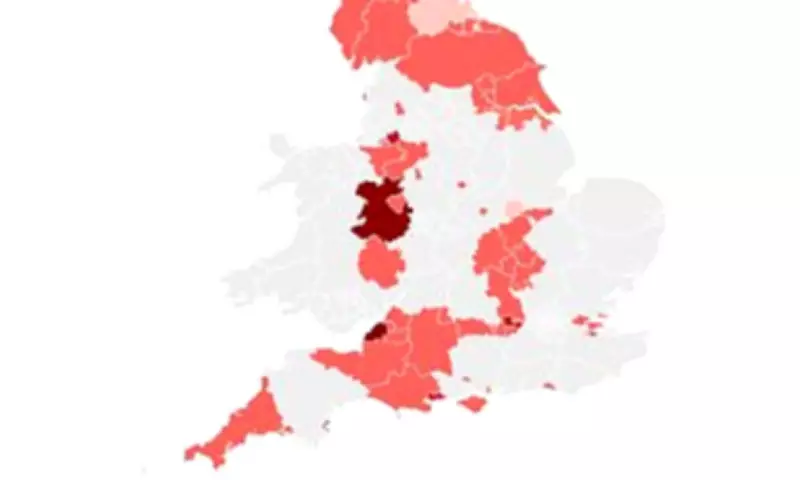
Households across England are preparing for significant financial strain as new data reveals that nearly four out of every five top-tier local authorities are planning to implement the maximum allowable council tax increase from April. This widespread move comes at a time when many families are already grappling with persistent cost-of-living challenges.
The Maximum Allowable Increase
Under current regulations, local councils in England are permitted to raise council tax by up to 4.99 percent annually without triggering a mandatory local referendum. This cap is composed of two distinct elements: a 2.99 percent increase for general expenditure and an additional 2 percent precept specifically designated for adult social care services.
Overwhelming Majority Opt for Maximum Hike
Out of the 153 top-tier local authorities operating across England, an astonishing 118 have publicly announced their intention to implement the full 4.99 percent council tax rise for the upcoming 2026/27 financial year. This represents approximately 77 percent of all such authorities, indicating a near-universal trend toward maximizing revenue through council tax increases.

In contrast, fewer than one in five local authorities—specifically 28 councils—have proposed increases below the 4.99 percent threshold. Among these, Hartlepool and Durham Councils stand out with the most modest planned rises of just 1.98 percent. Meanwhile, Barnet Council has proposed a marginally lower increase of 4.98 percent, falling just short of the maximum permitted amount.
Exceptional Cases with Higher Increases
In a notable development, seven local authorities have received special permission from the central government to exceed the standard 4.99 percent cap this year. This exceptional authorization means that some households will face council tax bills increasing by nearly 9 percent beginning next month.
The government has granted North Somerset, Shropshire, and Worcestershire councils permission to implement substantial 8.99 percent increases in their council tax levies. Additionally, authorities in Trafford, Warrington, and Windsor & Maidenhead have been authorized to raise their council tax by 7.49 percent. Bournemouth, Christchurch & Poole Council has received approval for a 6.74 percent increase.
Broader Economic Context and Concerns
These widespread council tax increases will undoubtedly intensify the financial pressure on already struggling households throughout England. The timing is particularly concerning as it coincides with growing apprehensions that international conflicts could further exacerbate the ongoing cost-of-living crisis.
The Office for Budget Responsibility has issued a stark warning regarding the potential economic consequences of sustained geopolitical instability. The government's independent fiscal watchdog has cautioned that a prolonged spike in energy prices resulting from the US-Israel conflict with Iran could drive inflation one full percentage point higher than previously anticipated by year's end.
According to the OBR's assessment, the impact of this conflict on UK prices could prove "significant" and "completely unwelcome" for British consumers and businesses alike. Fuel prices have already experienced dramatic increases following American and Israeli military strikes against Tehran, marking the most substantial surge since 2022 when Russia's full-scale invasion of Ukraine triggered a severe global energy crisis.
This combination of domestic fiscal pressures and international economic uncertainty creates a particularly challenging environment for household budgets across the country, with council tax increases representing just one facet of the broader financial difficulties facing many British families.






