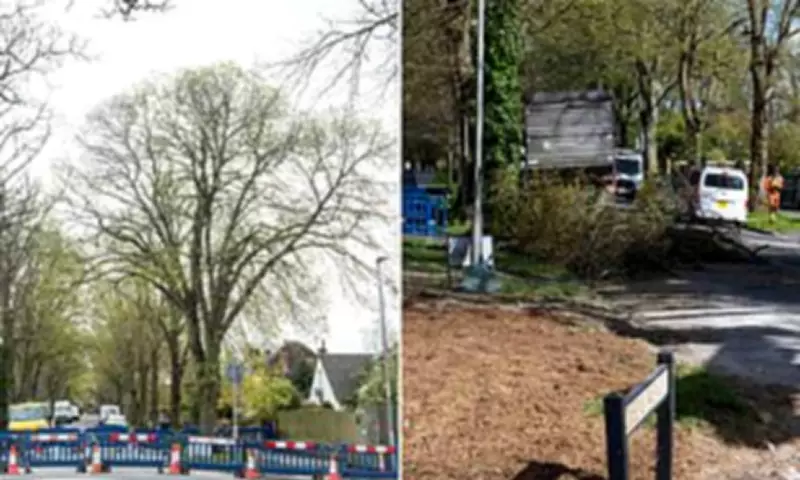
Climate Council Apologises After Felling Historic Lime Tree in Dorchester
Dorset Council, which declared a nature and climate emergency in 2024 with policies aimed at protecting trees as part of a 'nature recovery' initiative, has been forced to issue a public apology after felling a historic lime tree in Dorchester. The council, run by the Liberal Democrats with support from the Green Party, faced immediate backlash from local residents who expressed deep disappointment and outrage over the loss of the tree, which had stood for over a century.
Root Damage During Utility Works Leads to Tree Removal
The 80-foot-tall lime tree, the largest in a cluster of evergreens believed to have lined a leafy street in Dorchester, Dorset, for more than 100 years, had its roots terminally damaged during trenching works to lower electricity cables underground. Despite workers using 'specialist equipment' designed to minimise disturbance, the damage was severe enough that an arboricultural assessment later revealed the tree was no longer structurally sound. Consequently, the council decided to remove it for safety reasons, a decision that has left the community reeling.
Questions are being raised about why the climate-conscious council did not ensure that work around the tree's roots was done by hand to prevent such damage. Les Fry, an independent local councillor, criticised the council's actions, stating, 'I know that Dorset Council has been critical of others for not digging close to trees by hand before, so why do we not do as we say?' This sentiment echoes the frustration of many residents who feel the council has failed to uphold its own environmental commitments.

Residents Express Outrage and Disappointment
Upset locals took to social media to voice their dismay at the loss of the lime tree, with many accusing the council of negligence. Christopher Bates commented, 'This is criminally negligent; they should always seek professional advice before risking destroying trees.' Chris Robinson added, 'Should get specialist contractors in for this type of work. It would be interesting to see if a member of the public were to be prosecuted for tree damage and used the standard council excuse of 'we're sorry' to avoid a fine.'
Other residents suggested alternatives to felling, such as moving the tree. Shelly Reece argued, 'It does not have to be felled. It's just the cheaper option. Those who damaged it should pay to have it moved. You can wrap the roots and move it. It's not cheap, but a 100+ year old tree can't be replaced... once it's cut, it's gone forever.' Tom Reid echoed this frustration, questioning, 'Why do the council get away with this? If anyone else did it, they would be in big trouble.'
Council's Explanation and Future Plans
Dorset Council explained that the mishap occurred while adjusting a trenching route around the lime tree to avoid a gas main during the Easter holidays. The works were part of preparations for installing a new pedestrian crossing on the road to serve two nearby schools. In a statement, the council said, 'Unfortunately, despite using special equipment designed to minimise disturbance, the tree's roots were damaged during the work. Following professional arboricultural advice, we have been informed that the tree is no longer structurally sound and, very regrettably, will need to be removed to ensure public safety.'
The council apologised for the loss and pledged to replace the tree at the earliest opportunity. They added, 'We are very sorry that this work has led to the loss of this tree, which we will replace. We are working closely with specialists to agree the most appropriate and sensitive way forward to ensure this loss is mitigated at the earliest opportunity.' However, this assurance has done little to quell the anger among residents, who view the incident as a stark contradiction to the council's proclaimed environmental goals.