China's Most Dangerous Technology Already Active, Harvesting US User Data
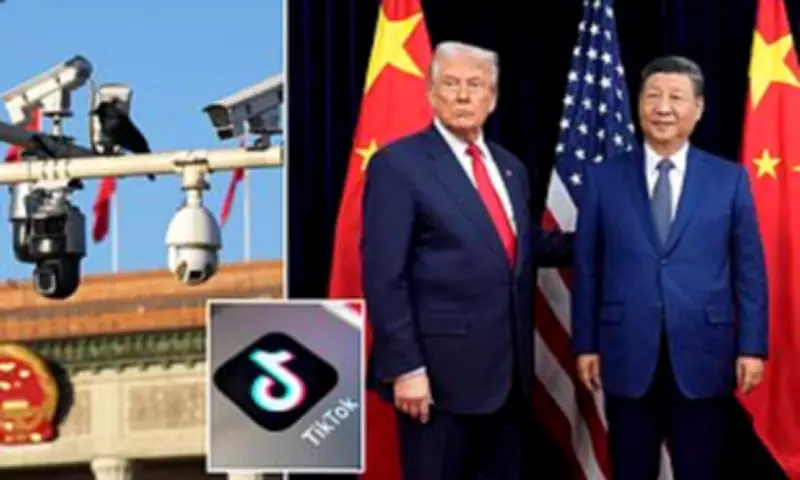
China's most perilous technological exports have already been deployed across the United States, with millions of Americans likely already ensnared within their extensive data harvesting systems, according to explosive claims in a forthcoming book. Social media titan TikTok and artificial intelligence powerhouse DeepSeek, both products of Chinese innovation, are being characterized as modern 'Trojan Horses' utilized by the Chinese Communist Party to amass vast troves of sensitive personal information on US citizens.
Data Vacuums: The Surveillance Mechanism
In his upcoming publication, 'Code Red: The Left, the Right, China, and the Race to Control AI', author Wynton Hall asserts that these platforms function as sophisticated 'data vacuums'. They meticulously track users' keystrokes, IP addresses, browsing histories, digital habits, and even nuanced biometric data such as typing cadence and finger positioning. This collection creates a highly detailed digital fingerprint, enabling the construction of comprehensive profiles on individuals.
'Tragically, America's digital gates were breached long ago with the CCP's original Trojan horse, TikTok,' Hall writes. He warns that the accumulated data could empower China for purposes ranging from espionage and influence campaigns to pervasive surveillance. TikTok alone boasts approximately 150 million active monthly users in the US, while DeepSeek, though smaller with an estimated 4 million monthly users, represents a potent and growing threat.

Legal Mandates and Propaganda Tools
US officials express deep concern over China's 2017 National Intelligence Law, which legally compels Chinese citizens and organizations to cooperate with state intelligence efforts. This law theoretically allows Beijing to demand user data from companies like ByteDance, TikTok's parent. Furthermore, both platforms are accused of serving as propaganda instruments. The House Select Committee on the CCP has stated that TikTok's algorithm can be manipulated to display specific content, while DeepSeek can 'manipulate information to align with CCP propaganda.'
'AI chatbot DeepSeek is another CCP tool to censor information and promote propaganda,' stated California Congresswoman Young Kim last year. Virginia Democratic Senator Mark Warner of the Senate Intelligence Committee echoed this in 2024, calling TikTok perhaps 'the most powerful propaganda tool ever.'
Market Shockwaves and Legislative Responses
The emergence of DeepSeek in early 2025 sent seismic shocks through global markets. The Chinese AI firm claimed its technology could compete with top US companies like OpenAI at a fraction of the cost. On January 27, 2025, this news triggered a historic market collapse, causing NVIDIA's stock to plummet roughly 17% and wiping out approximately $590 billion in value in a single day.
Despite the turmoil, DeepSeek's chatbot rapidly ascended to the top of US app stores, surpassing ChatGPT in downloads. Millions of Americans, drawn by its capabilities, installed the open-source model, potentially surrendering personal messages, business documents, and private conversations. The app's privacy policy explicitly states it collects usernames, emails, phone numbers, passwords, chat histories, device info, IP addresses, and keystroke patterns, with all data stored in China.
Political Deals and Ongoing Security Debates
In response to security fears, Congress passed legislation to ban TikTok, leading to a high-stakes political deal. Under an agreement finalized in January 2026, ByteDance was forced to sell its majority stake, retaining just 19.9% ownership after a $14 billion deal with a consortium of US investors, thus keeping the app operational in America. Former President Donald Trump, who famously used TikTok in his 2024 campaign, has taken credit for 'saving' the application.
Legislation targeting DeepSeek, however, has seen slower progress. While some states have banned its use on government devices, no federal ban has been adopted. Hall advocates for banning DeepSeek for federal and state employees due to its intelligence-gathering capabilities and questions whether the TikTok ownership deal truly mitigates the original security risks.

'The safest way to stop CCP Trojan horses is to not let them enter the gates to begin with,' Hall told the Daily Mail, underscoring the persistent and evolving nature of the digital threat posed by these Chinese technologies.