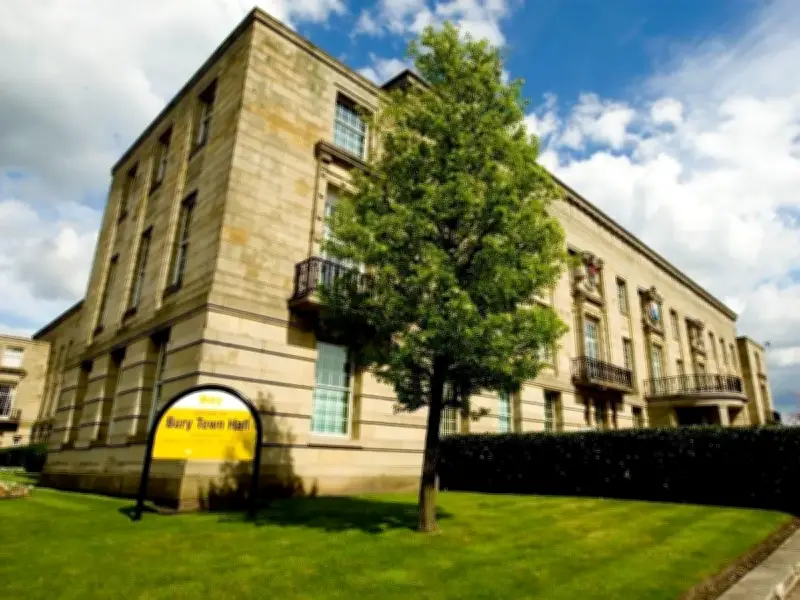
Residents in Bury face service cuts and significant council tax increases as the local authority seeks emergency financial aid from the Government. Finance bosses say they do not believe they can set a legal budget for the coming years without Exceptional Financial Support (EFS).
If nothing changes, leaders predict the council's three-year budget gap could reach £35m. Even with identified savings, the gap would still be £9.6m for the 2027/28 financial year, rising to £17.5m at the end of three years. Town halls are legally bound to present a balanced budget each year or must file a Section 114 notice, effectively declaring themselves bankrupt.
Second Greater Manchester authority to apply
This announcement makes Bury council the second Greater Manchester authority to apply for EFS in recent years, with Trafford council currently in its second year of emergency aid. For Trafford residents, this has resulted in two years of large council tax rises, with increases of 7.49pc in 2025/26 and 2026/27. Trafford council has also had to borrow to meet costs, prompting concerns that future repayments could cause further budget difficulties.
Finance leads at Bury council sat down with the Manchester Evening News to set out the authority's position. They said they did not believe borrowing was the solution for the council, but did not rule out tax rises of more than 4.99pc if the Government allowed it.
Lead member for finance Sean Thorpe said: “A lot of the decisions we're making, and even the ones that we haven't made yet, are all regrettable. Clearly we're at the stage now as a council where we're thinking the unthinkable and know that's not going to be enough [...]
“I think we're in a position where we've got to look at all options, no matter how distasteful they are. We know that there's a cost of living crisis.
“We know that people are struggling at the moment, and we know that the perception would be that people are paying more, but their services are declining, so [a higher council tax rise is] not a thing that we'd want to do, but we'd be bound to have to look at it as one of the options.”
Planned cuts and charges
Their preferred option would be flexibility with capital receipts – one-off spending for council projects such as new schools, regeneration projects and highways maintenance schemes – to use them for day-to-day costs. This would, however, mean that the council might not be able to proceed with all of the projects it has planned for the coming years. These could be deferred until alternative funding can be sourced, or cancelled.
Leaders said they did not expect this would impact on its major regeneration projects such as the planned Mill Gate redevelopment or work in Prestwich as much of that funding is external. There are also projects it feels it has to deliver to maintain service standards, such as a proposed new Pupil Referral Unit in Radcliffe.
The authority believes that EFS will be needed for the coming three years while it takes steps to bring down its spending, saying projections do not show it 'going viable any time soon'.
The council has also outlined a number of areas where it is currently looking to make cuts or raise more cash. These include the introduction of a green waste charge for residents, cuts to youth services and to school crossing patrols, streetlight dimming or 'trimming' – where lights are turned off – between 12am and 5am, and changes to membership fees at leisure centres, including the new Radcliffe Hub.
The council is also proposing to remove the payment cap for people who receive homecare through the council. This means they will be charged the full amount of their care placement costs, rather than the current reduced rate. This is expected to be means-tested.
Discretionary grants currently paid to Bury institutions such as The MET and the Fusiliers Museum are also expected to end. The council has said it has not made any final decisions on these measures and will be consulting residents on them later this month. Measures such as cuts to school crossings and turning off streetlights would be risk assessed prior to implementation.
Redundancy scheme and political reaction
Bury council is also currently engaged in a voluntary redundancy scheme for staff. Coun Thorpe said this was an effort to avoid compulsory redundancies, but added he 'could not rule out' progressing to that stage. Some of the cuts being explored by the council would also be likely to lead to staff losing their jobs, he acknowledged.
So why has the council ended up in this precarious position? Those in charge have blamed it on ballooning costs in high pressure service areas such as health and social care, with Coun Thorpe saying the authority is being effectively 'killed by social care'.
The council currently spends more than 80pc of its budget within health and social care and has taken steps to deliver millions in efficiency savings over the years, he said. Despite this, costs continue to outstrip income in these areas. The borough also has a smaller tax base than many of their neighbouring authorities and fewer Band D homes, which means they are bringing in less cash, he added.
Opposition councillors have accused the Labour leaders of the authority of financial 'mismanagement', however, criticising reliance on reserves in recent years and non-delivery of some planned savings.
Leader of Bury's Reform UK group Jack Rydeheard said: “Last year the council overspent by £7.3 million, burned through almost a third of its reserves and is now offering every single member of staff redundancy in a desperate attempt to stay solvent.
“Today, we learn that it is planning on asking the Government for an emergency bailout, risk the safety of schoolchildren, rinse older people dry, cut services and charge you more to balance the books. Exceptional financial support is never normally free money.
“It means borrowing more money to plug holes in our badly mismanaged budget, and Bury's residents will be paying for it for years to come.”
Reform councillor for Pilkington Park Shadman Zaman added: “Residents are about to pay more for less: darker streets, less safe school runs, a new tax for green waste on top of a limit-busting council tax rise. All councils provide social care, but not all of them need a bailout [...]
“In Pilkington Park, residents want safe roads and better services, not higher bills and broken promises. They are tired of more potholes, more cuts, more mess. They want value for their money.”
Leader of Radcliffe First Judi Sheppard said the position is 'clearly serious' and will 'understandably concern residents'. She has called for a 'clear explanation' as to how the current position has been reached, 'full transparency' on EFS arrangements, and said her group will 'scrutinise carefully' proposed cuts to frontline services.
Coun Thorpe said: “Residents can be assured about the prudence and the maturity of the leadership, and that includes officers as well as political leadership. We're taking this seriously, we are still a council that delivers significant benefits for our town. We can see it in the literal spades in the ground to the topping off ceremonies.
“Where we've been asked to improve services we have done. Right the way across our more challenging sectors, we're actually delivering. The finances look stark and harsh. However, it's indicative of the challenges facing local government funding rather than anything directly attributable to this leadership, I believe.”