

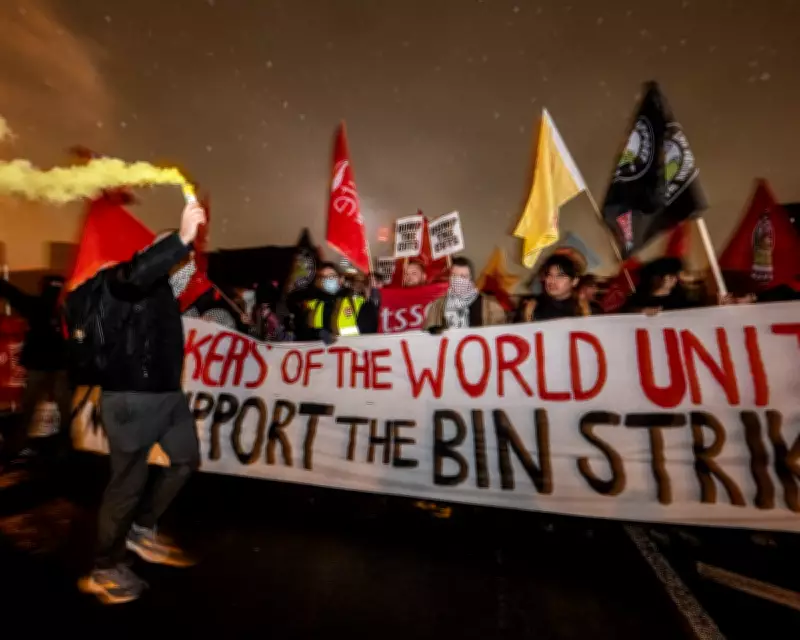
Birmingham Council Doubles Agency Spending Amid Ongoing Bin Strike Dispute
Birmingham City Council has come under fire after analysis revealed it doubled its spending on agency staff during the ongoing bin strike, which has now entered its second year. The industrial action, led by Unite, began in March last year over proposed pay cuts and role changes, leaving residents with disrupted waste collection services and streets littered with overflowing bins.
Spending Surge on Agency Staff
A Guardian analysis of the council's spending data shows a significant increase in expenditure on agency workers in fleet and waste operations since the all-out strike commenced. Between April and December 2024, the council spent over £4.3 million on agency staff in this department. This figure more than doubled to over £8.8 million during the same period in 2025, following the start of the strike.
The council's monthly spending on agency staff in fleet and waste operations averaged £481,000 in the nine months before strikes began in January 2025. It surged to £971,000 in January 2025 when stoppages started, and rose again to over £1.2 million in March 2025 when workers initiated an all-out strike.

Unite Accuses Council of Law-Breaking
Unite's general secretary, Sharon Graham, has accused the council of "breaking the law by using agency staff to try to break the strike." She stated, "The council continually denied it but the figures here, that the Guardian have exposed, show the truth. The facts are clear. The council needs to stop wasting Birmingham residents' money trying to break the strike and instead resolve the strike."
Graham emphasized that the council's actions are a misuse of public funds, urging a focus on resolving the dispute rather than escalating spending on temporary workers.
Council's Defense and Legal Implications
Birmingham City Council, which is Labour-run, strongly refuted "any suggestion that agency workers have been carrying out work normally undertaken by striking workers"—a practice that is unlawful. A spokesperson for the council said, "The figures do not refer solely to the residential waste collection service, which is where there is industrial action, but the waste service as a whole. It would therefore be misleading to suggest the figures relate to the council's response to industrial action."
The council claimed it was using the "same level of agency staff as before the strike" and that the increased expenditure was for purposes such as "fly-tipping clearance crews, grounds maintenance and Christmas bank holiday payments." In January 2026, spending exceeded £2 million, which the council attributed to these additional services.
Expert Analysis and Legal Challenges
Mark Stuart, a professor of employment relations at the University of Leeds, commented on the case, noting it hinges on "what the increased expenditure has been for." He said, "For the union, the position seems clear. Expenditure on agency staff has doubled over the period since the start of the indefinite strike action. This would seem to offer at least some basis for legal challenge by Unite."
Stuart added that the council must demonstrate that the increased spending was not directed at mitigating disruptions caused by the strike, rather than maintaining usual operations.
Background of the Strike and Negotiations
The dispute began in January 2025 when refuse workers employed by Birmingham City Council initiated a series of stoppages over pay cuts and role changes. Unite argued that the removal of the waste recycling and collection role would cost some members up to £8,000 a year, a figure the council has disputed.
Negotiations between the council and Unite took place last summer but broke down in July. Unite claimed that government-appointed commissioners blocked an agreement, while the council stated it had "reached the absolute limit of what we can offer."
Recent Developments and Future Outlook
In December, agency workers joined the picket lines for the first time, citing claims of bullying and harassment. Unite, which was fined £265,000 earlier this month for breaching an injunction that prohibited blocking waste lorries at depots, has warned that the strikes could extend beyond September this year.

The ongoing industrial action has not only strained relations between the council and union but also impacted residents, with waste collection services remaining partially functional and streets facing persistent litter issues.





