Birmingham Bin Strike Reaches One-Year Milestone Amid Ongoing Waste Crisis
Next week will mark the first anniversary of a mass walkout that has crippled bin collections across Birmingham, leading to mountains of waste piling up in the city's streets and sparking fears of a public health emergency. The industrial action, which began with a series of one-day strikes over plans to downgrade job roles, has now persisted for nearly twelve months, with no resolution in sight.
'The City Has Turned Into a Cesspit': Workers Speak Out
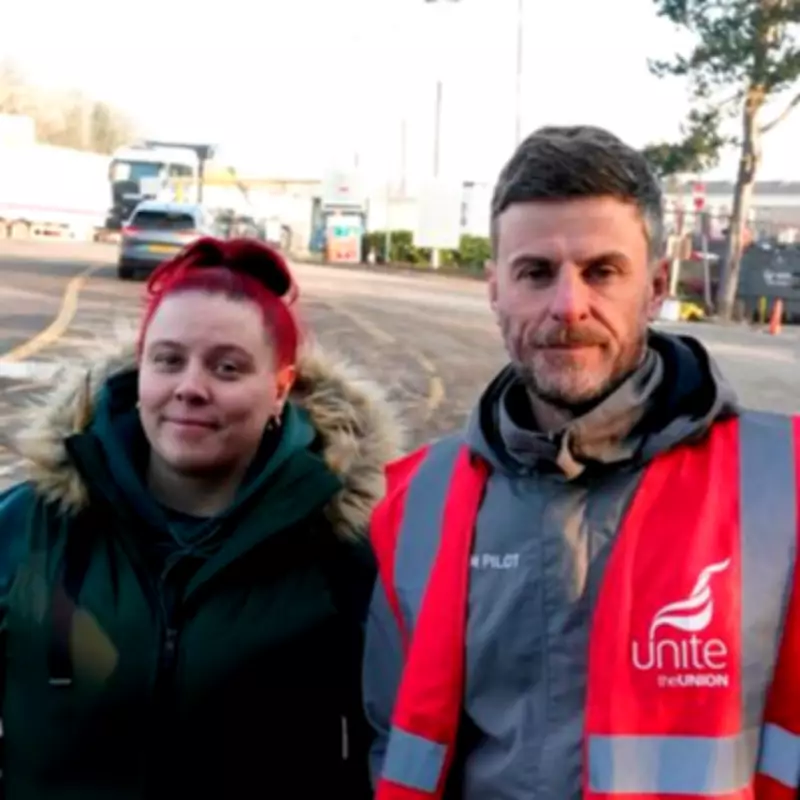
Danny Taylor, a 45-year-old bin man with 25 years of service, has been on the picket line outside Lifford Lane tip since January of last year. He was one of the original strikers, later joined by 350 colleagues. The father-of-five told reporters he feels "ashamed" at the sight of Birmingham's litter-strewn streets, which he describes as having turned into a "cesspit."
"I was brought up in the city, and seeing how it's turning into a cesspit is really upsetting," Taylor said. "I'm ashamed. We keep the city clean and now they're letting it slip. That's on the council."

Taylor explained that his life has been "turned upside down" by the strike. With five children aged 16 to 22 to support financially, he has been living "on the edge" since his pay stopped the moment he walked out. Like many striking workers, he is classified as absent without leave, with some drivers losing up to £600 per month.
Mountains of Waste and 'Squeaky Blinders' Rats
The strike has led to shocking scenes across Birmingham, with overflowing wheelie bins and mounds of bin liners creating what residents describe as "apocalyptic" conditions. Recycling collections have been halted indefinitely, causing incidents of fly-tipping to soar. Giant cat-sized rats feasting on the rotting rubbish have been dubbed the 'Squeaky Blinders' by locals.
A year on from the all-out strike, waste continues to blight large parts of the city. Despite the ongoing crisis, striking bin workers claim they still have the public's support.
Determination in the Face of Hardship
Taylor described standing on the picket line in freezing conditions, with temperatures dropping to -2 degrees Celsius and rain pouring down. "No amount of cold, no amount of upset, will make us walk away from that picket line," he declared. "We're here to win. If that means standing outside in the freezing cold, the rain, the wind, we're going to do it. We are not going to back down."
The industrial action began over plans to downgrade some job roles, which Unite union said would result in approximately 170 workers facing an £8,000 annual pay cut. Taylor was told his grade-three 'worko' role—loading bins on the back of lorries—was being downgraded.
He explained that during consultation, he was offered the option to retrain as a grade-four driver team leader, with assurances his pay wouldn't be affected. "I tried to scale up and better myself, and then they've swept that from me," Taylor said. "They sold me a lie."
The Human Cost of the Strike
At the height of the strike, 370 union members were taking industrial action. Today, around 270 remain on the picket line, with the majority of others opting for voluntary redundancy. Among those who accepted redundancy was Mark Lawrence, 56, a former bin lorry driver who remained on strike for seven months before leaving.
His daughter Sharon Lawrence, 33, remains on the picket line after losing her agency job a week into the strike. She had followed in her father's footsteps as a bin lorry loader for two years before the walkout. Unite has been paying her and other striking workers £70 per day to help cover bills and family expenses.
"I can't actually believe we're still on the picket line a year later," Sharon said. "Considering what we're going through, morale is really high. Everybody is sticking together and staying strong."

She described the financial strain on her household, which includes her parents, sister, and grandmother. "Financially it's had a massive impact," she explained. "For the drivers who were at the top end of grade four, it's a big drop in money. But if they went back to work on the new terms, then there would be an even bigger drop."
Political Dimensions and Hope for Resolution
Danny Taylor expressed frustration with Birmingham's Labour council, stating: "You don't expect this from 'the party for the workers'. I don't think that's true anymore." He suggested that if this were a private company, the strike would have been resolved months ago, but because it involves council spending of public money, it continues to drag on.
Taylor claimed the council has spent £35 million of taxpayers' money on the dispute without resolution. "We are ready to return to negotiations at any point," he insisted. "We want to negotiate, we want to go back to work. They say the door is always open. Well, we're still waiting for them to walk through that door."
Many strikers are pinning their hopes on May's local elections and a possible change in council leadership to break the deadlock. Taylor reported that workers have been door-knocking to discuss the strike with residents, claiming that "the public are on our side."
As Birmingham approaches the one-year anniversary of its bin strike, the city remains divided between mounting waste, determined workers, and a council yet to find a solution that addresses both public health concerns and fair working conditions.