

Scientists Teach AI to Decode Regional Slang for Council Phone Systems
Researchers are pioneering a study to enhance artificial intelligence's ability to understand regional slang and accent variations, aiming to improve automated phone services used by councils across the United Kingdom. Many local authorities have adopted AI to handle phone enquiries, assisting residents with tasks like bin collection schedules or council tax payments. However, the technology often falters when confronted with diverse accents and colloquial terms.
Frustrations with Current AI Systems
Dr Chris Montgomery from the University of Sheffield highlighted common issues faced by callers. 'Many people across the UK may have found themselves in a situation where they've tried to phone their local council but the AI that first handles their call struggles to understand them,' he explained. 'This may have led to them having to repeat themselves several times or being routed to the wrong service, which can be frustrating and time consuming.'
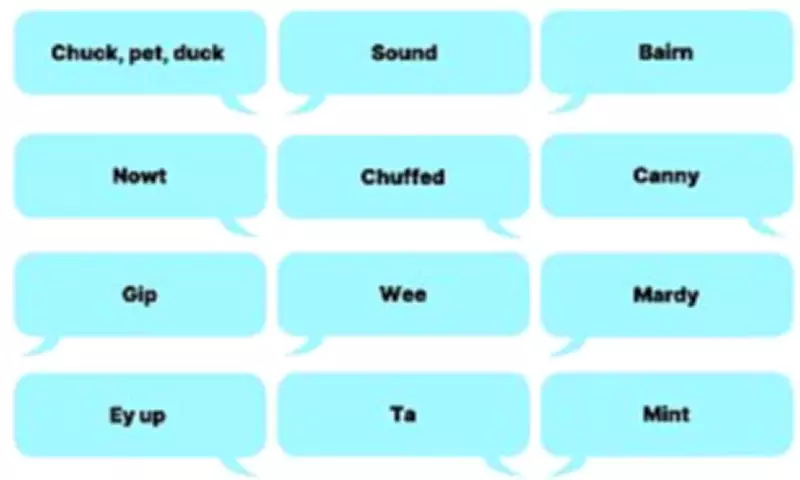
The AI frequently misinterprets words such as:

- 'pet' – a term of endearment in northern England
- 'canny' – a Geordie slang meaning nice or very
- 'chuffed' – indicating pleasure
- 'gip' – describing something painful or nagging
Regional Slang Words Explained
Understanding these terms is crucial for effective communication. For instance:
- 'Chuck', 'pet', and 'duck' are affectionate addresses similar to 'dear', but AI might confuse them with other meanings like 'to throw' or 'to crouch'.
- 'Nowt' means nothing in northern English slang.
- 'Sound' can describe something excellent or a reliable person.
- 'Bairn' refers to a child or baby in Scotland and northern England.
- 'Wee' simply means small.
Collaborative Efforts to Improve AI
Dr Montgomery is working with ICS.AI, a company providing AI platforms for the public sector. Last year, they launched Darcie, a generative AI phone-answering voice agent with Derby City Council, which initially struggled with Midlands accents. 'As AI is frequently used to direct calls across public services, we need to ensure the technology can understand the range of accents and dialects it may be faced with,' Dr Montgomery stated. He compared it to learning a new language, where regional variations must be accounted for during development.
Dr Crispin Bloomfield, Chief Education Solutions Officer at ICS.AI, emphasized inclusivity: 'Public sector AI has to work for everyone, not just for people whose voices or speech patterns are easiest for systems to process.'
Public Concerns and Regional Disparities
A recent survey revealed significant public apprehension about AI's ability to handle accents and dialects. Over half of UK residents express concern, with rates rising to 57% in Wales, 67% in Northern Ireland, and 71% in Scotland. This underscores the urgency of refining AI to reflect the UK's linguistic diversity, ensuring no one is disadvantaged by their manner of speech.
The next phase of the project focuses on making AI technology adaptable to the full spectrum of UK accents and dialects, promoting equitable access to public services through improved automated systems.






