The French Open's continued reliance on human line judges rather than electronic line calling (ELC) has come under fresh scrutiny following a contentious moment during Joao Fonseca's victory over Casper Ruud at Roland Garros.
Controversial Call Denies Ruud Set Point
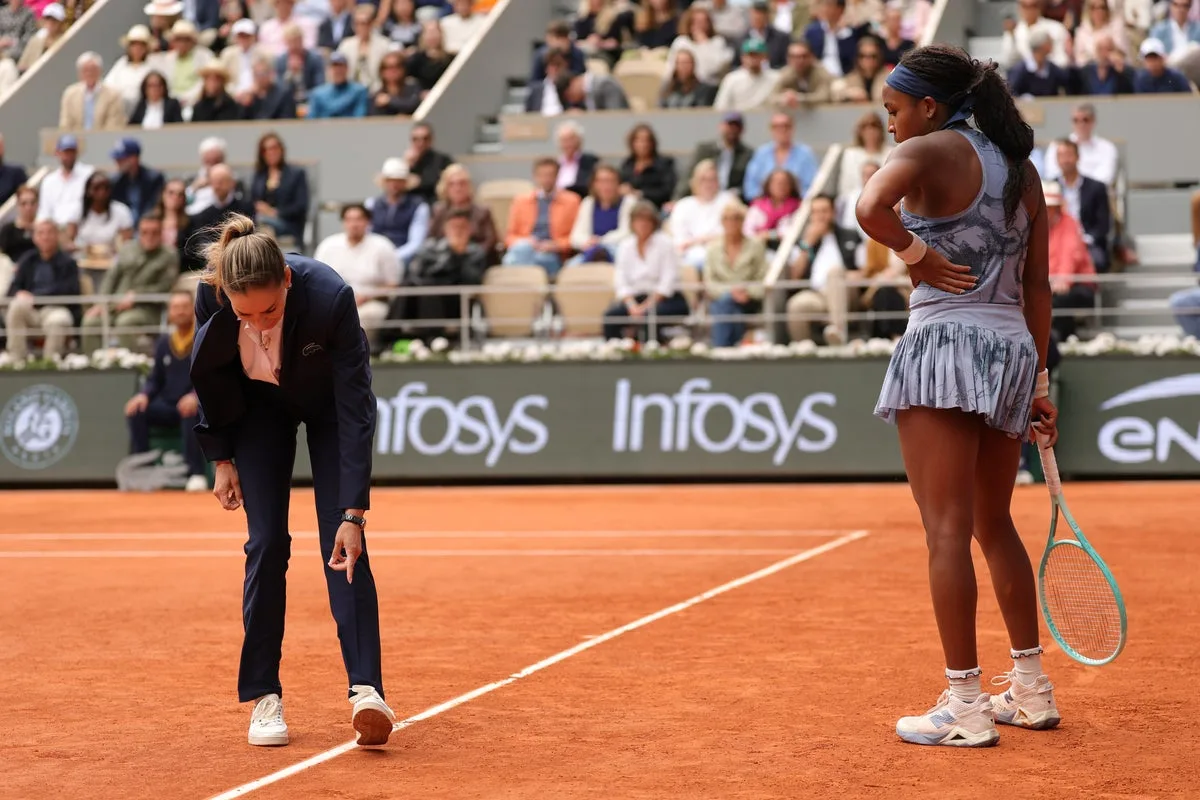
With Ruud holding set point in a tie-break to level the second set, Fonseca unleashed a forehand that appeared to land long. However, after inspecting the ball mark on the clay, the chair umpire ruled the shot had caught the baseline. Replays using Hawk-Eye, the leading ball-tracking system, later indicated the ball was out, denying Ruud the set and prompting former champion Jim Courier to question the absence of ELC technology.
French Open: The Last Grand Slam Without ELC
The French Open is the only Grand Slam tournament that still employs human line judges. Wimbledon ended its 147-year tradition last year by introducing ELC, though it faced several glitches during the grass-court fortnight. The Australian Open and US Open, both played on hard courts, eliminated human line judges entirely in 2021 and 2022, relying solely on automated calls.
Electronic line calling uses cameras, computers, and sensors to track the ball and instantly determine whether it is in or out. Some critics argue that clay surfaces can affect the tracking technology, potentially increasing the margin of error. However, clay courts offer a unique advantage: ball marks left on the surface allow umpires to check close calls, though this method is not perfectly accurate.
FFT President Defends Human Officials
Gilles Moretton, president of the French Tennis Federation (FFT), reiterated last year that Roland Garros intends to keep line judges and human decision-making for as long as possible. He praised the officials as the best in the world. "We are a federation where umpires and line judges work every day, and we are the best country for providing officials on the tour," Moretton stated. "We take pride in this, we have a strong training system. We are a benchmark and we want to stay that way."
He added that the federation's will is to preserve line judges as long as possible, noting that players are currently driving the change. "If one day they unanimously say: 'We won't play without the machine,' we'll see… But I believe we have a bright future ahead to preserve this officiating pyramid."
Until then, the French Open remains a bastion of tradition, even as technology continues to reshape the sport.






