
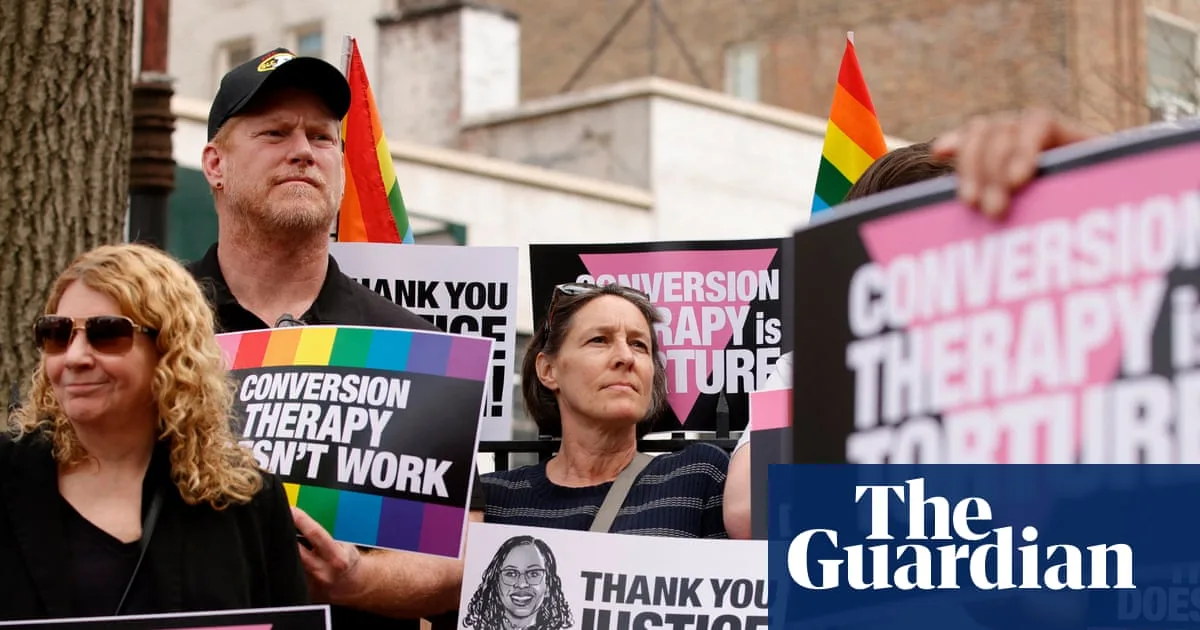
The US supreme court has ruled 8-1 against a Colorado law banning conversion therapy for minors, in a decision that could have significant implications for LGBTQ+ youth across the country. The case, Chiles v Salazar, was brought by Kaley Chiles, a licensed counsellor who argued that the state's ban infringed on her free speech rights to discuss her religious beliefs about biological sex with patients.
Colorado's 2019 law, one of 23 similar state restrictions, prohibits licensed clinicians from attempting to change the gender identity or sexual orientation of patients under 18. Chiles, represented by the Christian legal group Alliance Defending Freedom, contended that the law censored her speech. The court agreed, sending the case back to a lower court for a more rigorous review of the statute.
The ruling saw two liberal justices, Elena Kagan and Sonia Sotomayor, side with the conservative majority. In a dissenting opinion, Justice Ketanji Brown Jackson argued that states have the right to restrict what she described as a dangerous therapy that has caused lasting psychological harm to young people.
Leading medical organisations, including the American Medical Association and the American Psychological Association, have condemned conversion therapy practices, noting that they are not evidence-based and are linked to increased depression and suicide attempts among LGBTQ+ youth. Advocates have expressed concern that the ruling could weaken protections in other states with similar bans.
The decision's broader consequences remain uncertain, but legal experts suggest it may encourage further challenges to state restrictions across the US. The case now returns to lower courts, where the Colorado law will face heightened scrutiny, leaving the future of conversion therapy bans in doubt.




