
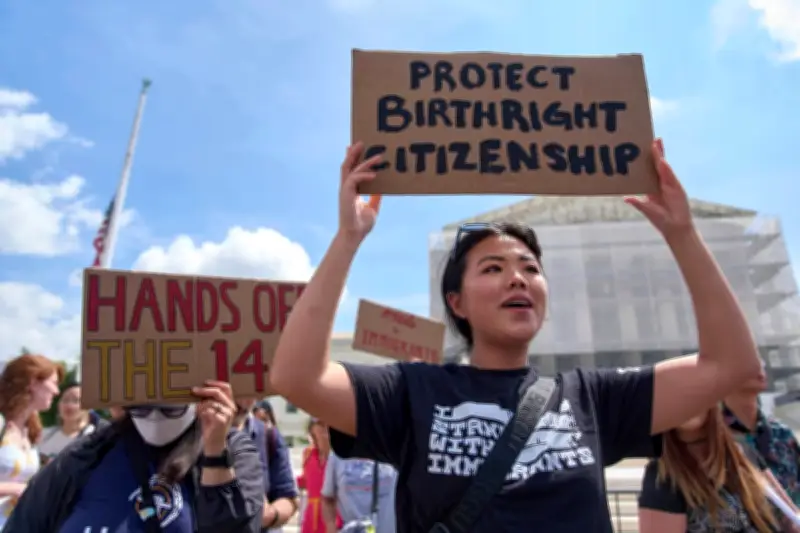
The US Supreme Court dealt a significant blow to President Donald Trump's anti-immigration agenda by upholding birthright citizenship, ruling that his executive order violated the 14th Amendment. The decision, delivered on 15 May 2025, affirms that children born in the United States to parents who are unlawfully or temporarily present are citizens at birth.
What the Court Ruled
Chief Justice John Roberts wrote the majority opinion, joined by liberal justices Sonia Sotomayor, Elena Kagan, and Ketanji Brown Jackson, along with conservative justice Amy Coney Barrett. Justice Brett Kavanaugh concurred in the judgment but dissented in part. The majority held that the 14th Amendment's Citizenship Clause grants citizenship to all persons born in the US and subject to its jurisdiction, a principle affirmed by the Supreme Court 128 years ago in United States v. Wong Kim Ark.
The ruling stated: "Children born in the United States to parents unlawfully or temporarily present are 'subject to the jurisdiction' of the United States and are citizens at birth under the Fourteenth Amendment's Citizenship Clause." This directly rebuked the administration's argument that such children were ineligible for citizenship.
Background of the Case
Trump issued an executive order on the first day of his second term seeking to end birthright citizenship, which immediately drew lawsuits from Democratic state attorneys general and the American Civil Liberties Union. The case, Trump v. Barbara, was a class-action challenge brought by parents of affected children. During oral arguments in April, the government's lawyer conceded that "no one knows for sure" how significant the problem of so-called "birth tourism" actually is.
The Center for Immigration Studies, an anti-immigration think tank, estimated there are between 20,000 and 26,000 births by women on tourist visas annually, representing less than 1% of all US births.
What Is Birthright Citizenship?
Birthright citizenship is based on the legal principle of jus soli, or "right of the soil," which grants citizenship to nearly everyone born on US soil. This principle derives from English common law and was codified in the 14th Amendment, ratified in 1868 to overturn the Supreme Court's 1857 Dred Scott decision, which denied citizenship to Black descendants of enslaved people.
The Citizenship Clause states: "All persons born or naturalized in the United States, and subject to the jurisdiction thereof, are citizens of the United States and of the State wherein they reside." This phrase, along with related statutes, forms the modern basis for birthright citizenship.
Historical Precedent
The landmark 1898 case United States v. Wong Kim Ark affirmed that children born in the US to immigrant parents are citizens, even if their parents were not eligible for naturalization. Wong Kim Ark, born in San Francisco to Chinese immigrant parents, was denied reentry to the US after a trip to China, but the Supreme Court ruled in his favor.
Exceptions to birthright citizenship are rare: Native Americans born in the US were excluded until 1924, people born in American Samoa are not automatically citizens, and children of foreign diplomats or enemy occupiers also lack birthright citizenship.
Dissenting Opinions
Conservative justices Clarence Thomas, Samuel Alito, and Neil Gorsuch dissented. Thomas wrote a lengthy dissent, arguing that children of foreign temporary visitors were not entitled to citizenship because they lacked bonds to the US. Alito called the decision "one of the most important" in the court's history but a "serious mistake," suggesting Congress could address the issue. Kavanaugh wrote that while the executive order did not violate the 14th Amendment, it violated a federal statute, which Congress could amend.
Trump's Next Steps
Trump called the ruling "too bad" but appeared undeterred, posting on Truth Social: "Congress should start TODAY to work on ending expensive and unfair to our Country, Birthright Citizenship." However, overturning a constitutional amendment requires a two-thirds majority in both chambers of Congress or a constitutional convention, a much higher bar than passing a statute. Trump is pushing for legislation to establish exceptions for children of parents without permanent legal status, but any such bill would need to overcome the 60-vote filibuster in the Senate.




