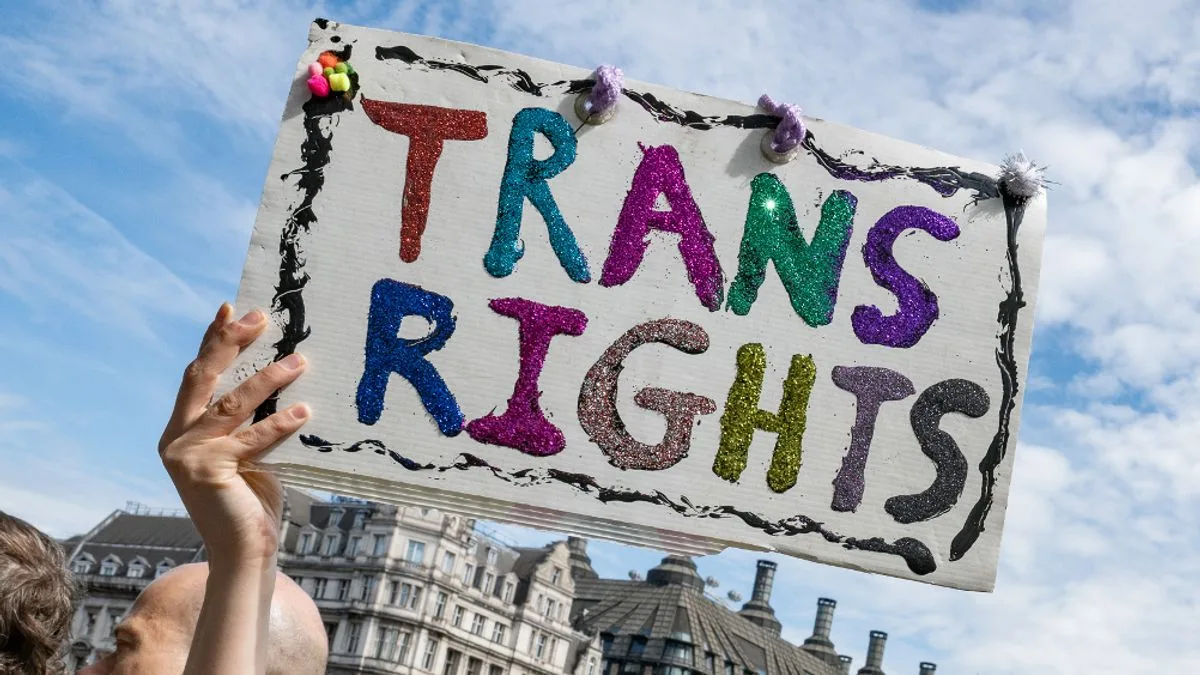
Trans people in the UK are facing enforced segregation following a landmark Supreme Court ruling on the definition of a woman in the Equality Act, warns campaigner Alexandra Parmar-Yee. The ruling, which determined that the terms 'man' and 'woman' refer to biological sex, has upended decades of legal understanding and threatens hard-won protections for transgender individuals.
The Supreme Court Decision
In April 2025, the UK Supreme Court ruled that the Equality Act 2010 must interpret 'man' and 'woman' based on biological sex, rejecting the previous interpretation that allowed for gender reassignment. The decision was met with celebration by gender-critical campaigners and welcomed by government ministers, despite the court's assertion that it would not disadvantage trans people.
EHRC Guidance Sparks Outrage
The Equality and Human Rights Commission (EHRC) swiftly issued guidance seeking to implement the ruling, initially advising that trans people should be excluded from single-sex services and associations matching their gender identity. This included groups like the Women's Institute, which were told they could no longer include trans women. The guidance faced widespread criticism and was later revised, but campaigners argue the changes are superficial.
The revised guidance, published last week, offers a thin cushion for trans equality, allowing some associations to continue including trans people if they operate for multiple protected characteristics. However, it provides no clear route for inclusive men's and women's services to remain so, urging them to exclude trans individuals. This affects everything from toilets and hospital wards to writing workshops.
Impact on Trans People
The government's own equality impact assessment acknowledges that the guidance will likely have wide-ranging negative effects on all trans people. It notes that trans women could face a 'disproportionate risk of violence and sexual assault' if forced to use men's services, and that masculine-presenting women may face greater scrutiny. The guidance encourages suspicion based on 'physique or physical appearance,' which could also harm disabled people.
Trans people are left with a choice between researching toilet provision every time they go out or living without legal protection. Many will self-exclude from public life, shrinking their worlds and impoverishing communities. Parmar-Yee recounts her own fear of seeking hospital treatment for lung problems, worried about being admitted to a men's ward.
Financial and Social Costs
The financial cost of reconfiguring facilities is estimated at over half a billion pounds, not including potential litigation. Socially, the guidance creates an era of enforced segregation, with policing outsourced to businesses, charities, and the NHS. Trans people are now second-class citizens, told to accept exclusion, outing, and risk.
A Call to Parliament
Parmar-Yee argues that parliament must fix the law itself, as the courts cannot be hidden behind. She warns that not doing so will define Labour's legacy on LGBTQ+ rights for a generation. The UK risks becoming an outlier in the rights-respecting world, but it is not too late to change course.
Alexandra Parmar-Yee is a campaigner for trans equality and a director of Trans+ Solidarity Alliance.






