

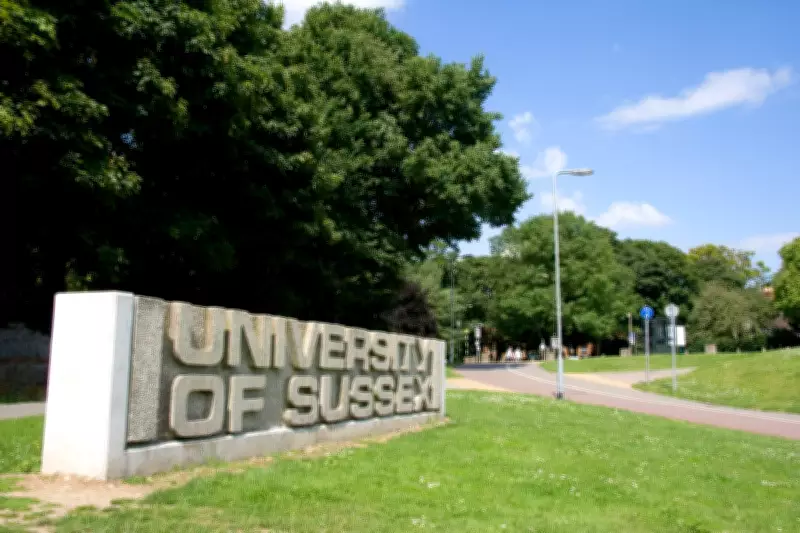
The University of Sussex has emerged victorious in a High Court challenge against England's higher education regulator, the Office for Students (OfS), over a record £585,000 fine imposed for alleged infringements on lawful free speech. The judgment, delivered by Mrs Justice Lieven on Wednesday, found that the OfS had misdirected itself and approached the case with a closed mind, rendering its decision unlawful.
Background of the Case
The dispute originated from the OfS's investigation into the University of Sussex's trans and non-binary equality policy statement, which the regulator claimed had a chilling effect on free speech. The investigation followed student protests in 2021 over the gender-critical views of former staff member Professor Kathleen Stock, who resigned that year. In March 2025, the OfS concluded that the university had breached conditions of its registration by adopting a policy that could lead to self-censorship among students and staff, and imposed the maximum fine of £585,000.
University's Legal Challenge
The university contested the regulator's decision at the High Court, arguing that the OfS had misinterpreted the law and acted unfairly. During a hearing in February, Chris Buttler KC, representing the university, asserted that the trans and non-binary equality policy, first adopted in 2018 and updated in 2022 and 2023, was designed to promote fair treatment on campus and did not restrict freedom of speech. He contended that the OfS wrongly classified the policy as a governing document, subject to stricter registration conditions, and failed to acknowledge remedial actions taken by the university to address any concerns.

Buttler further claimed that the university was unfairly singled out for punishment and that the OfS did not consider the comprehensive protections for academic freedom and free speech already in place at Sussex. The university maintained that the OfS's absolutist approach to free speech was erroneous and that the investigation was conducted with a closed mind.
OfS's Defense
Monica Carss-Frisk KC, representing the OfS, defended the investigation as careful and detailed, conducted under a fair procedure. She argued that the university's policy, despite updates, still threatened disciplinary action and created a chilling effect that could harm those under investigation. The OfS maintained that its conclusions were unimpeachable and that the university had no valid reason to exclude documents showing its values from the definition of governing documents.
Court's Ruling
In her 74-page judgment, Mrs Justice Lieven ruled entirely in favor of the university. She found that the OfS had made a clear error of law by considering irrelevant factors such as a chilling effect and potential stress and anxiety. The judge stated that the OfS misdirected itself on whether later versions of the policy failed to protect freedom of speech within the law, and failed to read the policy statement as a whole. Moreover, she concluded that the OfS had predetermined the decision, demonstrating bias by closing its mind to any evidence that might lead to a different outcome.
The judge emphasized that the case did not concern the facts surrounding Professor Stock's situation but focused on whether the OfS acted lawfully in its regulatory capacity.
Reactions
Professor Sasha Roseneil, vice-chancellor and president of the University of Sussex, welcomed the ruling as a good day for the university and for those who care about proper governance of universities. She described the judgment as an excoriating indictment of the OfS's impartiality and competence, and announced plans to seek a meeting with Education Secretary Bridget Phillipson to discuss its implications for the higher education sector.
Josh Fleming, interim chief executive of the OfS, expressed disappointment but stated that the regulator would carefully consider the judgment before deciding on next steps. He noted that the OfS's investigation had led to policy changes at a dozen institutions, including the University of Sussex, which should enhance confidence in free speech on campus. He also stressed that the case was not about the substance of debates on sex and gender but about protecting lawful speech across all subjects.

Implications
The High Court's decision is a significant blow to the OfS's regulatory authority and raises questions about its approach to enforcing free speech obligations. The ruling may prompt a reassessment of how the regulator handles similar cases in the future, particularly concerning the interpretation of governing documents and the consideration of remedial actions taken by institutions. The university's victory is likely to be seen as a reaffirmation of the importance of due process and impartiality in higher education regulation.





