

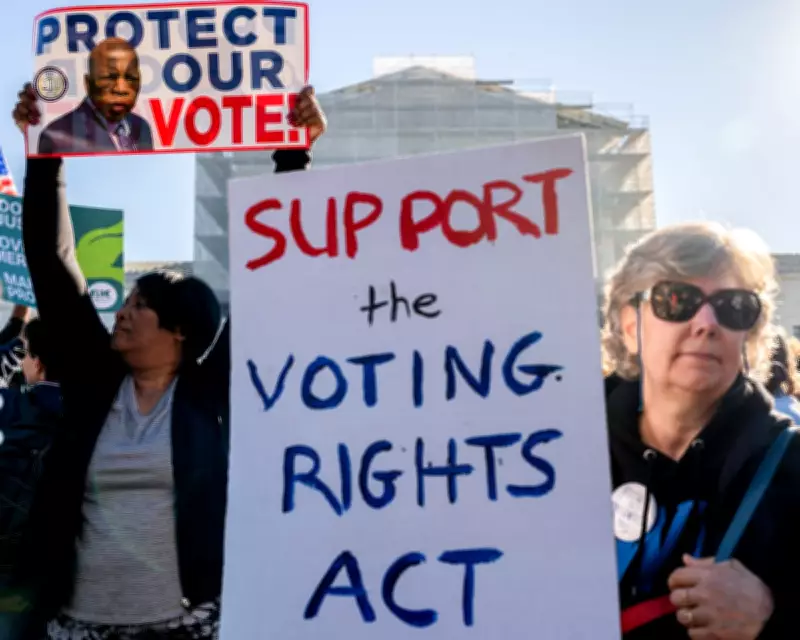
The United States Supreme Court has delivered a significant ruling, upholding Louisiana's congressional voting map against allegations of racial gerrymandering. In a decision that could shape future voting rights litigation, the Court found that the map, which includes two majority-Black districts, did not violate the Voting Rights Act.
Details of the Ruling
The case centered on Louisiana's congressional districts, drawn after the 2020 census. Critics argued that the map diluted the voting power of Black residents by packing them into two districts and cracking others. However, the Supreme Court, in a 6-3 decision, ruled that the map was legally sound. The majority opinion, authored by Chief Justice John Roberts, stated that the plaintiffs failed to prove that the map was enacted with discriminatory intent or that it resulted in unequal voting opportunities.
Implications for Voting Rights
This ruling marks a significant moment in the ongoing debate over voting rights and redistricting. Voting rights advocates expressed disappointment, warning that the decision could embolden states to adopt maps that minimize minority representation. Conversely, supporters of the ruling argue that it affirms the principle that not all racial disparities in representation are unconstitutional. The decision also underscores the Court's evolving interpretation of the Voting Rights Act, which has been narrowed in recent years.

Reactions and Analysis
Justice Elena Kagan, writing in dissent for the liberal bloc, argued that the ruling ignores the reality of racial discrimination in voting. She wrote that the decision "undermines the promise of the Voting Rights Act" and allows states to "entrench racial inequality." Legal experts note that the ruling may influence similar cases in other states, including Georgia and Texas, where redistricting challenges are pending.
The Biden administration had filed a brief supporting the challengers, but the Court's conservative majority sided with Louisiana. The state's attorney general praised the decision, calling it a victory for "fair and legal redistricting." Civil rights groups have vowed to continue fighting for more equitable maps through state courts and future legislation.






