

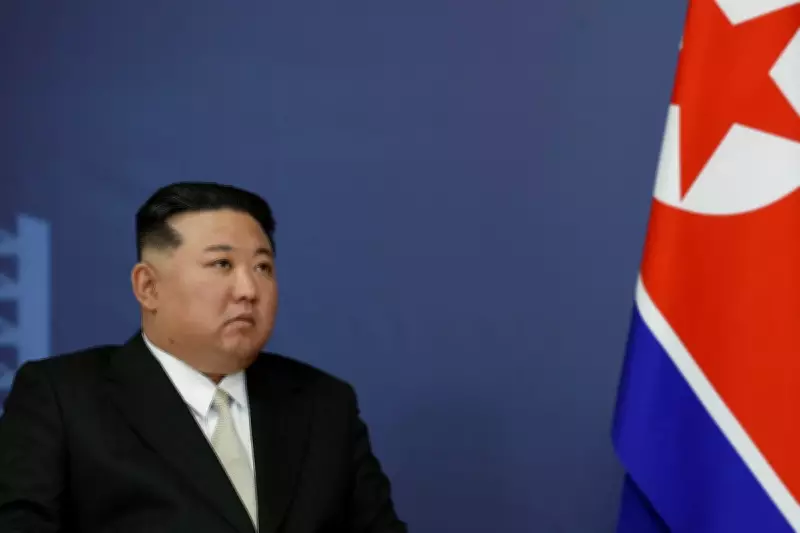
North Korea has updated its constitution to explicitly define its territory and grant leader Kim Jong Un authority over the nation's nuclear weapons. The revised constitution removes all previous references to reunification with South Korea, signalling a shift towards treating the two Koreas as separate states.
Key Changes in the Constitution
The amendments, adopted in March, also strengthen the State Affairs Commission chairman's position, formally defining Kim Jong Un as the 'head of state'. A new clause in Article 6 explicitly states that command authority over nuclear forces belongs to the chairman, who may delegate nuclear weapons use authority.
Implications for Inter-Korean Relations
Experts suggest these changes aim to portray North Korea as a 'normal' state, with the new text reportedly avoiding strongly hostile language towards the South. This move is seen as a significant departure from decades of official policy that called for eventual unification under Pyongyang's rule.

The constitutional revision comes amid heightened tensions on the Korean Peninsula, with North Korea continuing to advance its weapons programmes. The explicit codification of nuclear command authority underscores the regime's commitment to its nuclear deterrent strategy.






