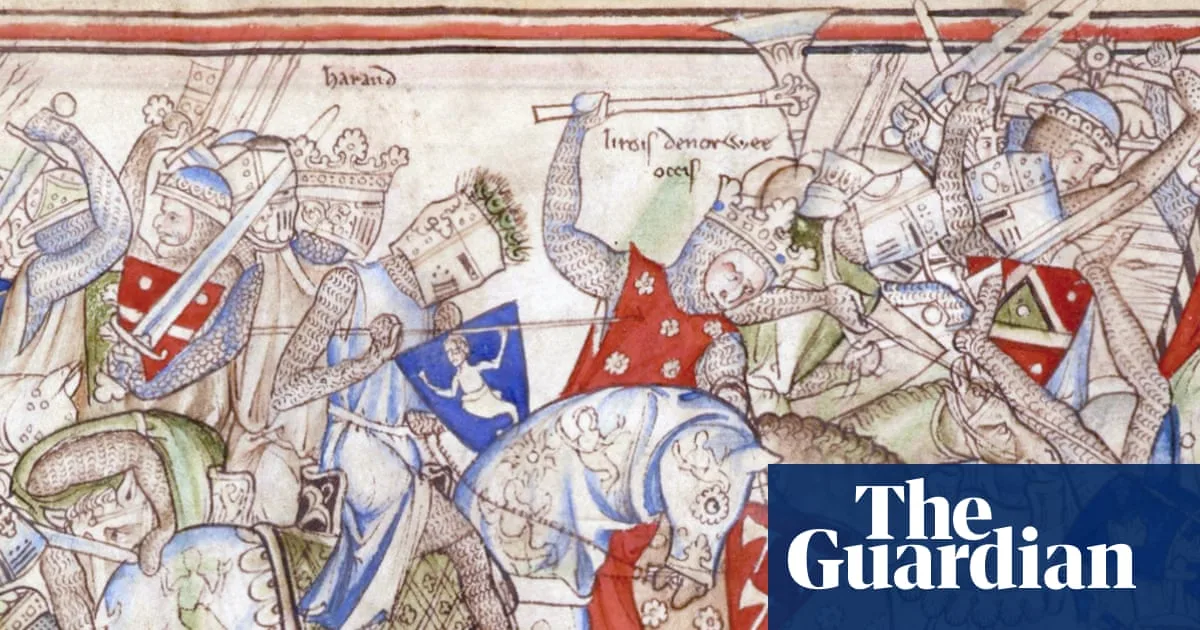
Historian Challenges Hastings Narrative: Harold's Navy Never Disbanded
New Research Overturns 1066 Battle of Hastings Story

New Research Overturns Centuries-Old Battle of Hastings Narrative

For generations, British schoolchildren have been taught a dramatic story about one of England's most pivotal historical events. According to traditional accounts, in September 1066, King Harold II of England faced a dire situation when Viking leader Harald Hardrada landed in Yorkshire with an invading army. Historians have long claimed that Harold had disbanded his naval fleet weeks earlier, forcing him to march his army nearly 300 miles north to Stamford Bridge near York, defeat the Vikings, then march exhausted troops back south where they were defeated by William the Conqueror at the Battle of Hastings on October 14.

A Fundamental Misreading of Historical Records

Now, a British academic is challenging this foundational assumption. Tom Licence, a professor of medieval history and literature at the University of East Anglia, argues that historians have completely misinterpreted Old English records for centuries. His research suggests the notorious "forced march" that has been interpreted as a sign of Harold's recklessness and a key factor in his defeat never actually occurred.

"When I realised that passage had been misread, then everything else that had previously confused historians began to fall into place," says Licence, referring to a crucial entry in the Anglo-Saxon Chronicle.

Wide Pickt banner — collaborative shopping lists app for Telegram, phone mockup with grocery list

The Naval Evidence That Changes Everything

Licence points to the Anglo-Saxon Chronicle entry stating that the English fleet "came home" in early September 1066. Victorian historians interpreted this to mean Harold had disbanded his warships, sending them back to their home ports around the country. However, Licence's re-examination of sources reveals that "coming home" likely meant returning to their home base in London, not disbanding entirely.

This reinterpretation opens up a completely different narrative of the events leading to the Battle of Hastings. Licence has found multiple references to Harold maintaining a fleet at this critical juncture, along with two early Norman accounts describing Harold sending hundreds of ships around England's south coast in an attempt to trap William's fleet in a pincer movement.

No Evidence for the Famous March

Perhaps most startlingly, Licence discovered that contemporary sources contain no references to Harold's army marching to Yorkshire. "I couldn't find any reference to marching at all," he notes. "That was a real surprise because it's such an entrenched story. I mean, it's the most famous march in English history, it's so central to the debate around Harold's defeat at Hastings. And it's not in the texts."

Instead, Licence proposes that Harold simply sailed his armies to Yorkshire and back. "Only a mad general would have attempted what seems like an impossible march, which isn't recorded in the sources anyway," he argues. This reinterpretation presents Harold not as a reactive, exhausted commander but as a strategic leader utilizing England's naval assets to wage a coordinated defense against multiple threats.

Academic Community Responds to Groundbreaking Findings

Licence will present his evidence at a conference at the University of Oxford on March 24, where his research is already generating significant interest among medieval historians. Rebecca Tyson, a doctoral researcher and expert in 11th-century maritime history at the University of Bristol, commented: "This new discovery that Harold maintained his fleet right up until the Battle of Hastings highlights the central importance of maritime aspects to the events of 1066, which have largely been overlooked in scholarship to date."

Professor Michael Lewis, head of the portable antiquities scheme at the British Museum and curator of its forthcoming Bayeux tapestry exhibition, added: "It is clearly a fascinating discovery that following the Battle of Stamford Bridge, Harold took an easier, more logical, trip south by ship to meet Duke William in battle, rather than a long trek overland, as has long been supposed."

Pickt after-article banner — collaborative shopping lists app with family illustration

This research coincides with the Bayeux tapestry's upcoming display in London for the first time in a millennium, offering new context for understanding the famous embroidery that depicts the Norman conquest. Licence's work suggests that Harold attempted to resist William's invasion both on land at Hastings and by sea, challenging centuries of historical interpretation about one of England's most decisive battles.




