

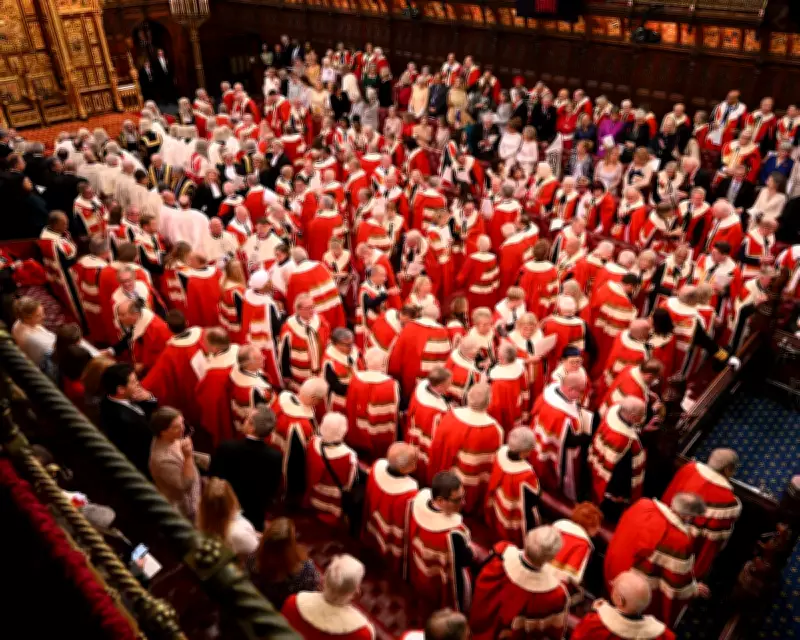
House of Lords Reform Stalls as Hereditary Peers Depart Amid Tory Resistance
The House of Lords witnessed a significant yet contentious shift as hereditary peers were nearly abolished following a fierce political battle. Despite two-thirds of voters supporting a democratically elected second chamber, the process was marred by Tory resistance and procedural threats, exposing deep-seated anachronisms in the UK's constitutional framework.
Tory Blackmail and the End of Hereditary Peers
On Tuesday night, hereditary peers were voted out, but not without a vicious fight. The Tories, backed by Kemi Badenoch, employed blackmail and threats to retain these peers, most of whom are Conservatives. This move defied Labour's manifesto pledge for abolition and trashed the Salisbury convention, which traditionally expects the Lords to approve government manifesto items post-election.
The debate revealed absurd justifications for keeping hereditaries. Lord Hamilton argued that without them, the Lords would be filled with "political chancers" and donors, while Lord Moore claimed their "lack of legitimacy" encouraged better behavior. The Earl of Devon highlighted discrimination concerns under employment law, noting the peers' all-male, all-white, blue-blooded composition, and even cited his crusader ancestry as relevant to current events in Israel and Gaza.

Procedural Threats and Legislative Gridlock
The Tory leader in the Lords, Lord True, threatened to halt all government business unless Labour compromised, warning of "very aggressive procedural action" if the "purge" proceeded. This included filibustering, wrecking amendments, and using "ping-pong" delays between the Commons and Lords. As a result, 15 hereditary peers were reprieved and converted into life peers.
This obstructionism extends beyond hereditary peers. A handful of Lords are killing the assisted dying bill through filibustering, despite majority support in the Commons and from three-quarters of the public. Similarly, the Tory-dominated Lords forced a watering down of new employment rights pledged in Labour's manifesto, with ministers warning of "parliamentary limbo" without compromise.
Systemic Issues and the Need for Radical Reform
Even with hereditary peers almost gone, the Lords retains absurd anachronisms, such as former hereditary peers making laws and 23 bishops despite minimal Church of England attendance. These traditions, tied to nostalgic British sovereignty, contributed to the Brexit disaster and fuel mistrust in Westminster politics.
Corruption is built into the Lords' foundations, with donations buying peerages. Transparency International research shows £48.2m in donations allegedly or proven to buy access and honours, involving 20 super-donors who gave £92m, mainly to the Tories. The current weak elections bill fails to cap donations or prevent large gifts, like Elon Musk's rumoured $100m to Reform from UK profits.
Public Demand and Labour's Retreat
Since 1911, Lords reform has been stymied by conflicting alternatives, with warnings of US-style gridlock. However, all European second chambers are elected, and the public strongly backs proportional representation to fix the dysfunctional electoral system. The Electoral Reform Society has laid out alternatives, suggesting a senate could be devised through a royal commission.
Despite this, Labour is rumoured to be retreating on reform, cooled by the exhausting effort to expel hereditary peers and only modest enthusiasm for constitutional change. If so, it would be a victory for the departing born-to-rule peers, leaving the Lords unreformed and out of step with democratic principles.






