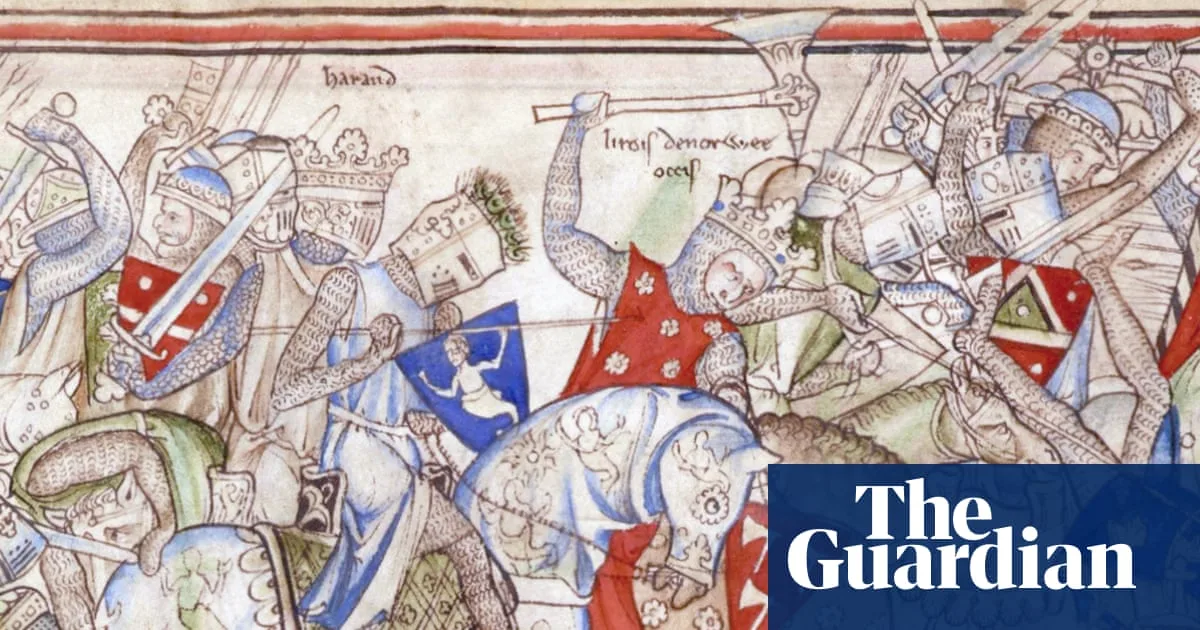
New Study Debunks King Harold's Legendary 200-Mile March to Hastings
King Harold's 200-Mile March to Hastings Debunked by Study

King Harold's Legendary March to Hastings Exposed as Victorian Myth

A groundbreaking study from the University of East Anglia has shattered one of English history's most enduring tales, declaring that King Harold's famed 200-mile march to the Battle of Hastings in 1066 never actually occurred. Instead, researchers assert that Harold's campaign was a meticulously coordinated land-sea operation, challenging centuries of historical understanding.

Reanalysing the Anglo-Saxon Chronicle

The research team, led by Professor Tom Licence, conducted a thorough reanalysis of the Anglo-Saxon Chronicle, a pivotal document compiled from the late 9th to the 12th century that records early English events. Their investigation uncovered a critical misinterpretation regarding Harold's fleet, which Victorian historians believed was disbanded before the battle. The Chronicle mentions the ships 'came home,' a phrase long interpreted as Harold dismissing his navy, but Professor Licence argues this was a misunderstanding.

Professor Licence stated: 'Harold's campaign was not a desperate dash across England; it was a sophisticated land-sea operation. The idea of a heroic march is a Victorian invention that has shaped our misunderstanding of 1066 for far too long.'

Key Findings from the Study

  • Harold never disbanded his fleet, contrary to previous beliefs.
  • The iconic 200-mile march is a Victorian fabrication.
  • Harold utilised his fleet against Harald Hardrada and attempted a naval pincer movement against Duke William.
  • Evidence points to a naval battle occurring in early October 1066.

Professor Licence explained that contemporary sources describe Harold deploying hundreds of ships to block Duke William after the Norman landing, references that have caused confusion due to the assumed absence of a fleet. He noted, 'I checked the evidence for him having sent the fleet home and found it was just a misunderstanding. I went looking for evidence of a forced march and found there wasn't any.'

Wide Pickt banner — collaborative shopping lists app for Telegram, phone mockup with grocery list

Implications for Historical Narratives

The findings reframe Harold as a strategic commander rather than a reactive, exhausted leader. Professor Licence emphasised, 'Harold was not a reactive, exhausted commander; he was a strategist using England's naval assets to wage a coordinated defence. This highlights a previously overlooked aspect of Anglo-Saxon maritime capability.'

Roy Porter, English Heritage Senior Curator of Properties, who oversees Battle Abbey and the Hastings battlefield, commented that these discoveries are certain to ignite debate among historians. He said, 'What we know about Harold's previous military campaigns fits with the idea that he used naval forces to transport soldiers and threaten William. It's exciting to consider that Harold's response may have been far more sophisticated than previously understood.'

Timeline of the Norman Conquest

  1. January 1066 - Edward the Confessor dies, and Harold Godwinson is selected as king by the Anglo-Saxon Witenaġemot.
  2. 20 September 1066 - Harold's army defeats Tostig and Harald Hardrada at Fulford near York.
  3. 14 October 1066 - After William II of Normandy lands in England, Harold meets him at Hastings, where Harold is killed and his army defeated.
  4. October to December 1066 - War continues until a deal is struck with English magnates.
  5. 25 December 1066 - William is crowned King of England in London.
  6. 1067-1069 - Subsequent revolts by Harold's family are crushed by Norman forces.

This study not only debunks a long-held myth but also prompts a reevaluation of historical textbooks, urging a more nuanced view of Anglo-Saxon military strategies during the Norman Conquest.

Pickt after-article banner — collaborative shopping lists app with family illustration




