
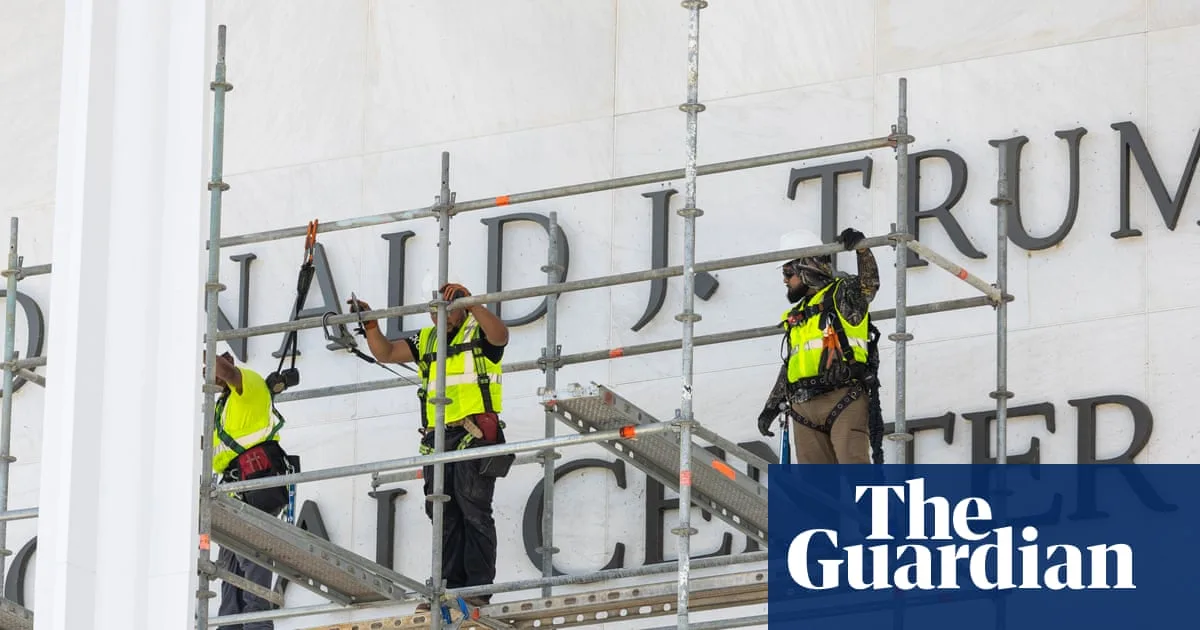
An appeals court in Washington DC has rejected an emergency appeal by Donald Trump’s legal team seeking to pause the removal of his name from the facade of the Kennedy Center. The ruling came on Friday, upholding a judge’s order that the president’s name be taken down from the iconic performing arts venue.
Justice department lawyers for Trump and his hand-picked Kennedy Center board had filed the emergency appeal earlier that day, asking the court to stay a decision by US district judge Christopher Cooper. Cooper had ruled in May that Trump’s name was illegally added to the centre, stating that only Congress has the authority to change the institution’s name.
Workers began erecting scaffolding around the section of the building where Trump’s name is affixed on Friday evening, but a thunderstorm halted their efforts. Onlookers gathered to cheer the removal process, chanting “Take it down!” as crews prepared to pry the letters from the marble exterior.
The legal challenge was brought by Democratic representative Joyce Beatty of Ohio, an ex-officio member of the Kennedy Center board. She filed a motion opposing the emergency appeal and appeared outside the venue as a crowd gathered in support. The centre has already removed Trump’s name from its website and internal documents in compliance with the judge’s order.
Bonnie Berry, a retired events worker, expressed relief at the impending removal, saying she had refused to work on the Kennedy Center Honors last year due to the name change. She suggested auctioning off the removed letters to raise funds for the centre’s operations.




