

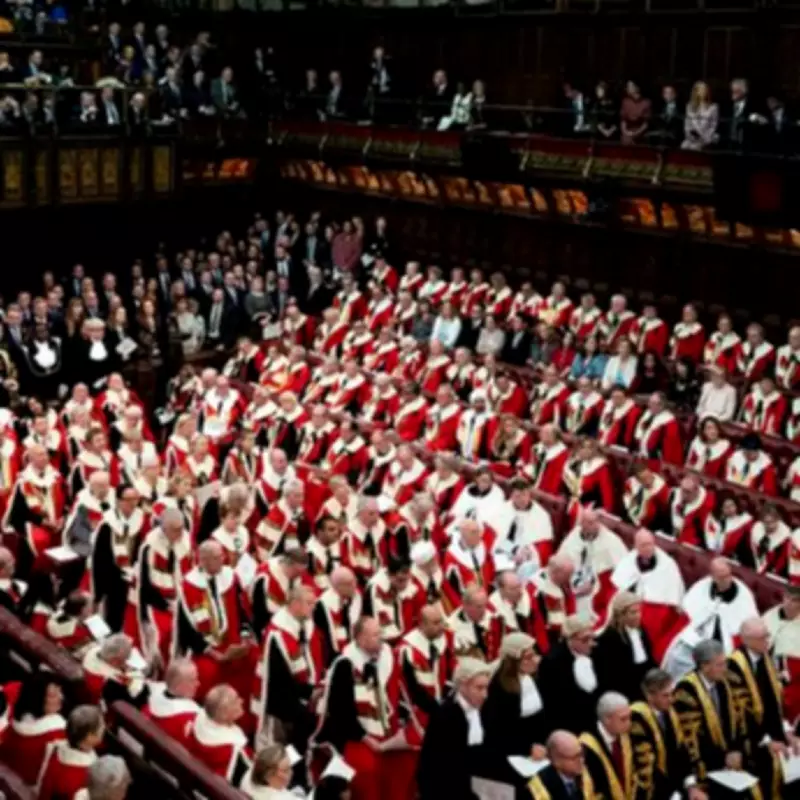
Historic Reform Ends Hereditary Peers' Lifetime Right to Lords Seats
In a landmark constitutional change, hereditary peers will finally lose their right to sit and vote in the House of Lords for life under major reforms passed by Keir Starmer's government. The House of Lords (Hereditary Peers) Bill cleared Parliament on Tuesday evening, ending a stand-off lasting several months and abolishing the centuries-old practice of inheriting a seat on the red benches.
End of an Era for Hereditary Privilege
The legislation effectively reduces the quota of hereditary peers from 92 to zero, fulfilling Labour's 2024 election promise to scrap what the party called an "indefensible" right. Their right to sit in the Lords will cease once the current parliamentary session ends, which is expected later this spring.
This reform represents the most significant change to the Lords since Tony Blair's 1999 reforms, which massively reduced but didn't eliminate hereditary representation. For over seven centuries, hereditary peers have served in Parliament, but that tradition now faces its conclusive end.

Political Reactions and Compensatory Measures
Lords Leader Baroness Angela Smith emphasized that the reform addresses a fundamental principle agreed by Parliament over 25 years ago: "that no one should sit in our Parliament by way of an inherited title." She noted that while hereditary peers remained, meaningful reform had stagnated for a quarter century.
The government has engaged in constructive conversations with Conservatives, agreeing to allocate the opposition party "a number" of life peerages to compensate for their loss of hereditary members. Of the 84 hereditary peers currently taking seats, 42 take the Conservative whip while 31 are independent crossbenchers.
Baroness Smith acknowledged Conservative concerns: "We appreciate the case that has been made by the official opposition that they rely significantly on the experience of hereditary peers, particularly on the front bench, but also in committees."
Mixed Emotions in the Lords Chamber
Lord True, the Conservatives' shadow Lords leader, described the Bill as a "bitter pill" for many colleagues. "For dozens of our fellows on this side and on the crossbenches, April will be a cruel month of cold going but that is how it will be," he told the Lords.
He added with historical perspective: "So, here we are at the end of well over seven centuries of service by hereditary peers in this Parliament. They helped create our Parliament and they brought it back to life in 1660."
Hereditary peer the Earl of Devon, a crossbencher, expressed concern that the Lords, Parliament and country would "miss" the departing members "not as individuals but as an essential ancient thread in the complex and fragile constitutional fabric that supports our nation."
Democracy Advocates Celebrate Long-Overdue Change
Dr Jess Garland, Director of Policy and Research for the Electoral Reform Society, welcomed the legislation: "There is no place in a modern democracy for people influencing our laws due to an accident of birth. The removal of the remaining 84 all-male hereditary peers, who were each gifted a job-for-life legislating in the House of Lords purely due to who their parents were, is a long-overdue reform."
She added: "No part of Parliament should be a gated community from which the public are excluded. Ministers should be commended on the passing of this bill, which is a crucial first step towards reforming the Lords so it better reflects the country."
Garland urged continued progress: "Yet, progress must not stall here and the government now needs to move onto the next phase, as promised, and reform the Lords into a smaller, democratic chamber, with members chosen by and accountable to the people of this country."
The legislation marks a decisive shift in Britain's constitutional landscape, removing one of the last vestiges of aristocratic privilege from the parliamentary system and setting the stage for potential further reforms to the second chamber.






