

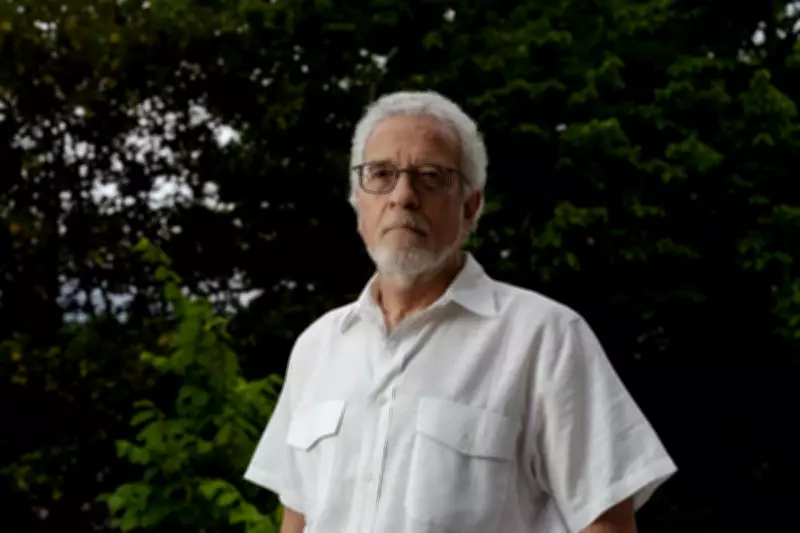
Genocide Scholar Omer Bartov Analyzes Israel's Political Evolution
Omer Bartov, a prominent Holocaust historian and former Israeli Defense Forces soldier, has sparked significant debate with his latest publication examining Israel's political trajectory. In his new book, "Israel: What Went Wrong?", Bartov traces the transformation of Zionism from what he describes as a liberatory movement into an extremist ideology he holds responsible for genocide in Gaza.
From Liberation Movement to Settler Colonialism
Bartov, who teaches at Brown University and has published extensively on the Holocaust, argues that Zionism originally contained two distinct strands. "One is a settler-colonial, ethno-national movement, and the other is the liberation and emancipation and rescue of a persecuted minority," he explains. The Holocaust transformed Zionism from what some considered a pipe dream into a viable political project, with the argument that a Jewish state could have prevented the murder of six million Jews.
The fundamental shift occurred, according to Bartov, after Israel declared independence in 1948. "When the state decides that it's not going to be a normal state, it's not going to have a constitution, it's not going to define its borders, it's not going to try and have a normal relationship with its own Palestinian citizens," Bartov states, "then its nature changes."

Academic Background and Personal Perspective
Bartov brings considerable authority to his analysis, having spent decades researching the Second World War, antisemitism, Nazi indoctrination, and historical amnesia. The son of devoted Zionists who fought in the 1948 war, Bartov himself served four years in the IDF, commanding an infantry company in the West Bank, northern Sinai, and Gaza before earning his doctorate at Oxford.
His perspective has been shaped by living in the United States for more than three decades, which he says provides necessary distance to view Israel's actions clearly. Bartov famously invoked an Israeli pop lyric that former Prime Minister Ariel Sharon used to explain his Gaza disengagement: "What you can see from there, you can't see from here."
Controversial Genocide Designation
In July 2025, Bartov made headlines with a New York Times essay titled "I'm a Genocide Scholar. I Know It When I See It," where he applied the term genocide to Israel's assault on Gaza. This declaration cost him several close relationships, though subsequent events have validated his analysis, he maintains.
Bartov is particularly critical of how Holocaust memory has been instrumentalized in Israeli politics, becoming "a vast fig leaf" that combines "self-victimization and self-pity with self-righteousness, hubris and the euphoria of power." His goal is not to minimize Nazi horrors but to demonstrate how this trauma has been exploited to shape Israeli psyche and ideology.
Political Analysis and Constitutional Failures
Much of Bartov's book focuses on what he frames as Israel's original sin: the resistance to granting meaningful legal weight to the lofty words in the nation's declaration of independence, coupled with founders' failure to adopt a constitution and bill of rights. Had Israel's first prime minister, David Ben-Gurion, pushed for either approach, Bartov argues, the nascent state might have grown into the liberal democracy it has long proclaimed itself to be.
Despite his condemnation of present-day Israeli society, Bartov sees a narrow path toward peaceful coexistence through confederation plans championed by groups like A Land for All. Under such schemes, sovereign Palestinian and Jewish states would exist side by side with free movement throughout combined territory, similar to European Union arrangements.
American Support and Political Realities
Bartov points out that Israel's preference for military confrontation over diplomacy depends entirely on American support, which is now being tested as never before. A clear majority of Democratic voters now have negative views of Israel following the Gaza conflict, and even Republican support has eroded after what Bartov calls "ill-conceived US-Israeli aggression against Iran."

"Maga is becoming anti-Israel," Bartov observes, due to "Netanyahu completely leading Trump by the nose into a completely idiotic war." The charge of antisemitism has grown hollow, he argues, due to its "weaponization" as "a tool to shut people up" while Israel wreaks destruction on its neighbors.
Personal Consequences and Publishing Challenges
Bartov's outspokenness has come with personal costs. "Many of my best friends are in Israel – at least they were my best friends until recently," he admits. "I don't know now. So there's also a personal sorrow here."
His book is being published in nine or ten languages, but Hebrew is not among them. Even left-leaning Israeli publishers declined the manuscript, with Bartov suggesting they felt offended by his criticism of the Israeli left. "They feel that I'm this Israeli living in America in an air-conditioned room, as they say, sipping espresso, while they're suffering," he notes.
Future Prospects and Diplomatic Solutions
Bartov believes America's indulgence of its Middle East ally may be reaching its limits. Should the United States withhold military support, "Israel will have to go through a process of coming to terms with itself," he predicts. Under such circumstances, the country would have no choice but to pursue diplomacy, which ironically might be the so-called Jewish state's best hope for a peaceful and prosperous future.
Despite the grim current reality, Bartov maintains that understanding how Zionism transformed from liberation movement to what it has become is essential for any meaningful resolution to the ongoing conflict.





