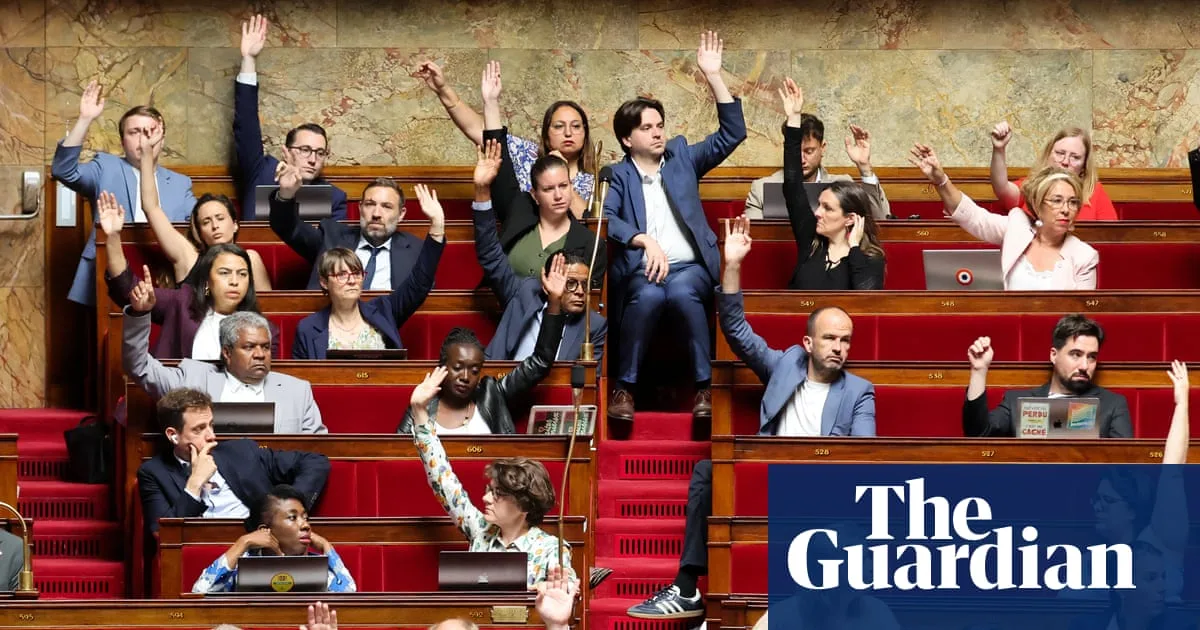
France's parliament is set to repeal the Code Noir, a 1685 decree signed by King Louis XIV that governed slavery in French colonies, classifying enslaved people as movable property. The law remained technically in place for nearly two centuries after France abolished slavery in 1848, a fact that has shocked many.
Lawmakers Vote to Eliminate the 'Black Code'
The bill, expected to be adopted by the National Assembly, will formally eliminate the 60-article Code Noir. President Emmanuel Macron called the law's survival "a form of offense" and acknowledged that the silence around it was no longer an oversight. However, like his predecessors, Macron stopped short of issuing an apology.
Historical Context and Impact
France operated the third-largest slave trade, shipping approximately 1.4 million Africans to plantations that generated immense wealth for cities like Nantes and Bordeaux. The Code Noir allowed enslaved people to be worked, beaten, sold, raped, and killed. Article 44 declared them "movable property," while other sections mandated mutilation for those who fled and denied the legal value of an enslaved person's testimony.
France's four oldest slave colonies—Guadeloupe, Martinique, French Guiana, and Réunion—were made full overseas departments in 1946, meaning they are governed from Paris. Their roughly 1.9 million people are French citizens, yet these territories remain among the poorest in France, with unemployment double the mainland rate and over 75% of households in Mayotte living below the poverty line.
Personal Reactions and Symbolism
Max Mathiasin, the lawmaker from Guadeloupe who proposed the repeal, said he had copies of the Code Noir on his shelf but could never read it fully. "As the great-great-grandson of people who were enslaved, I had never been able to read it in full," he said. For him, the vote is a way to restore the humanity of his ancestors and live up to France's republican promise of liberty, equality, and fraternity.
Muriel Jean-Baptiste, a Paris-born nurse with roots in Martinique, expressed shock that a law treating Black people as property was left in place. "That shocks me," she said. "A law that treated Black people as property was left sitting there."
Criticism of Symbolism Without Substance
Some argue the repeal is a symptom of France's failure to fully reckon with its colonial past. Pierre-Yves Bocquet, deputy director of the Foundation for the Memory of Slavery, called the Code Noir the birthplace of France's "colonial exception." He noted that even today, people in overseas territories may have fewer rights than those in mainland France.
Max Relouzat, 81, president of the Association for the Memory of Slaveries, said the repeal matters because so little else has changed. He described systemic racism in France as a form of "apartheid" and "colonial continuity." His African ancestor had no name under the law, only a number and registration code; the family was given the name Relouzat at emancipation.
Florence Alexis, a slavery expert, said the real turning point came in 2001 with the Taubira law, which recognized the slave trade and slavery as crimes against humanity. She emphasized that racism is the legacy of slavery itself, not of one edict. "When I was a child at school, they called me the little monkey," she recalled.
Reparations Debate
On the 25th anniversary of the Taubira law, Macron floated the idea of reparations but committed no money, defining repair as truth-telling, education, and historical work. France forced Haiti, which won independence in 1804, to pay reparations for the loss of slave owners—a debt cleared only in 1947.
The timing of Macron's speech was seen as awkward, as France had abstained from a U.N. General Assembly vote calling the trans-Atlantic slave trade the gravest crime against humanity. Additionally, at the Africa Forward Summit in Kenya, Macron was criticized for behaving like a colonizer after silencing a room.
Bocquet noted that the repeal "will have no direct effect" on fighting racism and inequality. Alexis added, "It is easy for the French authorities, and for Macron, to do this, because it commits them to nothing."






