
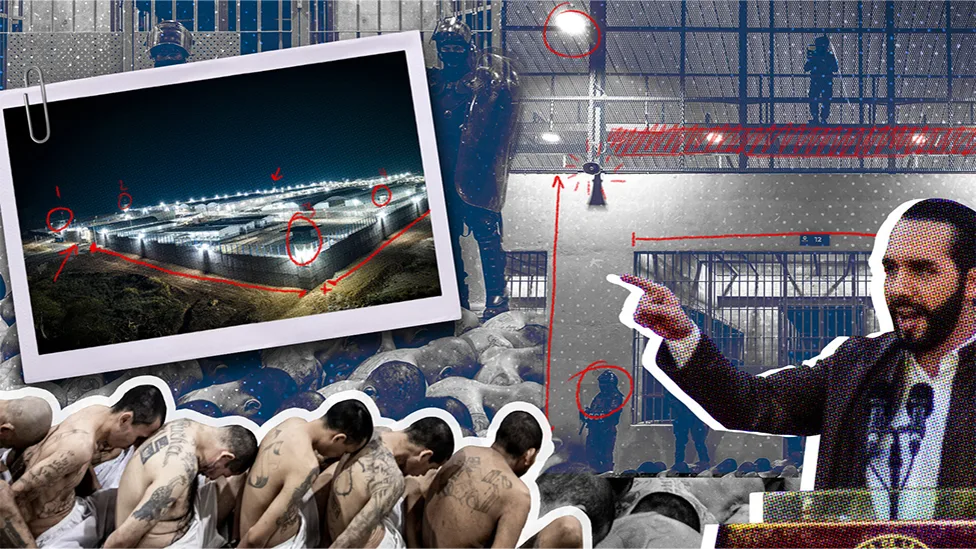
El Salvador's Cecot mega-prison, opened in January by President Nayib Bukele, has become a symbol of his controversial war on gangs. The facility, located 74km southeast of San Salvador, can hold up to 40,000 inmates, exclusively high-ranking members of MS-13 and Barrio 18. Since the crackdown began in March 2022, at least 68,000 people have been detained, with thousands of families left in the dark about their loved ones' whereabouts.
The prison's conditions are stark: cells measuring 7.4m by 12.3m house up to 156 prisoners, giving each just 0.58sq m of space—far below the Red Cross standard of 3.4sq m. There are no windows, fans, or air conditioning, and inmates have only two basins and two toilets with no privacy. Family visits are banned, and prisoners are expected to never be released.
Despite human rights concerns, Bukele's approach enjoys overwhelming domestic support. A January CID Gallup poll found 92% of Salvadorans approve of his leadership, largely due to a dramatic drop in murders. In neighbourhoods once terrorised by gangs, residents now move freely without fear.
Could the UK learn from El Salvador's model? British prisons are overcrowded and underfunded, with rising violence and reoffending rates. However, the Cecot system's harshness—including indefinite detention and lack of rehabilitation—would likely conflict with UK human rights obligations and prison reform principles.
While the UK may consider stricter measures for serious offenders, the Cecot approach raises ethical questions. The lack of transparency, denial of family contact, and punitive conditions contrast sharply with British values of rehabilitation and proportionality. Any lessons would need to balance security with fundamental rights.




