

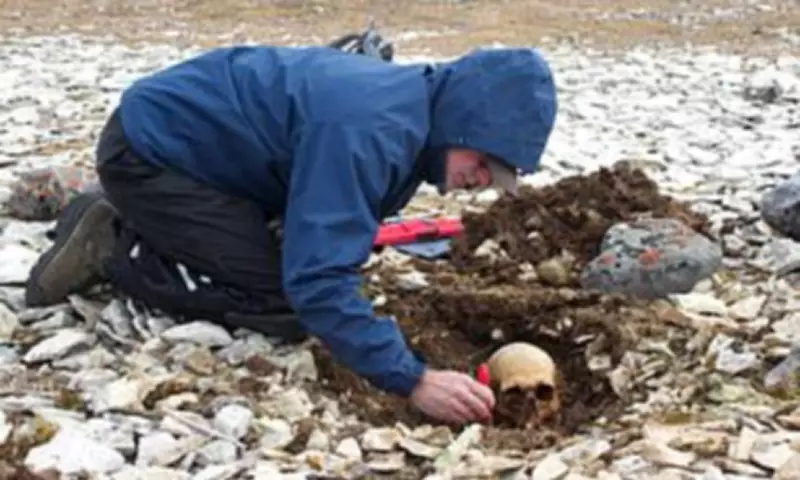
Scientists have revealed the identities of four men who perished in Sir John Franklin's doomed 1845 expedition, using advanced DNA analysis to solve a 180-year-old mystery. The Franklin Expedition aimed to discover the fabled Northwest Passage through the Arctic, but ended in tragedy with the deaths of Franklin and his entire crew.
Discovery Through DNA
Researchers from the University of Waterloo, Canada, extracted DNA from skeletal remains and compared it to living descendants of the crew members. This process yielded exact matches for three crew members who died on the shores of Erebus Bay and a fourth whose body was found 80 miles (130 km) away.
Identified Crew Members
- William Orren, Able Seaman, HMS Erebus
- David Young, Boy 1st Class, HMS Erebus
- John Bridgens, Subordinate Officers' Steward, HMS Erebus
- Harry Peglar, Captain of the Foretop, HMS Terror
The identification of Harry Peglar solves a long-standing puzzle. His remains were found in 1859 with personal documents, known as the Peglar Papers, but wearing clothing inconsistent with his rank. Dr. Robert Park, co-author of the study, noted the significance of finding written documents from the expedition.

Background of the Expedition
The expedition set off from London in May 1845 with two ships, HMS Erebus and HMS Terror, stocked with seven years' worth of food and state-of-the-art equipment. After becoming trapped in ice near King William Island, 105 men abandoned the ships and attempted to cross the island on foot. Weakened by scurvy and freezing temperatures, none survived.
Cannibalism Evidence
Reports of cannibalism among the crew, initially dismissed, were confirmed in 1997 when cut marks were found on bones. In 2024, Captain James Fitzjames' jawbone showed clear signs of butchery. However, the newly identified men show no such marks, indicating they were not subjected to cannibalism.
Significance of Findings
Lead researcher Dr. Douglas Stenton expressed hope that the discovery commemorates the men and preserves their legacy. The identification of Peglar, the first from HMS Terror, raises questions about the crew's escape strategy and the reasons behind the distribution of remains.






